
Carmelo Luis Soria Espinoza
Victim of the military dictatorship of Augusto Pinochet
About Carmelo Luis Soria Espinoza
Lived 1921 – 1976 (aged 54). Carmelo Luis Soria Espinoza was a Spanish diplomat.
Carmelo Soria (Madrid, 5 November 1921 – Santiago de Chile, 16 July 1976) was a Spanish-Chilean United Nations diplomat. A member of the CEPAL (United Nations Economic Commission for Latin America and the Caribbean) in the 1970s, he was assassinated by Chile's DINA agents as a part of Operation Condor. Augusto Pinochet was later personally indicted over this case.
Life
Carmelo Soria was the nephew of the Spanish urban planner Arturo Soria y Mata. He had three children with his wife Laura González Vera.
After the Spanish Civil War (1936–39), Carmelo Soria, who was a member of the Communist Party of Spain (PCE), exiled himself to Chile, where he obtained double citizenship.
On 4 August 1976, another member of Soria's family, Carlos Godoy Lagarrigue, the son of the ex-rector of the University of Chile and former Minister of Education Pedro Godoy, also "disappeared".
Chilean transition and trials
In 1991, during the beginning of the Chilean transition to democracy, the DINA biochemist Eugenio Berríos, already involved in the Letelier case, escaped to Uruguay in order to avoid testifying in both the Letelier case and the Soria case.
In 1994, Carmen Soria, the daughter of the assassinated diplomat, presented a complaint for "assassination" of her father. She then received anonymous calls informing her that the investigations would lead nowhere as the corpse had disappeared from the cemetery. This led Carmen Soria to present the following year a complaint against Chile before the Inter-American Commission on Human Rights (CIDH), charging it with "denigration of justice." Brady subsequently denied any knowledge concerning Soria's murder. However, the Audiencia Nacional (high court) archived the case on 31 May 2001, arguing that the Spanish justice was not entitled to pursue the Soria case, despite the universal jurisdiction principle, as it had refused a short time before to pursue Arnaldo Otegi (leader of Batasuna) for an alleged act of "apology of terrorism" committed in France. However, prosecution against Roche and numerous other defendants would get underway in Chile by May 2008. Roche later died in Santiago at the age of 92 in May 2011 while still being prosecuted.
In May 2002, Soria's corpse was exhumed on orders of the magistrate Andrés Contreras, in order to verify his identity. Soria's family had presented a complaint two weeks before concerning "illegal inhumation", alleging that during the transfer of Soria's corpse in 1983, a substitution had been made in order to dispose of his corpse.
In January 2004, Chilean foreign minister Soledad Alvear signed an agreement with Carmen Soria which promised that a law would be voted concerning the funding of US$1.5 million to Soria's family in reparations of Carmelo Soria's death. Alvear then signed it again in March 2004 before the UN. In July 2007, the Senate ratified this agreement with the UN, by 16 votes for against 14. It had beforehand refused this same agreement, in November 2005. The Brigada Mulchén, ultimately placed under the orders of Augusto Pinochet, According to the judge Madrid, the order to detain Ríos San Martín was directly issued by the Brigadier Jaime Lepe, whose promotion to General was blocked in 1997 by the former President Eduardo Frei Ruiz-Tagle in 1997 following denunciations by Carmen Soria. Ruz argued that Chile's 1978 Amnesty Law was an "obstacle making the effective prosecution of the crime where it took place impossible." International arrest warrants would be issued for all seven of the genocide and murder suspects in October 2012. All had been members of Mulchen Brigade.
In August 2023, the Supreme Court of Chile affirmed convictions for six former agents of the National Intelligence Directorate and two Army officers for Soria's murder.
Don’t just read it —
keep it.
Full-length biographies made to live with: read them, listen on the way to work, watch them tonight.
- E-book
- Audio
- Video
Instant download · yours to keep · every purchase keeps this site free
Important facts
People in Carmelo Luis Soria Espinoza's life
Named in this biography and alive at the same time
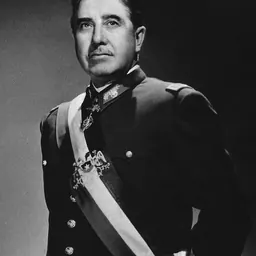

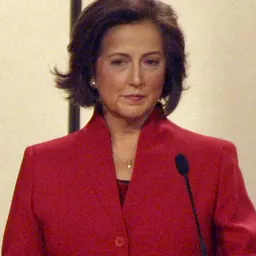
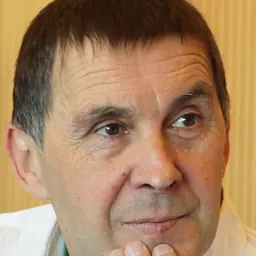

Related people
Same field, nearest in time
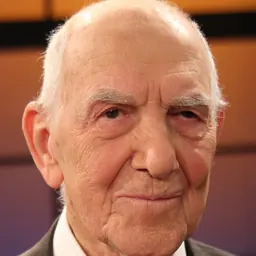
Contemporaries
People whose lives overlapped Carmelo Luis Soria Espinoza's




Frequently asked questions
Who was Carmelo Luis Soria Espinoza?
victim of the military dictatorship of Augusto Pinochet
When was Carmelo Luis Soria Espinoza born?
Carmelo Luis Soria Espinoza was born on 5 November 1921 in Madrid.
When did Carmelo Luis Soria Espinoza die?
Carmelo Luis Soria Espinoza died on 16 July 1976 in Santiago, Santiago.
What was Carmelo Luis Soria Espinoza's occupation?
Carmelo Luis Soria Espinoza was a diplomat.
What nationality was Carmelo Luis Soria Espinoza?
Carmelo Luis Soria Espinoza was Spanish.
Sources & further reading
· Wikipedia: Carmelo Luis Soria Espinoza
· DBpedia: Assassination of Carmelo Soria
Cite this page
APA: Biography.guide. (2026). Carmelo Luis Soria Espinoza. https://biography.guide/carmelo-luis-soria-espinoza/
MLA: "Carmelo Luis Soria Espinoza." Biography.guide, https://biography.guide/carmelo-luis-soria-espinoza/.
Chicago: "Carmelo Luis Soria Espinoza." Biography.guide. https://biography.guide/carmelo-luis-soria-espinoza/.
Data last updated: 2026-09-20 · Spot an error? Report a correction.
Page generated 2026-09-27 05:14 UTC