
About Carlos Aparicio
Born 1982. Carlos Aparicio is a Bolivian politician and diplomat.
Carlos Aparicio Vedia (born 16 January 1982) is a Bolivian diplomat, lawyer, and politician serving as ambassador of Bolivia to Peru since 2021. Aparicio studied law at the University of San Francisco Xavier, during which time he became an adherent of Trotskyist political theory, leading him to join the emerging Movement for Socialism. He served as president of the party's departmental youth wing and participated in its successful 2005 general election campaign. In 2006, he obtained his first elective position, serving as a member of the Constituent Assembly from Chuquisaca, representing circumscription 5 from 2006 to 2007. Two years later, he was elected to represent the same constituency in the Chamber of Deputies, where he served from 2010 to 2015. Following the conclusion of his term, he served as vice minister of public security from 2015 to 2017 and ambassador to Italy from 2018 to 2019.
Early life and career Of Quechua descent, Carlos Aparicio was born on 16 January 1982, one of twelve children born to Modesto Aparicio and Elizabeth Vedia, a peasant family native to Viña Pampa in central Chuquisaca's Azurduy Province. Raised in rural poverty, Aparicio began his early schooling at a small institution in Puca Puca, a minor hamlet near Tarabuco, where his father worked as a teacher. He spent most of his childhood in the town, completing primary studies up to the fifth grade, at which point he moved to Tarvita, where he concluded the remainder of his education, graduating from the nearby Antonio Tovar School. Shortly thereafter, he moved to Sucre, studying law at the University of San Francisco Xavier, relying on odd jobs and the aid of his parents to make ends meet, even as he received a small scholarship to cover food expenses.
Aparicio's political ideology was heavily influenced by the injustices his family experienced as tenant farmers in the hacienda economic system. His uncle was a partisan of the Free Bolivia Movement, whose anti-landowner and pro-land reform advocacy piqued Aparicio's interest in left-wing ideals. This orientation solidified during his time in university, where he became an adherent of Trotskyist political theory. He followed that path into the ranks of the nascent Movement for Socialism (MAS-IPSP), a party whose permanent political presence was consolidated following the 2002 general election, capitalizing on discontent with the neoliberal economic system that had produced such high inequality in the country.
Political career Aparicio attained his first elective position in 2006 when the MAS ran him to represent Chuquisaca's circumscription 5 in the Constituent Assembly. The 2006 constituent elections provided a unique opportunity for new leaders to make their political debuts due to the fact that most experienced politicians had opted to contest the 2004 municipal and 2005 general elections. This generational change meant that following the election, most elected constituents counted younger profiles, averaging between twenty-five and forty years of age. Aged twenty-four, Aparicio was the youngest male constituent and was among the ten youngest lawmakers in the entire assembly. For many constituents, the assembly offered minimal opportunity to stand out due to prolonged polarization over regional conflicts. For Chuquisaca's delegation, in particular, the inclination of the MAS against moving the seat of government from La Paz back to its historic site of Sucre caused great discontent among the department's populace, with figures like Aparicio being branded as "traitors" by opponents.
Despite the stated issues, roughly one-tenth of the assembly's constituents accrued enough political capital to continue pursuing political careers following the body's closure. The following year, local party bases facilitated his nomination as a candidate for a seat in the Chamber of Deputies. Aparicio carried out the assigned tasks of managing police logistics and budgets for just under two years, all the while maintaining a relatively low public profile. The following day, Aparicio was replaced as vice minister by Gonzalo Trigoso, although government officials noted that he had already presented his resignation days before the incident, citing personal reasons. Following a three-month process, local courts closed the case after the girl's family dropped all charges, with Aparicio covering their medical expenses until the child's complete recovery.
Diplomatic career The vehicle collision scandal failed to substantially damage Aparicio's political prospects. By late November, Aparicio had already begun to profile himself as the next ambassador to Italy, He fulfilled diplomatic functions in Rome for the ensuing two years, up until the fall of the Evo Morales administration in November 2019. Within days of its assumption, the conservative transitional government that succeeded Morales terminated eighty percent of his administration's ambassadorial staff, qualifying them as "political operators" rather than diplomatic professionals. Although the MAS under Luis Arce returned to power in late 2020, internal struggles within the party weakened Morales' national influence. Nonetheless, the former president managed to insert many of his administration's leading cadres in key diplomatic positions, including Aparicio, who was designated as ambassador to Peru in early 2021.
Electoral history + Year Office Party Votes Result . Total % . 2006 Constituent Movement for Socialism 7,143 49.30% 1st 2009 Deputy Movement for Socialism 11,356 59.29% 1st Source: Plurinational Electoral Organ Electoral Atlas
Don’t just read it —
keep it.
Full-length biographies made to live with: read them, listen on the way to work, watch them tonight.
- E-book
- Audio
- Video
Instant download · yours to keep · every purchase keeps this site free
Important facts
People in Carlos Aparicio's life
Named in this biography and alive at the same time
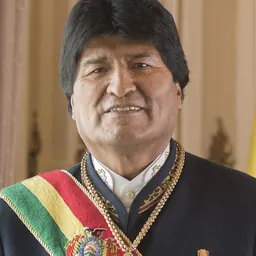
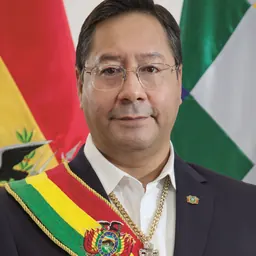
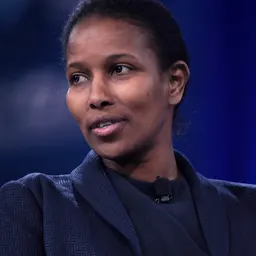
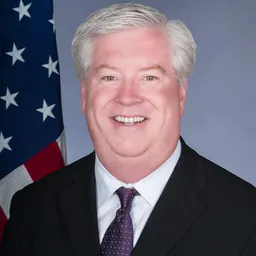
Related people
Same field, nearest in time


Contemporaries
People whose lives overlapped Carlos Aparicio's





Frequently asked questions
Who is Carlos Aparicio?
Bolivian politician (born 1982)
When was Carlos Aparicio born?
Carlos Aparicio was born on 16 January 1982 in Juana Azurduy de Padilla Province.
What is Carlos Aparicio's occupation?
Carlos Aparicio is a politician and diplomat.
What nationality is Carlos Aparicio?
Carlos Aparicio is Bolivian.
Sources & further reading
Cite this page
APA: Biography.guide. (2026). Carlos Aparicio. https://biography.guide/carlos-aparicio/
MLA: "Carlos Aparicio." Biography.guide, https://biography.guide/carlos-aparicio/.
Chicago: "Carlos Aparicio." Biography.guide. https://biography.guide/carlos-aparicio/.
Data last updated: 2026-09-20 · Spot an error? Report a correction.
Page generated 2026-09-27 05:23 UTC