
About Carlo Geloso
Lived 1879 – 1957 (aged 77). Carlo Geloso was an Italian military personnel and military leader.
Carlo Geloso (20 August 1879 – 23 July 1957) was an Italian general during the Second World War. In 1939, he assumed command of the Italian forces in Albania. In 1940, he served as commander of the 11th Army during the Greco-Italian War. He was the commander of the Italian occupation forces in Greece from 1941 to 1943. After Italy joined the Allies, he became a German prisoner-of-war. After the German surrender, he was briefly imprisoned by the Soviets but was released in 1946.
Early life and career Born in Palermo on 20 August 1879 to Bonaventura Geloso and Fortunata Burgio di Villanova, Carlo Geloso entered the Military Academy of Artillery and Engineers of Turin on 27 October 1898. After graduation, he was commissioned as a second lieutenant of artillery on 26 August 1901 and continued his studies at the Application School of Artillery and Engineers at Turin. He graduated in 1903 and being promoted to lieutenant on 11 August.
At the same time, Geloso's relations with the Germans became increasingly strained, as he jealously guarded the Italian prerogatives in Greece against German encroachments, particularly after the appointment of Colonel-General Alexander Löhr as the German Commander-in-chief Southeast in December 1942. The appointment came as a result of the worsening situation on the North African Front, which made an Allied landing in Greece increasingly likely. The Germans, who did not trust the Italians' ability to withstand such an attack, began moving more of their own troops into Greece, sought to supplant the Italians in certain strategic areas including Athens and the Athens–Thessaloniki railway and justified the move by thereby making additional Italian troops available to defend western Greece. Geloso vehemently refused to consider that and, in a later meeting, counter proposed for any additional German forces in Greece to be placed under his command. With the backing of the Italian high command, the situation remained unresolved, with Geloso even proposing setting up an "Army Group East" under his command, comprising all Italian forces in the occupied areas of the Balkans, as a counterpart bans counterweight to Löhr's command, with himself at its head.
Despite being highly praised by the chief of the Italian General Staff, Ugo Cavallero, as "perhaps the best of our generals, technically prepared, energetic and tactful", Geloso was dismissed on 3 May and placed under the disposition of the Ministry of War. The likely reason was his final disagreement with Löhr in a meeting a few days earlier. Löhr demanded from the Italians a series of measures to curb the growing Greek Resistance, including the arrest of the officers of the Greek army, the confiscation of all radios and the handover of all Jews in the Italian zone to German control. An Italian investigation, headed by Admiral Domenico Cavagnari, into his tenure in Greece ended up absolving him of all charges brought against him for malpractice and corruption.
Imprisonment and release On 20 June 1943, he was placed in the reserve because of his advanced age but was recalled to service attached to the Ministry of War. In the days before the Italian armistice, he was placed in command of the troops intended to defend Rome, but he never actually exercised a field command. He was captured by the Germans on 23 September and sent to an officers' camp at Schokken. He was liberated by the arrival of Red Army troops, sent to Kharkov, and thence returned to Italy on 9 October 1945. During his imprisonment, Geloso wrote to Graziani, the Minister of War in the Italian Social Republic (RSI), asking for his intervention to secure his release; but, appeared not to have joined the RSI. On his return to Italy, he was asked to compile a series of memoranda on his fellow prisoners and their behaviour in captivity.
Later life He was placed on leave on 1 February 1946 but was recalled to temporary service from 27 April to 30 June 1947. On 28 May 1947, the Italian monarchy having been abolished the previous year he swore an oath of loyalty to the new Italian Republic. On 1 May 1954, he was placed in permanent leave because of his advanced age. He died at Rome on 23 July 1957.
Don’t just read it —
keep it.
Full-length biographies made to live with: read them, listen on the way to work, watch them tonight.
- E-book
- Audio
- Video
Instant download · yours to keep · every purchase keeps this site free
Important facts
People in Carlo Geloso's life
Named in this biography and alive at the same time
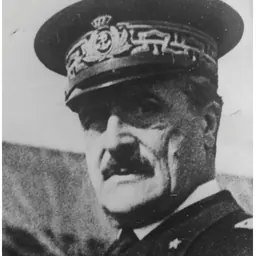
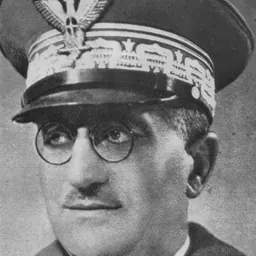
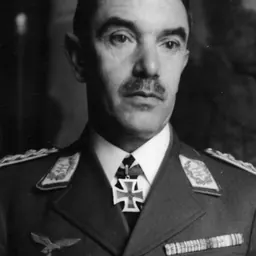
Related people
Same field, nearest in time
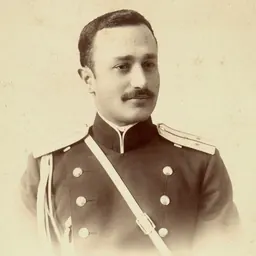





Contemporaries
People whose lives overlapped Carlo Geloso's






Frequently asked questions
Who was Carlo Geloso?
Italian general (1879–1957)
When was Carlo Geloso born?
Carlo Geloso was born on 20 August 1879 in Palermo.
When did Carlo Geloso die?
Carlo Geloso died on 25 July 1957 in Rome.
What was Carlo Geloso's occupation?
Carlo Geloso was a military personnel and military leader.
What nationality was Carlo Geloso?
Carlo Geloso was Italian.
Sources & further reading
Cite this page
APA: Biography.guide. (2026). Carlo Geloso. https://biography.guide/carlo-geloso/
MLA: "Carlo Geloso." Biography.guide, https://biography.guide/carlo-geloso/.
Chicago: "Carlo Geloso." Biography.guide. https://biography.guide/carlo-geloso/.
Data last updated: 2026-09-20 · Spot an error? Report a correction.
Page generated 2026-09-27 05:18 UTC