
About Carl Wiman
Lived 1867 – 1944 (aged 77). Carl Wiman was a Swedish paleontologist, university teacher and geologist.
Carl Johan Josef Ernst Wiman (March 10, 1867 – June 15, 1944) was a Swedish palaeontologist, the first professor of palaeontology and historical geology at Uppsala University, and the father of Swedish vertebrate palaeontology.
Wiman was instrumental in the construction of the Palaeontological Museum of Uppsala University (now part of the Museum of Evolution), which contains the largest collection of Chinese fossil vertebrate material outside China. and the species Pentaceratops fenestratus and Parasaurolophus tubicen. He was also the first to suggest that the hollow cranial crests of lambeosaurine duckbill dinosaurs could be used as a horn-like noisemaker. located on Husby-Odensala, Stockholm. Wiman's father was a Swedish army captain and Märsta's station-master between 1866 and 1879. Wiman's mother was from Aachen, the daughter of a wealthy Catholic pharmaceutical chemist.
In 1896 Wiman was made lecturer of palaeontology and pre-Quaternary historical geology by his PhD advisor, now professor, Arvid Högbom, who preferred to devote his time to other scientific endeavors. Nevertheless, Högbom constantly sought for Wiman's success, and actively promoted the project of an independent professorship in palaeontology and historical geology. This would later prove successful, with Wiman's obtaining a personal professorship in 1911, and finally a chaired professorship in 1922.
Wiman sent a few of his students, namely Otto Zdansky, Birger Bohlin, Torsten J. Ringström and Erik Stensiö from Sweden, as well as non-Swedish scientists such as Max Schlosser and Arthur T. Hopwood. Collectively, between 1919 and 1923, they sent back to Uppsala 783 boxes of Chinese fossils. Some fossils of international interest were four teeth of Peking Man.
Palaeontological Museum Back in Uppsala there were no single facilities that could hold the amount of material pouring in from China. The fossils were consequently stored in five facilities spread over the town.
A detailed proposal and budget was put forward in June 1926 to the administration of Uppsala University, urging for the construction of a new museum building. Wiman claimed that the fossil collections were on a par with those of the foremost museums in Europe, and therefore rightly deserved a proper museum building in which to house them. By influence of his friend Lagrelius, who discussed the matter with Crown Prince Gustaf VI Adolf, a memorandum was sent to the Prime Minister. The proposal was approved by the government in 1929, and 791 000 SEK were allocated to the construction of Carl Wiman's palaeontological museum. Unfortunately, the assigned budget made Wiman reduce the scope of his project, but still he enthusiastically hailed it in the press, calling it a "temple to the fossils". The museum finished construction in 1931.
Later life Carl Wiman studying Cenozoic mammals from the Lagrelius Collection, July 1938. Wiman eventually retired from academic life one year after his museum's completion at age 65. During that time he oversaw the installation of the exhibits and the storing of all dispersed collections. Wiman would continue to work and supervise the running of the museum until a week before his death on 6 June 1944. Wiman's only female student, Elsa Warburg, the first female palaeontologist in Sweden, informally administered the institute in the interval immediately following Wiman’s death.
Don’t just read it —
keep it.
Full-length biographies made to live with: read them, listen on the way to work, watch them tonight.
- E-book
- Audio
- Video
Instant download · yours to keep · every purchase keeps this site free
Important facts
People in Carl Wiman's life
Named in this biography and alive at the same time



Related people
Same field, nearest in time

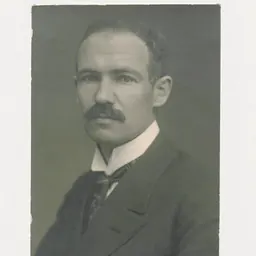
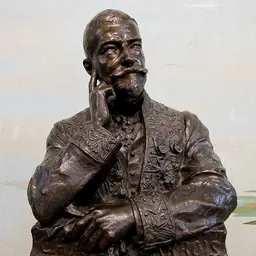
Contemporaries
People whose lives overlapped Carl Wiman's
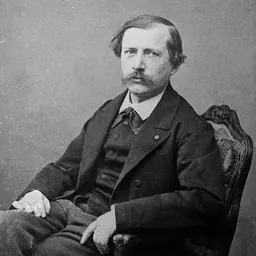
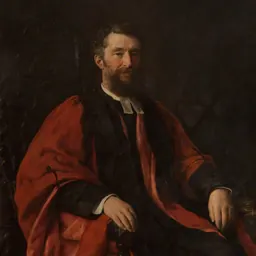

Frequently asked questions
Who was Carl Wiman?
Swedish paleontologist (1867–1944)
When was Carl Wiman born?
Carl Wiman was born on 10 March 1867 in Husby-Ärlinghundra parish, Stockholm.
When did Carl Wiman die?
Carl Wiman died on 15 June 1944 in Uppsala Cathedral Assembly, Uppsala.
What was Carl Wiman's occupation?
Carl Wiman was a paleontologist, university teacher and geologist.
What nationality was Carl Wiman?
Carl Wiman was Swedish.
Sources & further reading
Cite this page
APA: Biography.guide. (2026). Carl Wiman. https://biography.guide/carl-wiman/
MLA: "Carl Wiman." Biography.guide, https://biography.guide/carl-wiman/.
Chicago: "Carl Wiman." Biography.guide. https://biography.guide/carl-wiman/.
Data last updated: 2026-09-25 · Spot an error? Report a correction.
Page generated 2026-09-27 05:13 UTC