
About Erik Stensiö
Lived 1891 – 1984 (aged 92). Erik Stensiö was a Swedish paleontologist and zoologist.
Prof Erik Helge Osvald Stensiö HFRSE (2 October 1891 – 11 January 1984), né Andersson, was an influential Swedish paleozoologist and founder of the so-called "Stockholm School"
He received his Ph.D. and a docentship in paleontology from Uppsala University in 1921 and became professor and keeper at the Zoopaleontological (later called the Paleozoological) department of the Swedish Museum of Natural History in Stockholm in 1923, a position he held until his retirement in 1959.
Stensiö specialized in the anatomy and evolution of "lower" vertebrates. His studies of placoderms showed them to be related to modern sharks (though, now, placoderms are considered to be the sister group of all jawed vertebrates, in addition to sharks). His first major work, Triassic fishes from Spitzbergen (part I: Vienna 1921; part II: Stockholm 1925), was based on material collected during his expeditions to Spitzbergen in 1912, 1913, 1915 and 1916. For his work, The Downtonian and Devonian Vertebrates of Spitzbergen, Part I, Stensiö was awarded the Daniel Giraud Elliot Medal from the National Academy of Sciences in 1926.
In 1917 he changed his name from Andersson to Stensiö, adopting the name of his home-town.
He founded the so-called "Stockholm School" in paleozoology, continued notably by his successors in the professorship, Erik Jarvik and Tor Ørvig.
Stensiö was a member of the Royal Swedish Academy of Sciences from 1927 and was elected a Foreign Member of the Royal Society in 1946. He received the Wollaston Medal in 1953, and the Linnean Medal of the Linnean Society of London in 1957. He was awarded the Linnean Society of London's prestigious Darwin-Wallace Medal in 1958.
He died on 11 January 1984 at the Danderyd Hospital in Stockholm.
Family He was married to Aina Laurell.
Legacy Stensiö named several genera of prehistoric vertebrates:
"Acidorhynchus" (=Saurorhynchus) Acrorhabdus Axelia Birgeria Boreaspis Boreosomus Braunosteus Broughia Buchanosteus Dictyonosteus Diplocercides Dobrowlania Endeiolepis "Glaucolepis" (=Pteronisculus) Helmolepis Kujdanowiaspis Laugia Meridensia Millerosteus Mylacanthus Ospia Sassenia Scleracanthus Sinamia Tapinosteus Walterosteus Wimania (="Leioderma")
He also named several higher taxa of prehistoric vertebrates:
Aspinothoracidi Bobasatraniidae Coccosteomorphi Colobodontidae Dunkleosteidae Laugiidae Endeiolepididae Pachyosteomorphi Parasemionotidae (="Ospiidae") Phyllolepida Zenaspidida Zenaspididae
The Devonian placoderm fish Stensioella and the Triassic actinopterygian fish Stensionotus are named in his honour.
Stensöfjellet, a mountain in Sassendalen (Spitsbergen, Svalbard), is named after him.
Selected publications
Don’t just read it —
keep it.
Full-length biographies made to live with: read them, listen on the way to work, watch them tonight.
- E-book
- Audio
- Video
Instant download · yours to keep · every purchase keeps this site free
Important facts
People in Erik Stensiö's life
Named in this biography and alive at the same time
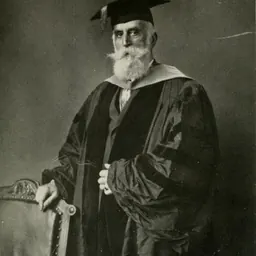


Related people
Same field, nearest in time


Contemporaries
People whose lives overlapped Erik Stensiö's





Frequently asked questions
Who was Erik Stensiö?
Swedish ichthyologist (1891–1984)
When was Erik Stensiö born?
Erik Stensiö was born on 2 October 1891 in Oskarshamn.
When did Erik Stensiö die?
Erik Stensiö died on 11 January 1984 in Stockholm.
What was Erik Stensiö's occupation?
Erik Stensiö was a paleontologist and zoologist.
What nationality was Erik Stensiö?
Erik Stensiö was Swedish.
Sources & further reading
Cite this page
APA: Biography.guide. (2026). Erik Stensiö. https://biography.guide/erik-stensio/
MLA: "Erik Stensiö." Biography.guide, https://biography.guide/erik-stensio/.
Chicago: "Erik Stensiö." Biography.guide. https://biography.guide/erik-stensio/.
Data last updated: 2026-09-20 · Spot an error? Report a correction.
Page generated 2026-09-27 05:24 UTC