
About Carl von Weinberg
Lived 1861 – 1943 (aged 81). Carl von Weinberg was a chemist, entrepreneur and art collector.
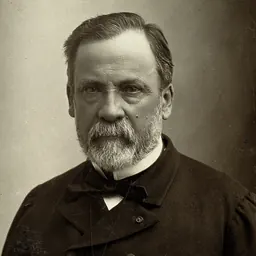
Carl von Weinberg (born September 14, 1861, in Frankfurt am Main; died March 14, 1943, near Florence, Italy) was a German Jewish chemist, entrepreneur, patron of the arts and philanthropist. He one of the founders of IG Farben.
Life
Carl and his brother Arthur von Weinberg, who was one year older, came from a Jewish merchant family; their father was Bernhard Weinberg. In 1880, both brothers were baptized as Protestants. Carl completed a commercial apprenticeship and in 1882, at the age of 21, like his brother, became a partner in the Leopold Cassella & Co. company, which in 1894 merged with the Frankfurt aniline dye factory founded by his uncle Leo Gans and subsequently achieved world fame as Cassella Farbwerke Mainkur in the manufacture of synthetic dyes.
Weinberg married Ethel Mary Villiers Forbes, known as May, born in Plymouth in 1866, said to be a member of the family of the Earl of Granard. In 1898, they settled in Niederrad. Weinberg had the Villa Waldfried built in an English country house style by the architects Aage von Kauffmann and Otto Bäppler. This villa had around one hundred rooms, providing space for the couple's important art collections of over 700 objects.
In 1897, one year before they moved into the new house, their longed-for daughter Wera was born. She later married Richard von Szilvinyi and died on April 9, 1943, in London. May von Weinberg was famous in Frankfurt as a philanthropist.
A private chapel was established in the house for May, who was a Roman Catholic. Later, the Niederrad chaplain Georg Nilges celebrated Sunday services in this chapel. Carl von Weinberg donated a considerable amount for the Niederräder parish Mother of Good Counsel for the construction of a new church.
The house was destroyed in the Allied air raids on Frankfurt am Main in World War II. A Florentine Italian Renaissance fountain which was at the house survived and has stood since 1952 in the garden of the Nebbienschen Gartenhaus, an artists' meeting place in the Bockenheimer Anlage in downtown Frankfurt. In 1908, the Weinberg brothers were ennobled, which had the effect of adding the word "von" to their names.
German delegation to the 1919 Versailles peace negotiations In 1919, Carl von Weinberg was a member of the German delegation to Paris for negotiations for the Treatry of Versailles. In 1924, he took part in the negotiations on German reparations in London, which resulted in the Dawes Plan. In 1925, the Weinberg brothers led Cassella-Farbwerke into a merger to form IG Farbenindustrie AG, commonly known as IG Farben, where they both served as supervisory and administrative board members.
Together with his brother, Carl von Weinberg donated to various institutions, including the University of Frankfurt. In 1921, the Carl von Weinberg School was built in Schwanheim with his support and was named for him. The founding of the Frankfurt Polo Club in 1913 and the polo grounds can also be traced back to his initiative. He also founded the Waldfried stud farm, which became known far beyond the borders of his hometown.
In 1937 his wife May died, she was buried in the vineyard chapel of the Niederräder church "Mutter vom Guten Rat". Large parts of her estate went to this parish, some parts were given to the former Niederrad chaplain Georg Nilges, who since 1929 was pastor in the newly built Holy Cross Church in Frankfurt-Bornheim in the Bornheimer Hang housing estate.
The Frankfurt artist Lina von Schauroth, a close friend of the Weinbergs, managed to bring the four stained glass windows she had created in the private chapel of Villa Waldfried to safety, after the former owner of the house had fled. During the war, they were kept in the Limburg Cathedral Museum, and in 1951, at the instigation of the Protestant Synod, they were installed in the nave of the Old St. Nicholas Church, near Frankfurt's Römer. The "Ascending Christ" window on the west side has this inscription: The glass windows come from the chapel in Waldfried. Carl von Weinberg donated them in memory of his wife May (née Forbes).
After the expropriation of his property, Carl von Weinberg, widowed since 1937, went into exile to live with his sister and her family in Italy. His sister was married to Count Paolozzi of Chiusi. On March 14, 1943, he died near Florence, six days before his brother Arthur died in the Theresienstadt Ghetto. Carl von Weinberg was buried in the cemetery of Chiusi, in the grave of his sister's family.
Awards In 1927, Weinberg was awarded an honorary doctorate by the Goethe University of Frankfurt. In 1928, he was awarded the silver plaque of the city of Frankfurt.
After 1945, all name changes were reversed. In addition to the Carl von Weinberg School and Carl von Weinberg Street in Frankfurt's West End, a park with his bust on the grounds of the former Villa Waldfried in Frankfurt-Niederrad commemorates the patron and supporter of Frankfurt
Literature Ernst Mack: Die Frankfurter Familie von Weinberg. Im Zeichen der Kornblumenblüten. Heimat- und Geschichtsverein Schwanheim e. V., Schwanheim 2000, ISBN 3-921606-55-1. Angela von Gans, Monika Groening: Die Familie Gans 1350-1963. Verlag Regionalkultur, Heidelberg 2006, ISBN 3-89735-486-1. Helene von Schauroth (Hrsg.): Lina v. Schauroth. Eine Frankfurter Künstlerin. Verlag Waldemar Kramer, Frankfurt am Main 1984, ISBN 3-7829-0291-2. Hansjörg W. Vollmann: Cassella und ihre Eigentümer. Große Frankfurter Mäzene. Vortrag im Rahmen der Reihe „Mäzene, Stifter, Stadtkultur“ der Frankfurter Bürgerstiftung am Mittwoch, 23. Januar 2013, 19.30 Uhr, Veranstaltungsort: Haus am Dom, Frankfurt, Bad Soden am Taunus, 23. Januar 2013, Vortrag als PDF, retrieved: 3.
Don’t just read it —
keep it.
Full-length biographies made to live with: read them, listen on the way to work, watch them tonight.
- E-book
- Audio
- Video
Instant download · yours to keep · every purchase keeps this site free
Important facts
People in Carl von Weinberg's life
Named in this biography and alive at the same time

Related people
Same field, nearest in time



Contemporaries
People whose lives overlapped Carl von Weinberg's

Frequently asked questions
Who was Carl von Weinberg?
German chemist and art collector (1861-1943)
When was Carl von Weinberg born?
Carl von Weinberg was born on 14 September 1861 in Frankfurt.
When did Carl von Weinberg die?
Carl von Weinberg died on 14 March 1943 in Rome.
What was Carl von Weinberg's occupation?
Carl von Weinberg was a chemist, entrepreneur and art collector.
What nationality was Carl von Weinberg?
Carl von Weinberg's recorded nationality: German Reich.
Sources & further reading
· Wikipedia: Carl von Weinberg
Cite this page
APA: Biography.guide. (2026). Carl von Weinberg. https://biography.guide/carl-von-weinberg/
MLA: "Carl von Weinberg." Biography.guide, https://biography.guide/carl-von-weinberg/.
Chicago: "Carl von Weinberg." Biography.guide. https://biography.guide/carl-von-weinberg/.
Data last updated: 2026-09-20 · Spot an error? Report a correction.
Page generated 2026-09-27 05:20 UTC