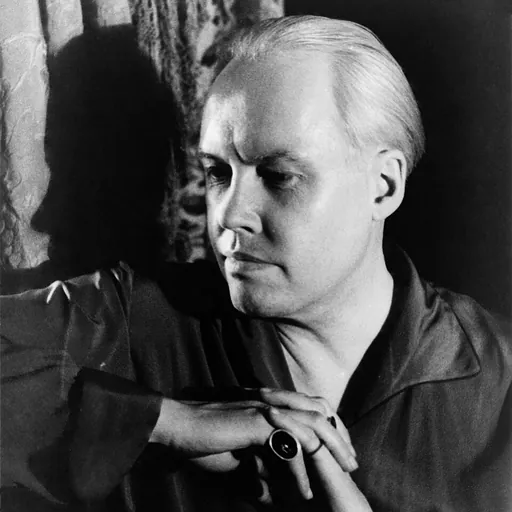
About Carl Van Vechten
Lived 1880 – 1964 (aged 84). Carl Van Vechten was an American writer, photographer, screenwriter and novelist.
Carl Van Vechten (; June 17, 1880 – December 21, 1964) was an American writer and artistic photographer who was a patron of the Harlem Renaissance and the literary executor of Gertrude Stein. He gained fame as a writer, and notoriety as well, for his 1926 novel Nigger Heaven. In his later years, he took up photography and took many portraits of notable people. Although he was married to women for most of his adult years, Van Vechten engaged in numerous affairs with men during his lifetime.
Life and career Born in Cedar Rapids, Iowa, he was the youngest child of Charles Duane Van Vechten and Ada Amanda Van Vechten ( Fitch). Both of his parents were well educated. His father was a wealthy, prominent banker. His mother established the Cedar Rapids Public Library and had great musical talent. As a child, Van Vechten developed a passion for music and theatre. He graduated from Washington High School in 1898.
After high school, Van Vechten was eager to take the next steps in his life but found it difficult to pursue his passions in Iowa. He described his hometown as "that unloved town". To advance his education, he decided in 1899 to study at the University of Chicago, His interest in opera had him take a leave of absence from the paper in 1907 to travel to Europe and explore opera. They continued corresponding for the remainder of Stein's life, and, at her death, she appointed Van Vechten her literary executor; he helped to bring into print her unpublished writings.
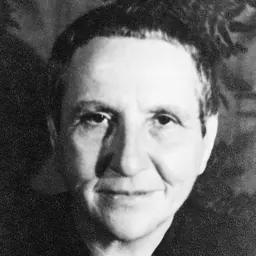
Van Vechten wrote a piece called "How to Read Gertrude Stein" for the arts magazine The Trend. In his piece, Van Vechten attempted to demystify Stein and bring clarity to her works. Van Vechten came to the conclusion that Stein can be best understood when one has been guided through her work by an "expert insider". He writes that "special writers require special readers".
The marriage to Anna Snyder ended in divorce in 1912, and he wed actress Fania Marinoff in 1914. Van Vechten and Marinoff were known for ignoring the social separation of races during the times and for inviting black people to their home for social gatherings. They were also known to attend public gatherings for black people and to visit black friends in their homes.
Van Vechten is depicted in Asbury Park South, 1920 painting by Jazz Age artist Florine Stettheimer. Amid a summer crowd in Asbury Park, the artist is under a green parasol, several of her friends are also recognizable. Van Vechten stands on the elevated structure left (black suit), Avery Hopwood (white suit, right side) talks with a woman in a yellow dress, and the Swiss painter Paul Thévanaz (red bathing suit) bends over a camera. Artist Marcel Duchamp (pink suit) walks with Van Vechten's wife, the actress Fania Marinoff.
Although Van Vechten's marriage to Fania Marinoff lasted for 50 years, they often argued about Van Vechten's affairs with men.
Several books of Van Vechten's essays on various subjects, such as music and literature, were published between 1915 and 1920, and Van Vechten also served as an informal scout for the newly formed Alfred A. Knopf. Between 1922 and 1930, Knopf published seven novels by him, starting with Peter Whiffle: His Life and Works and ending with Parties. His sexuality is most clearly reflected in his intensely homoerotic portraits of working-class men.
As an appreciator of the arts, Van Vechten was extremely intrigued by the explosion of creativity that was occurring in Harlem. He was drawn towards the tolerance of Harlem society and the excitement it generated among black writers and artists. He also felt most accepted there as a gay man. Van Vechten promoted many of the major figures of the Harlem Renaissance, including Paul Robeson, Langston Hughes, Ethel Waters, Richard Wright, Zora Neale Hurston, and Wallace Thurman. Van Vechten's controversial novel Nigger Heaven
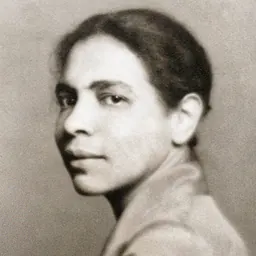
In Harlem, Van Vechten often attended operas and cabarets. He was credited for the surge in white interest in Harlem nightlife and culture as well as involved in helping well-respected writers such as Langston Hughes and Nella Larsen to find publishers for their early works.
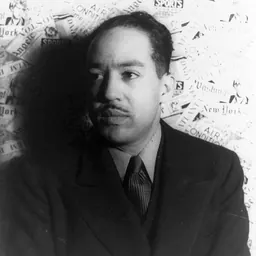
In 2001, Emily Bernard published Remember Me to Harlem, a collection of letters that documents the long friendship between Van Vechten and Langston Hughes, who publicly defended Nigger Heaven.
By 1930, at the age of 50, Van Vechten was finished with writing and took up photography, using his apartment at 150 West 55th Street as a studio, where he photographed many notable people.
Van Vechten died in 1964 at the age of 84 in New York City. His ashes were scattered over the Shakespeare garden in Central Park. He was the subject of a 1968 biography by Bruce Kellner, Carl Van Vechten and the Irreverent Decades, as well as Edward White's 2014 biography, The Tastemaker: Carl Van Vechten and the Birth of Modern America.
Works At the age of 40, Van Vechten wrote the book Peter Whiffle (1922), which established him as a respected novelist. This novel was recognized as contemporary and an important work to the collection of Harlem Renaissance history. In his novel, autobiographical facts were arranged into a fictional form. In addition to Peter Whiffle, Van Vechten wrote several other novels. One is The Tattooed Countess (1924), a disguised manipulation of his memories of growing up in Cedar Rapids.
One of his more controversial novels, Nigger Heaven (1926), was received with both controversy and praise. Van Vechten called this book "my Negro novel". He intended for this novel to depict how African Americans were living in Harlem and not about the suffering of Black people in the South who were dealing with racism and lynchings. Although many encouraged Van Vechten to reconsider giving his novel such a controversial name, he could not resist having an incendiary title. Some worried that his title would take away from the content of the book. In one letter, his father also cautioned him: "Whatever you may be compelled to say in the book," he wrote, "your present title will not be understood & I feel certain you should change it."
Many black readers were divided over how the novel depicted African Americans. Some felt that it depicted black people as "alien and strange", and others valued the novel for its representation of African Americans as everyday people, with complexity and flaws just like typical white characters. The novel's supporters included Nella Larsen, Langston Hughes, and Gertrude Stein, who all defended the novel for bringing Harlem society and racial issues to the forefront of America.
His supporters also sent him letters to voice their opinions of the novel. Alain Locke sent Van Vechten a letter from Berlin citing his novel Nigger Heaven and the excitement surrounding its release as his primary reason for making an imminent return home. Gertrude Stein sent Van Vechten a letter from France writing that the novel was the best thing he had ever written. Stein also played an important role in the development of the novel.
The Library of Congress has a collection of approximately 1,400 photographs which it acquired in 1966 from Saul Mauriber (May 21, 1915 – February 12, 2003). There is also a collection of Van Vechten's photographs in the Prentiss Taylor collection in the Smithsonian's Archives of American Art, and a Van Vechten collection at Fisk University. The Museum of the City of New York's collection includes 2,174 of Van Vechten's photographs. Brandeis University's department of Archives & Special Collections holds 1,689 Carl Van Vechten portraits. Van Vechten also donated materials to Fisk University to form the George Gershwin Memorial Collection of Music and Musical Literature. Joan Miró, and Frida Kahlo; and countless other actors, musicians, and cultural figures. Also included in the Mark Lutz gift is an extensive body of photographs Van Vechten took at the 1939 New York World's Fair as well as a large number of photographs depicting scenes across Western Europe and Northern Africa taken during Van Vechten's travels in 1935–1936.
In 1980, concerned that Van Vechten's fragile 35 mm nitrate negatives were fast deteriorating, photographer Richard Benson, in conjunction with the Eakins Press Foundation, transformed 50 of the portraits into handmade gravure prints. The album 'O, Write My Name': American Portraits, Harlem Heroes was completed in 1983. That year, the National Endowment for the Arts transferred the Eakins Press Foundation's prototype albums to the permanent collection of the Smithsonian American Art Museum.
The National Portrait Gallery, London, holds 17 of Van Vechten's portraits of leading creative talents of his era.
More than 3,000 Van Vechten portraits, most of which come from the Library of Congress collection, are included in Wikimedia Commons. His public domain photographs illustrate countless Wikipedia entries on mid-century (mostly American) notables. See examples in the gallery below.
Carl Van Vechten Papers. Yale Collection of American Literature, Beinecke Rare Book and Manuscript Library. Carl Van Vechten Papers Relating to African American Arts and Letters. James Weldon Johnson Collection in the Yale Collection of American Literature, Beinecke Rare Book and Manuscript Library. Guide to the Carl Van Vechten papers, 1833–1965. Manuscripts and Archives, New York Public Library. Carl Van Vechten collection of papers, 1911–1964. Berg Collection of English and American Literature, New York Public Library. Carl Van Vechten theatre photographs, 1932–1943, held by the Billy Rose Theatre Division at the New York Public Library for the Performing Arts at Brandeis University's Archives & Special Collections, contains 1,689 Van Vechten portraits. Images by Carl Van Vechten in the Collections of the Museum of the City of New York Living Portraits: Carl Van Vechten's Color Photographs of African Americans, 1939–1964, Beinecke Rare Book and Manuscript Library at Yale University, features a searchable database of 1,884 rare color Kodachrome slides Portraits by Carl Van Vechten at the National Portrait Gallery, London Creative Americans: Portraits by Carl Van Vechten at the Library of Congress Carl Van Vechten's Portraits from the collection of the Beinecke Rare Book and Manuscript Library at Yale University: more than 9,000 black-and-white prints Postcards from Manhattan: The Portrait Photography of Carl Van Vechten at Marquette University: hundreds of portrait postcards sent by Van Vechten to Wisconsin artist Karl Priebe from 1946 to 1956. Guide to the Carl Van Vechten Photograph Collection 1932–1956 at the University of Chicago Special Collections Research Center The Rose McClendon Memorial Collection of Photographs of Celebrated Negroes by Carl Van Vechten at the Moorland-Spingarn Research Center at Howard University, Washington, D.C. Carl Van Vechten Papers at the Moorland-Spingarn Research Center at Howard University, Washington, D.C.
Gallery
Don’t just read it —
keep it.
Full-length biographies made to live with: read them, listen on the way to work, watch them tonight.
- E-book
- Audio
- Video
Instant download · yours to keep · every purchase keeps this site free
Important facts
Family & relationships
People in Carl Van Vechten's life
Named in this biography and alive at the same time

Related people
Same field, nearest in time





Contemporaries
People whose lives overlapped Carl Van Vechten's




Frequently asked questions
Who was Carl Van Vechten?
American writer and photographer (1880–1964)
When was Carl Van Vechten born?
Carl Van Vechten was born on 17 June 1880 in Cedar Rapids.
When did Carl Van Vechten die?
Carl Van Vechten died on 21 December 1964 in New York City.
What was Carl Van Vechten's occupation?
Carl Van Vechten was a writer, photographer, screenwriter and novelist.
What nationality was Carl Van Vechten?
Carl Van Vechten was American.
Sources & further reading
Cite this page
APA: Biography.guide. (2026). Carl Van Vechten. https://biography.guide/carl-van-vechten/
MLA: "Carl Van Vechten." Biography.guide, https://biography.guide/carl-van-vechten/.
Chicago: "Carl Van Vechten." Biography.guide. https://biography.guide/carl-van-vechten/.
Data last updated: 2026-09-22 · Spot an error? Report a correction.
Portrait: Wikimedia Commons · author & licence
Page generated 2026-09-27 05:04 UTC