
About Carl Ludwig Wimmel
Lived 1786 – 1845 (aged 58–59). Carl Ludwig Wimmel was a German architect.
Carl Ludwig Wimmel (23 January 1786 – 16 February 1845) was a German architect and Hamburg's first building director. His classicist buildings had a decisive influence on the cityscape of Hamburg in the 19th century; his best-known surviving buildings include the Hamburg Stock Exchange and the hospital in St. Georg.
Biography St. Georg Hospital (around 1900). In the foreground the bright buildings by Wimmel can be seen. The rear buildings are by Carl Johann Christian Zimmermann.
Wimmel was born the son of a stonemason. Early on he came into contact with architects and sculptors such as Karl Friedrich Schinkel, Christian Daniel Rauch and Johann Gottfried Schadow. Wimmel initially trained as a carpenter. From 1807 he took part in free courses of the Patriotic Society to further his education. He received a scholarship which enabled him to study at the École polytechnique in Paris. After completing his studies in 1810, he travelled through Italy for four years. There he studied the architecture of antiquity and the Renaissance and made numerous sketches and studies.
In 1815 he won the tender for the construction of a hospital in the district of St. Georg, Hamburg. In 1816 he joined the civil service and realised numerous public buildings, which still characterise the cityscape today. After he was financially secured by the public office, he soon acquired Hamburg citizenship. He married Johanna Juliana Sophie Frercks, the daughter of a Hamburg notary. The couple had seven children. After a reform of the municipal building administration, he was appointed Hamburg's first building director. Wimmel died in 1845. Many of his buildings fell victim to the Great Fire of 1842, were demolished, or destroyed in the Second World War.
A collective tombstone in the area of the Old Hamburg Memorial Cemetery on the Ohlsdorf Cemetery commemorates important architects, including Wimmel.
Notable works 1815: Monument of the expelled Hamburgers 1817: Dammtor 1818: Steintor and Alte Wache in St. Georg 1819: Guardhouse at Millerntor 1819–1820: St. Pauli Church 1820–1823: General hospital St. Georg 1826–1827: City theatre on Dammtorstraße (today Hamburg State Opera) 1827: Lombard Bridge 1834–1837: St. Johannis Monastery 1837–1840: Johanneum at the Domplatz 1837–1841: Hamburg Stock Exchange (with Franz Gustav Forsmann) 1840–1841: Schlachthof Hamburg
Gallery
Don’t just read it —
keep it.
Full-length biographies made to live with: read them, listen on the way to work, watch them tonight.
- E-book
- Audio
- Video
Instant download · yours to keep · every purchase keeps this site free
Important facts
People in Carl Ludwig Wimmel's life
Named in this biography and alive at the same time
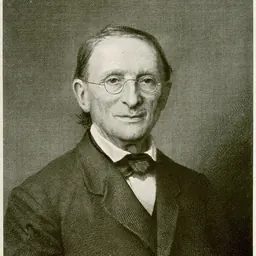
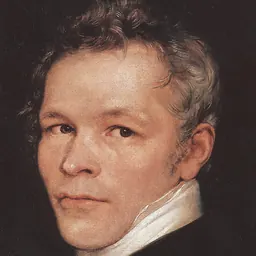
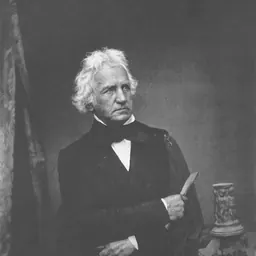

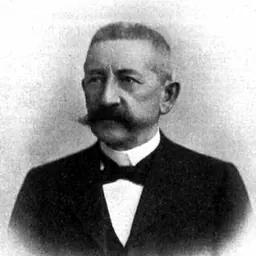
Related people
Same field, nearest in time



Contemporaries
People whose lives overlapped Carl Ludwig Wimmel's


Frequently asked questions
Who was Carl Ludwig Wimmel?
German architect
When was Carl Ludwig Wimmel born?
Carl Ludwig Wimmel was born on 23 January 1786 in Berlin.
When did Carl Ludwig Wimmel die?
Carl Ludwig Wimmel died in 1845 in Hamburg.
What was Carl Ludwig Wimmel's occupation?
Carl Ludwig Wimmel was an architect.
What nationality was Carl Ludwig Wimmel?
Carl Ludwig Wimmel was German.
Sources & further reading
· Wikipedia: Carl Ludwig Wimmel
Cite this page
APA: Biography.guide. (2026). Carl Ludwig Wimmel. https://biography.guide/carl-ludwig-wimmel/
MLA: "Carl Ludwig Wimmel." Biography.guide, https://biography.guide/carl-ludwig-wimmel/.
Chicago: "Carl Ludwig Wimmel." Biography.guide. https://biography.guide/carl-ludwig-wimmel/.
Data last updated: 2026-09-20 · Spot an error? Report a correction.
Page generated 2026-09-27 05:22 UTC