
About Carl Hindenburg
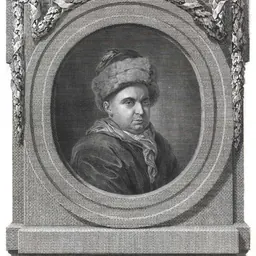
Lived 1741 – 1808 (aged 66). Carl Hindenburg was a German mathematician, university teacher, physicist, combinatorialist and philosopher.
Carl Friedrich Hindenburg (13 July 1741 – 17 March 1808) was a German mathematician born in Dresden. His work centered mostly on combinatorics and probability.
Education Hindenburg did not attend school but was educated at home by a private tutor as arranged by his merchant father. He went to the University of Leipzig in 1757 and took courses in medicine, philosophy, Latin, Greek, physics, mathematics, and aesthetics. Hindenburg later published on philology in 1763 and 1769.
Research contributions Hindenburg's first published mathematical publication, Beschreibung einer ganz neuen Art, nach einem bekannten Gesetze fortgehende Zahlen, durch Abzahlen oder Abmessen bequem und sicher zu finden, originated as a project to extend then-existing prime tables up to 5 million. In the book, he mechanically realizes, independent of the work done by Felkel, the sieve of Eratosthenes, which he then proceeds with rules to both optimize and organize. The book also contained results in linear diophantine analysis, decimal periods, combinations, and gave combinatorial significance to the digits of numbers written in decimal notation.
In 1778, he started publishing a series of works on combinatorics, particularly on probability, series and formulae for higher differentials. He worked on a generalization of the binomial theorem and was a major influence in Gudermann's work on the expansion of functions into power series.
Editorial work Hindenburg co-founded the first German mathematical journals. Between 1780 and 1800, he was involved at different times with the publishing of four different journals all relating to mathematics and its applications. Two of the journals, the Leipziger Magazin für reine und angewandte Mathematik (1786–1789) and the Archiv für reine und angewandte Mathematik (1795–1799), published Johann Heinrich Lambert's Nachlass as edited by Johann Bernoulli. In 1796, he edited the Sammlung combinatorisch-analytischer Abhandlungen, which contained a claim that de Moivre's multinomial theorem was “the most important proposition in all of mathematical analysis”. Another student, Johann Karl Burckhardt published the book Theorie der Kettenbrüche after being encouraged by Hindenburg to work on continued fractions. He also influenced Christian Kramp's work in combinatorics.
Don’t just read it —
keep it.
Full-length biographies made to live with: read them, listen on the way to work, watch them tonight.
- E-book
- Audio
- Video
Instant download · yours to keep · every purchase keeps this site free
Important facts
People in Carl Hindenburg's life
Named in this biography and alive at the same time


Related people
Same field, nearest in time

Contemporaries
People whose lives overlapped Carl Hindenburg's




Frequently asked questions
Who was Carl Hindenburg?
German mathematician (1741-1808)
When was Carl Hindenburg born?
Carl Hindenburg was born on 13 July 1741 in Dresden.
When did Carl Hindenburg die?
Carl Hindenburg died on 17 March 1808 in Leipzig.
What was Carl Hindenburg's occupation?
Carl Hindenburg was a mathematician, university teacher, physicist, combinatorialist and philosopher.
What nationality was Carl Hindenburg?
Carl Hindenburg was German.
Sources & further reading
Cite this page
APA: Biography.guide. (2026). Carl Hindenburg. https://biography.guide/carl-hindenburg/
MLA: "Carl Hindenburg." Biography.guide, https://biography.guide/carl-hindenburg/.
Chicago: "Carl Hindenburg." Biography.guide. https://biography.guide/carl-hindenburg/.
Data last updated: 2026-09-20 · Spot an error? Report a correction.
Page generated 2026-09-27 05:33 UTC