
About Carl Bohm
Lived 1844 – 1920 (aged 75). Carl Bohm was a German composer, pianist and musician.
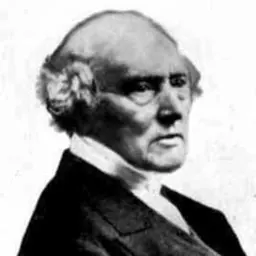
Carl Bohm (also known by Karl Bohm and his pseudonym Henry Cooper; 11 September 1844 – 4 April 1920) was a German pianist and composer.
Biography Bohm was born in 1844 in Berlin. He received training under Carl Albert Löschhorn and later became a music teacher. Bohm remained in Berlin for the majority of his life.
Legacy
Bohm is regarded as one of the leading German songwriters of the 19th century, and wrote such works as Still as the Night, Twilight, May Bells, Enfant Cheri and The Fountain.
According to the Oxford Companion to Music, Bohm was "a German composer of great fecundity and the highest salability... He occupied an important position in the musical commonwealth inasmuch as his publisher, N. Simrock, declared that the profits on his compositions provided the capital for the publication of those of Brahms." Bohm's specialty was music in a lighter vein, very different from the dark, brooding and introspective works of Brahms.
Bohm, like Schubert, was more than just a songwriter, composing in most genres. His chamber music, mostly quartets and piano trios, were popular not only amongst amateurs, but also among touring professional groups who were in need of a sure-fire audience pleaser.
Edition Silvertrust (see references) states that Bohm "was certainly very well known during his lifetime. Yet today, his name brings nothing but blank stares." This curious obscurity is borne out more than ever by the fact that Grove Dictionary of Music and Musicians contains no article about him. Nonetheless, his Sarabande in G minor remains a standard teaching piece for intermediate violinists and violists.
Selected works
Lieder (op. 326; including Nr. 27: "Still wie die Nacht“) Salon-Kompositionen (op. 327) Klaviertrio G-dur. (Forelle; op. 330 Nr.2) Perpetuo Mobile (Kleine Suite 6) Introduction and Polonaise Moto Perpetuo Hausmusik Spanischer Tanz The Fountain (op. 221) (G major) Op.99 Petit Rondeau Brillant (G major) Op.102 La Zingana - Hungarian Mazurka Op.114 No.5 Sextet From Lucia (Donizetti) Op.135 May Bells Op.213 Charge of the Uhlans - Grand Galop Militaire Op.266 If Thou Thy Heart Wilt Give Me - Melodie Op.270 Song of the Swallow Op.281 Fairy Dance Op.282 Frolic of the Butterflies - Kosender Falter Op.302 No.5 La Grace Op.305 No.b2 The Dance Queen - Polonaise Op.327 No.14 Seguidilla - Spanish Song Op.357 No.3 Brise printaniere - Polka brillante Op.357 No.4 Rosetta - Fantasie-Mazurka Op.362 No.1 Soldaten kommen (Soldiers are Coming) March Sarabande in G minor for solo violin
Notes and references
Some of the information on this page appears on the website of Edition Silvertrust but permission has been granted to copy, distribute and/or modify this document under the terms of the GNU Free Documentation License.
Don’t just read it —
keep it.
Full-length biographies made to live with: read them, listen on the way to work, watch them tonight.
- E-book
- Audio
- Video
Instant download · yours to keep · every purchase keeps this site free
Important facts
People in Carl Bohm's life
Named in this biography and alive at the same time


Related people
Same field, nearest in time

Contemporaries
People whose lives overlapped Carl Bohm's

Frequently asked questions
Who was Carl Bohm?
German composer (1844–1920)
When was Carl Bohm born?
Carl Bohm was born on 11 September 1844 in Berlin.
When did Carl Bohm die?
Carl Bohm died on 4 April 1920 in Berlin.
What was Carl Bohm's occupation?
Carl Bohm was a composer, pianist and musician.
What nationality was Carl Bohm?
Carl Bohm was German.
Sources & further reading
Cite this page
APA: Biography.guide. (2026). Carl Bohm. https://biography.guide/carl-bohm/
MLA: "Carl Bohm." Biography.guide, https://biography.guide/carl-bohm/.
Chicago: "Carl Bohm." Biography.guide. https://biography.guide/carl-bohm/.
Data last updated: 2026-09-20 · Spot an error? Report a correction.
Page generated 2026-09-27 05:28 UTC