
About Carl Auer von Welsbach
Lived 1858 – 1929 (aged 70). Carl Auer von Welsbach was an Austrian physicist, chemist and inventor, known for Lutetium, Neodymium and Praseodymium.
Lutetium and ytterbium
The rare earth element lutetium was independently discovered by three scientists at around the same time in 1907: French scientist Georges Urbain, Austrian Auer von Welsbach, and American Charles James. All three were successful in separating the substance then known as ytterbium into two new fractions. To name the newly discovered fraction, Urbain suggested the name "lutecium", for the Roman city of Lutetia that preceded Paris. Auer von Welsbach suggested the name "cassiopeium". James' work was not yet published when the others' work appeared, and he did not involve himself in subsequent disputes. Lutetium, a slight modification of Urbain's name, was eventually accepted after a long battle between Urbain and Welsbach.
A lawsuit (Wagner v. Coleman) was brought against Coleman. The company changed its formulation to use non-radioactive materials, which apparently cost less and last longer.
Metal-filament light bulb Auer von Welsbach then started work on development of metal-filament mantles, first with platinum wiring, and then osmium. Osmium is very difficult to work with, but he developed a new method, which mixed osmium oxide powder with rubber or sugar into a paste, which is then squeezed through a nozzle and fired. The paste burns away, leaving a fine wire of osmium.
Welsbach's flints consisted of pyrophoric alloys, 70% cerium and 30% iron, which when scratched or struck would give off sparks. This system remains in wide use in cigarette lighters today. In 1907 he formed Treibacher Chemische Werke GesmbH to build and market the devices.
Between 1907 and 1918, Auer von Welsbach focused on isolating preparations of actinium and thorium as by-products of radium extraction. He presented a major paper on his spectroscopic work and the separation of radioactive elements in 1922. The following photographs show scientific equipment from Auer von Welsbach's laboratory, from "Spektroskopische Methoden der analytischen Chemie" (1922).
In 2008 (150 years after his birth), Auer von Welsbach was selected as a main motif for a high-value collectors' coin: the Austrian €25 Fascination Light.
He was also depicted on postage stamps of 1936, 1954 and 2012.
Awards and honors 1900, Elliott Cresson Medal, The Franklin Institute Awards, Philadelphia, PA, USA 1901, raised to the hereditary nobility by Franz Joseph I of Austria, with the title of Freiherr Auer von Welsbach 1920, Werner von Siemens Ring 1921, Wilhelm Exner Medal, inaugural awardee, Austrian Industry Association, Austria 1988, the Welsbach Museum at Althofen was opened in April, 1998 2011, National Inventors Hall of Fame, North Canton, Ohio, USA
Don’t just read it —
keep it.
Full-length biographies made to live with: read them, listen on the way to work, watch them tonight.
- E-book
- Audio
- Video
Instant download · yours to keep · every purchase keeps this site free
Important facts
People in Carl Auer von Welsbach's life
Named in this biography and alive at the same time

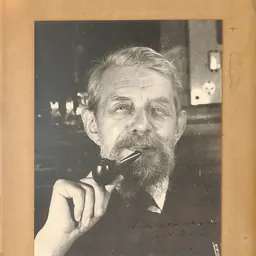
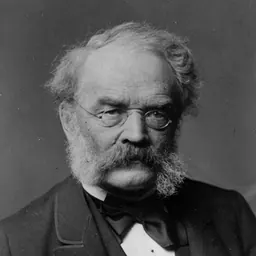


Related people
Same field, nearest in time


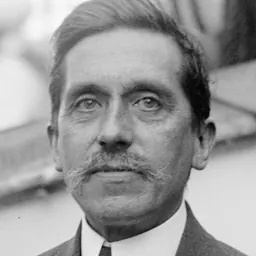

Contemporaries
People whose lives overlapped Carl Auer von Welsbach's


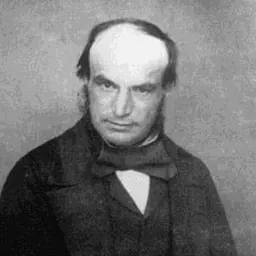
Frequently asked questions
Who was Carl Auer von Welsbach?
Austrian scientist and inventor (1858-1929)
When was Carl Auer von Welsbach born?
Carl Auer von Welsbach was born on 1 September 1858 in Vienna.
When did Carl Auer von Welsbach die?
Carl Auer von Welsbach died on 4 August 1929 in Mölbling.
What was Carl Auer von Welsbach's occupation?
Carl Auer von Welsbach was a physicist, chemist and inventor.
What was Carl Auer von Welsbach known for?
Carl Auer von Welsbach was known for Lutetium, Neodymium, Praseodymium and Rare-earth element.
What nationality was Carl Auer von Welsbach?
Carl Auer von Welsbach was Austrian.
Sources & further reading
· Wikipedia: Carl Auer von Welsbach
· DBpedia: Carl Auer von Welsbach
Cite this page
APA: Biography.guide. (2026). Carl Auer von Welsbach. https://biography.guide/carl-auer-von-welsbach/
MLA: "Carl Auer von Welsbach." Biography.guide, https://biography.guide/carl-auer-von-welsbach/.
Chicago: "Carl Auer von Welsbach." Biography.guide. https://biography.guide/carl-auer-von-welsbach/.
Data last updated: 2026-09-20 · Spot an error? Report a correction.
Page generated 2026-09-27 05:24 UTC