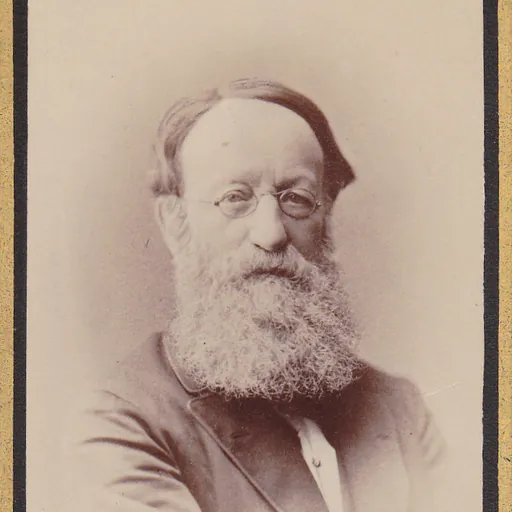
About Carl Amand Mangold
Lived 1813 – 1889 (aged 75). Carl Amand Mangold was a German composer and conductor.
Carl Ludwig Amand Mangold (8 October 1813 – 4 August 1889) was a German composer, violinist and conductor.
Biography Mangold was born in Darmstadt and received his initial musical education from his father. In 1831 he entered the orchestra of the ducal chapel at Darmstadt. A journey to London in 1834 acquainted him with the work of Handel. From 1835 he appeared in Darmstadt not only as a violinist, but also as a singer. Between 1836 and 1839 he studied at the Paris Conservatory and made the acquaintance of Berlioz, Chopin, Meyerbeer, Liszt, and Clara Wieck. After his return to Darmstadt in 1839 he became the director of the local "Musikverein", which in the course of the following years performed all of his major oratorio and cantata works. In 1848, he was made "Hofmusikdirektor" (court music director) at Darmstadt Castle. His second opera, Tannhäuser (1845), was written at the same time as Wagner's work of the same title, but without mutual knowledge. Apparently, performances of Mangold's work beyond Darmstadt were hampered out of consideration for Wagner. After Mangold's death the music was refitted to a new libretto by Ernst Pasqué as Der getreue Eckart (1892). Mangold was a co-founder of the regional music festival "Mittelrheinische Musikfeste" and conducted there in 1856 and 1868. He died in Oberstdorf.
Mangold's oratorio Abraham (1860) has been recorded on CD in 1986.
Selected compositions Operas Fiesco, Opera (1840; not performed) Das Köhlermädchen, oder Das Tournier zu Linz (libretto H. Wilke), romantic opera in 3 acts (Darmstadt, 1843) Tanhäuser (Eduard Duller), opera in 4 acts (1843–1845; Darmstadt, 1846) Dornröschen (Sleeping Beauty) (E. Duller), ballet with voices (Darmstadt, 1848) Die Fischerin (after Goethe); singspiel in 1 Act (1848) Rübezahl (E. Duller), opera (1848) Gudrun (libretto by composer), grand opera in 4 acts, op. 36 (1850; Darmstadt, 1851) Der Cantor von Fichtenhagen, comic opera in 2 acts
Oratorios and cantatas Wittekind (1843), oratorio on Widukind, the Saxon leader against Charlemagne during the Saxon Wars Elysium (1845), symphonic cantata Die Hermannschlacht op. 30 (1848) Frithjof op. 72 (1856) Abraham (1859), oratorio Israel in der Wüste (1863), oratorio Hermanns Tod (1870) Barbarossas Erwachen (1874) Sawitri (1882)
Further works some 260 works for male voice choir some 375 solo and religious songs
Selected recordings Abraham, performed by Gilles Cachemaille, Mechthild Georg, Michael Ruhr, Monika Frimmer, Thomas Sehrbrock, Konzertchor Darmstadt, Philharmonisches Orchester Darmstadt, Wolfgang Seeliger, on: Christophorus, 2CD (1986).
Don’t just read it —
keep it.
Full-length biographies made to live with: read them, listen on the way to work, watch them tonight.
- E-book
- Audio
- Video
Instant download · yours to keep · every purchase keeps this site free
Important facts
People in Carl Amand Mangold's life
Named in this biography and alive at the same time
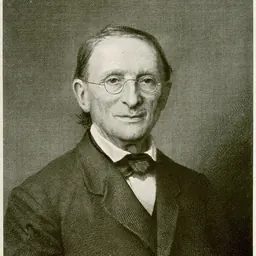
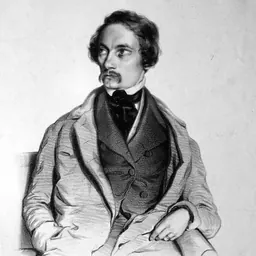

Related people
Same field, nearest in time
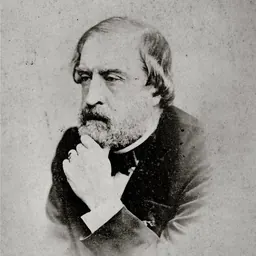


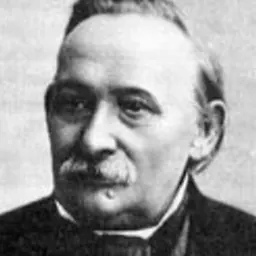
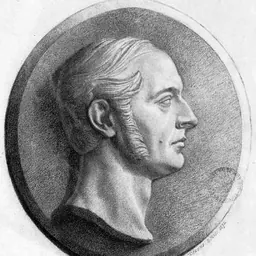

Contemporaries
People whose lives overlapped Carl Amand Mangold's





Frequently asked questions
Who was Carl Amand Mangold?
German composer and conductor (1813–1889)
When was Carl Amand Mangold born?
Carl Amand Mangold was born on 10 August 1813 in Darmstadt.
When did Carl Amand Mangold die?
Carl Amand Mangold died on 8 April 1889 in Oberstdorf.
What was Carl Amand Mangold's occupation?
Carl Amand Mangold was a composer and conductor.
What nationality was Carl Amand Mangold?
Carl Amand Mangold was German.
Sources & further reading
· Wikipedia: Carl Amand Mangold
Cite this page
APA: Biography.guide. (2026). Carl Amand Mangold. https://biography.guide/carl-amand-mangold/
MLA: "Carl Amand Mangold." Biography.guide, https://biography.guide/carl-amand-mangold/.
Chicago: "Carl Amand Mangold." Biography.guide. https://biography.guide/carl-amand-mangold/.
Data last updated: 2026-09-23 · Spot an error? Report a correction.
Portrait: Wikimedia Commons · author & licence
Page generated 2026-09-27 05:07 UTC