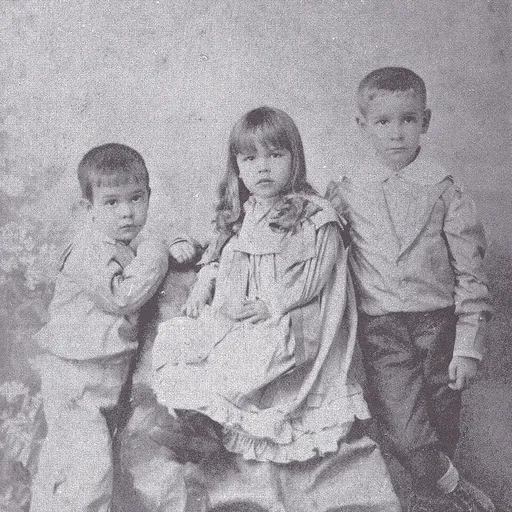
About Caridad Mercader
Lived 1892 – 1975 (aged 83). Caridad Mercader was a Spanish politician and spy, known for Leon Trotsky and Ramón Mercader.
Eustacia María Caridad del Río Hernández (; 29 March 1892 – 1975), better known as Caridad del Río, Caridad Mercader or Caritat Mercader, was a Spanish communist militant and an agent of the Soviet NKVD. She is also known for being the mother of Ramón Mercader, the assassin of Leon Trotsky, and for having personally participated in the operation.
Caridad Mercader belonged to a wealthy family from Barcelona of Indiano origin (term applied to a Spaniard who emigrated to the Americas who later returned to Spain enriched) in the early 20th century. She married Pablo Mercader, a member of Barcelona's industrial upper class, from whom she took the name (Spanish women do not normally take their husbands' surnames), and with whom she had five children. After the end of her marriage to Pablo Mercader, she moved away from her family and permanently turned her back on the social class they represented. This decision was motivated in part by an episode of forced institutionalization during which she was subjected to electroshock therapy and her former husband's attempts to change her state of "sexual apathy" through visits to local brothels. Mercader began to frequent anarchist circles and soon embraced communist ideology. At the outbreak of the Spanish Civil War, she participated in the fights against the military uprising in Barcelona and joined the groups that left for Aragon, where she suffered severe injuries during an aerial attack.
Mercader achieved some notoriety as a member of the Unified Socialist Party of Catalonia (Partit Socialista Unificat de Catalunya, PSUC). In 1936 she led a propaganda mission to Mexico and later became an agent of the NKVD in Spain. Her son Ramón, also a member of the PSUC and an officer in the Spanish Republican Army, was also recruited by Soviet espionage during the war, likely with the involvement of his mother. Under orders from Josef Stalin, as part of Operation Utka (Operation Duck), Ramon Mercader was enlisted and trained to assassinate Leon Trotsky, who was in exile in Mexico. Caridad, who had settled in Paris some time in 1937, also participated in the operation. When Ramón was arrested after murdering Trotsky, Caridad managed to leave Mexico and escape to the Soviet Union, where she was received with honors, awarded the Order of Lenin. The Hero of the Soviet Union was reserved for Ramon upon his release from a Mexican prison. In the Soviet Union, Caridad actively participated in conflicts between the different factions of exiled Spanish communists, including with Dolores Ibárruri, La Pasionaria.
Caridad found conditions in the Soviet Union disappointing and never adapted to life there. She bitterly told her son Luis and confidante Enrique Castro Delgado that they had fought for "Utopia" but were living in "Hell". She expressed that she felt deluded and that she had turned her son Ramon into a murderer, her son Luis into a hostage, and her other two children into ruins. She felt their only recompense had been "cuatro porquerias" (four pieces of trash), referring to the medals. In 1944, with some difficulty, Caridad obtained a permit to leave the Soviet Union. Violating the agreed conditions that she settle in Cuba, she traveled to Mexico, with the aim of achieving the release of her son Ramón. Unknown to Caridad, at Stalin's direction, the Soviets were running an undercover operation to stage the prison escape of Ramón Mercader. The awkward intervention of Caridad Mercader was counterproductive, causing the Mexican authorities to toughen Ramón's prison conditions and the Soviets to abandon their operation. Ramón was left in prison to serve out the remaining 16 years of his 20-year sentence.
Early years
Eustacia María Caridad del Río Hernández was born in Santiago de Cuba in 1892 into a wealthy family. Her father, Ramón del Río, was originally from the Spanish province of Santander, but when the family decided to return to Spain, a few years before Cuban independence, they settled in Barcelona, where they became part of the city's social elite. Caridad had at least two brothers. Although Caridad later claimed that her father had been governor of Santiago as well as the first planter to free his slaves on the Antillean island, none of this is true. Nor, contrary to what Caridad asserted, had her mother sympathized with the Cuban independence movement.
Caridad studied at the Catholic school of the Sacred Heart of Sarriá, also spending time in the centers that the congregation had in Paris and London. As a result, she spoke French and English perfectly. Apparently, during her adolescence she felt the call of a religious vocation, although she did not choose it.
When Caridad was barely 16 years old, on June 13, 1908, the Barcelona press announced the engagement of Caridad del Río to Pablo Mercader Marina, seven years older than her and a member of a prosperous family in the textile business. Pablo's father, Narciso Mercader Sacanella, had started his business with a factory in Badalona, expanding it with several more factories in Barcelona. The engagement was a bond that united two wealthy families of the Barcelona bourgeoisie. Both of the fiancés were equestrians. Caridad herself later stated that she fell in love with Pablo Mercader for his mastery as a rider. On January 7, 1911, the wedding took place. Mercader had an affable character, politically aligning himself with conservative Catalan nationalism and having been a member of the somatén. At that time, Caridad "was a beautiful teenager with a round face and pleasant features with a sweet look [...] in her green eyes that were always her most distinctive feature." The couple settled on Illas i Vidal street, in the upper-class neighborhood of Sant Gervasi de Cassoles. The young wife adopted her husband's surname and would thereafter be known as Caridad, or Caritat, Mercader. The couple had five children: Jorge (b. 1911), Ramón (b. 1913), Montserrat (b. 1914 ), Pablo (b. 1915) and Luis (b. 1923). Shortly after Pablo's birth, Jorge fell ill with poliomyelitis and suffered paralysis of both legs.
Breakup of the marriage and move to France
The marriage was unhappy, beginning to fail after the first years of living together. According to his wife, Pablo Mercader, ostensibly a devoted family man in private, showed some unconventional sexual proclivities. As their son Luis described in the documentary Asaltar los cielos, Caridad had told him that her husband took her to brothels to incite her to new sexual experiences. There, he forced her to observe through peepholes hidden in room partitions the sexual encounters between the prostitutes and their clients. These episodes created in Caridad a deep contempt for her husband, as well as for her social class.
Until this point in time, Caridad had lived according to the conventions of her social circle. At the beginning of the 1920s, however, she began to display an attitude that clashed with bourgeois customs. According to the journalist and writer Gregorio Luri—who recounts what was reported by Isaac Don Levine and included testimonies from Enrique Castro Delgado and Pablo Mercader, Caridad's first husband—Caridad began taking painting classes with the Valencian artist , Coincidentally, Caridad was staying at a family property in the area. Louis and Caridad met and fell in love: "He was young, elegant and chivalrous, and he embodied the mythical aura of heroism that surrounded the pioneers of aviation." in which Caridad Mercader appears on a country excursion with several followers of the SFIO, among whom were Pivert himself and his daughter Jacqueline. Some accounts postulate that it was at this time that Caridad came in contact with Soviet espionage. Gorkin claims it was as early as 1928, according to the testimony of "a former cultural attaché at the Soviet embassy in Paris." At this time, she may also have met Leonid Eitingon, a Soviet intelligence officer, who would later recruit her. Eitingon would have been in China, France and Germany before being assigned to Spain.
In the early morning of July 18–19, 1936, the Barcelona garrison revolted. Caridad actively participated in the fighting against the rebel troops, notably in the assault on the Captaincy General of Barcelona, spearheaded by the leader of the rebels in Barcelona, General Manuel Goded, who had arrived from Palma de Mallorca a few hours before. By account, on the evening of the 19th, it was Caridad Mercader who convinced the militiamen, after the soldiers' surrender, to take Goded before the president of the Generalitat, Lluís Companys, instead of executing him on the spot. Once before the president, Goded agreed to broadcast a message recognizing the failure of the uprising in Catalonia and asking those who still resisted to surrender. The role of Caridad Mercader in the episode was narrated by the French journalist in his work Espagne et liberté: le second Munich (1939): "Militiamen and militiawomen were grouped around him [General Goded], and among the latter we must highlight the examples of [Catalan] Louise Michel as well as Caridas [sic] Mercader, with her clothes in tatters but sublime in her ardent faith. At the risk of her life, she had saved the famous rebel general Goddet [sic] (Governor of Barcelona) from massacre to deliver him alive to the people's court." The story also was published on July 26 in La Dèpêche de Toulouse.
Facade of the Captaincy General building on Paseo de Colón in Barcelona, where General Goded barricaded himself. After his surrender, Caridad Mercader persuaded the militiamen to respect his life and hand him over to the president of the Generalitat, Companys.
After the failure of the uprising in Barcelona, Caridad became actively involved in the organization of the first columns that were formed in the city to put down the rebels. Sources differ regarding the assignment of Caridad Mercader: according to several sources, she left for the Aragon front in the column led by Durruti and Pérez Farrás—the Durruti column— although it is also possible that instead it was to the Trueba-Del Barrio, formed by communist militia. Her sons Ramón and Pablo also joined their mother's column, while her daughter Montserrat and her son-in-law, Jacques Dudouyt, arrived in Spain as volunteers. Montserrat worked as secretary to André Marty, who led the International Brigades with an iron fist. A few days later, Caridad was seriously injured in an air attack. Some sources affirm that it was in Tardienta, where the Carlos Marx column operated, while others suggest Bujaraloz, belonging to the sector of the Durruti column. The shrapnel caused eleven wounds, some of them quite serious, so she had to be evacuated to Lérida, where she underwent surgery and was treated for her wounds. Although she recovered almost completely, she had some chronic sequela, such as an intestinal ailment. Eight weeks after being wounded at the front, Caridad left the hospital.
Caridad did not return to the front, but was charged with leading a propaganda mission by the Generalitat of Catalonia, the PSUC, and the Committee of Anti-Fascist Militias of Catalonia (Comité de Milicias Antifascistas de Cataluña) to Mexico and the United States with the intent to acquire weapons and money. The expedition embarked from the port of Barcelona on September 18, 1936. Among other communist militants, Caridad was accompanied by her daughter Montserrat, as well as Lena Imbert, a teacher, communist militant, and girlfriend of her son Ramón, who served as his secretary. The ship in which they were traveling, the Manuel Arnús, The granting of asylum would thus have been prior to Mercader's arrival in Mexico, although after her departure from Barcelona. On November 20, Caridad Mercader, wearing a militiaman's overalls, and arm in arm with Mexican union leader Lombardo Toledano, occupied the head of an annual march commemorating the Mexican Revolution in Mexico City. According to Costa-Amic, whose first wife had met Caridad Mercader in the sewing workshop of the La Innovación in Barcelona, she would have recognized the Catalan communist leader and would have rebuked her, telling her, in Catalan: "You bastard, you have come to organize the assassination of Trotsky", to which Mercader would have responded with evasions. However, it has been pointed out that on the date of the demonstration—November 20—sources of the time agree that it had not yet been decided to grant asylum to Trotsky, which would destroy the credibility of Costa-Amic's statements. In any case, Caridad Mercader's expedition returned to Spain at the end of the year, stopping in the United States, where it also carried out propaganda activities. It is also known that Marinello met Caridad Mercader when he traveled to Spain on the occasion of his attendance at the II International Congress of Writers for the Defense of Culture (II Congreso Internacional de Escritores para la Defensa de la Cultura), which took place in July 1937. Also in July, so that he could continue studying, Caridad sent Luis to Paris to live with his sister Montserrat and her husband, who had returned to France after having had great differences with Marty.
NKVD agent
The information available in the former Soviet archives on Caridad Mercader has not been systematically explored. It is known that she was recruited at the beginning of 1937. The outbreak of World War II caused orders to be given from Moscow to suspend the transfer of Eitingon and the Mercader to America, but these orders were not followed.
Trotsky would die the next day. According to the agreed-upon plan, Caridad Mercader and Eitingon were waiting for Ramón near Trotsky's fortress house in a car—other sources speak of two cars—to help him escape. They realized that the attack had failed as soon as they observed the tumult and heard the police sirens without Ramón having come out. They quickly fled the scene and left the country. However, according to the testimony of Ramón Mercader's later lawyer, Eduardo Ceniceros, it was Caridad who, before illegally leaving the country, made the necessary arrangements for her son to receive legal assistance. The chosen one, at the suggestion of Lombardo Toledano, was Octavio Medellín Ostos. Caridad did not reveal the identity of Trotsky's alleged murderer or that he was her son: "Look, counselor, what this boy has done. He is the son of a dear comrade who is outside of Mexico, and I, because of that friendship with his mother, have come to request that you take charge of his defense.
In the Soviet Union
Badge of the Order of Lenin. It was awarded to Caridad Mercader in 1941, after her arrival in the Soviet Union.
Caridad Mercader and Eitingon traveled to Cuba from Mexico and remained there in hiding. Versions of documentation from the FSB and the Sudoplátov archives differ on some points, such as on the route that Eitingon followed after leaving Cuba, but agree on Caridad. According to Sudoplátov, both remained in Cuba for 6 months, which is consistent with the time it took to arrive in the Soviet Union. From there they maintained contact with Ramón through the lawyers who were in charge with his defense. However, from this point on, the versions differ. The FSB documentation states that Eitingon would have left Caridad in Cuba and arrived in the Soviet Union with a stopover in Europe. in the sanatorium where Dr. Carlos Díez Fernández worked. The PCE leadership denied the existence of tuberculosis among the Spanish emigrants. The other area of disagreement was the participation of Spanish exiles in NKVD operations. While Pasionaria did not always agree with the discretionary use that the Soviet espionage services made of the Spanish exiles—especially the PSUC—without consulting the PCE, Caridad was a determined defender of Soviet espionage and believed that everything they asked for had to be done, since the Soviet Union was the "Mother Country". One of the Spanish exiles enlisted in the NKVD was Sebastià Piera, who had the endorsement of Caridad Mercader herself for his enlistment. Piera described Caridad Mercader like this during her years in the Soviet Union: "...an exceptional woman who felt psuquera [a member of the PSUC, Partit Socialista Unificat de Catalunya] and very linked to Catalonia. Whenever she could, she invited us for a meal and cooked for the Catalans."
Based on the information that Enrique Castro Delgado would have provided him in 1960, Julián Gorkin attributed to Caridad Mercader various missions commissioned by the NKVD, such as participation in the failed attack carried out by Soviet espionage against Franz von Papen, ambassador of Nazi Germany in Turkey on February 24, 1942. Her son Luis, who remained in Moscow for most of the war, maintained the opposite: that Caridad did not participate in any NKVD mission, "among other things because she was burned out by her work."
According to Luis Mercader, in the period between her stay at the OMSBON and her departure from the country, "Caridad spent her days sitting in bed, dressed, with pillows behind her back, her cigarette in her mouth, drinking coffee after coffee, and knitting." In complete contrast, Castro also attributed Caridad with missions in Sweden, Norway, Denmark, Holland and Belgium, in which she would have been involved in the murder of about thirty people. Likewise, on behalf of the NKVD, she would have monitored the leaders of the Bulgarian communist party refugees in the Soviet Union, many of whom would have ended up being executed. Sudoplátov placed Caridad Mercader in Tashkent between 1941 and 1943, something that was flatly denied by her son Luis.
Various testimonies attested to Caridad Mercader having intervened so Spanish exiles could leave the Soviet Union. Manuel Tagüeña asserted that Caridad helped Spaniards who wanted to leave the country to join the NKVD, thus enabling them to leave the Soviet Union. Dr. Díez Fernández himself, who attended to most of the Spanish colony in Moscow, was one of them. Castro Delgado corroborated this testimony, stating that, after the defeat of Hernández and his own in the struggle for power in the Spanish Communist Party, he was purged in the summer of 1944. Despite his expulsion from the party, Caridad provided him with help and was one of the people who interceded for him so that he could leave the Soviet Union, since the leadership of the PCE refused to let him leave the country. He did not manage to do so until the end of 1945.
On the other hand, and according to her son's testimony, at this time Caridad resorted to scenes of great drama: "From time to time my mother would get hysterical and say unimaginable things, screaming that she was going to kill herself, and I had to take the gun from her." However, Luis also suspected that this could be a tactic to pressure the Soviet authorities to concern themselves with the fate of her son Ramón. In these years, a rumor also spread that Caridad had begun to use drugs again, which were given to her, under prescription, by Dr. Díez Fernández, who had treated Lena Imbert and visited the house regularly. At the end of the year, the Soviet Union opened an embassy in Mexico, which provided legal cover for the NKVD station—rezidentura, in Soviet terminology—in that country. Its main objectives were two: to provide cover for the espionage operations that the Soviets were developing to obtain the secrets of the American atomic bomb and to get Mercader out of prison. The operation, Code Name Gnome, the name assigned to Mercader, studied various strategies for Mercader to escape from prison, in which Soviet agents and Mexican and Spanish communists exiled in the country had to intervene. In the summer of 1943, before the opening of the diplomatic legation, Jesús Hernández—code name "Pedro"—was sent to Mexico along with Francisco Antón. In addition to the tasks related to the reorganization of the PCE in the American country—also part of his attempt to take control of the party, succeeding the recently deceased José Díaz as general secretary—Hernández also worked for the NKVD and aimed to reinforce the work of the rezidentura in Mexico and the operations it carried out. Gorkin goes further, stating that the NKVD field team made two attempts to kill her—whether real or fake is unknown—in order to scare her into leaving the country.
The appearance on the scene of Caridad Mercader and her efforts would have alerted the Mexican authorities, who tightened Ramón's prison regimen, thus attempts to achieve his escape would have been unsuccessful.
Final years Parisian cemetery of Pantin, where Caridad Mercader was buried in 1975.
Caridad left Mexico in November 1945, and received authorization to settle in Paris, where she lived with a Cuban passport until her death. She settled in an apartment at 25 Rennequin Street, near the Arc de Triomphe and received a pension from the Soviet government throughout her life. Although there is a photo of Caridad Mercader in Cuba in 1962, Luis Mercader's testimony does not mention that his mother had moved to Cuba for any length of time or that she had been fired from her job at the Cuban embassy.
On May 6, 1960, Ramón Mercader completed his sentence and was able to travel to Moscow with a Czechoslovak passport. There, where his brother Luis continued to live, he settled with his wife Roquelia. From that time Caridad would travel sporadically to the Soviet Union to visit her children and grandchildren. According to her son Luis, she was never able to adapt to life in the Soviet Union and attributed to her the phrase only serve to destroy capitalism, but I am not useful to build communism." Efforts by her children to make Caridad's visits more comfortable were always to no avail. Luis believed his mother was never able to recognize the failure of communism and that she believed they had fought "for a Utopia". He also added that returned to Paris sick, completely discouraged and disillusioned". But she stubbornly continued to be a communist, worshipping Stalin and believing in his doctrine.
In the last years of her life, Caridad was cared for by her son Jorge and her daughter-in-law, Germaine. She died in 1975, aged 82, months before the death of the dictator Francisco Franco in Spain. She was buried in the Parisian cemetery of Pantin, in a tomb that she shared with her son-in-law, the husband of her daughter Montserrat. The Soviet embassy in Paris took care of the funeral and burial.
Don’t just read it —
keep it.
Full-length biographies made to live with: read them, listen on the way to work, watch them tonight.
- E-book
- Audio
- Video
Instant download · yours to keep · every purchase keeps this site free
Important facts
People in Caridad Mercader's life
Named in this biography and alive at the same time
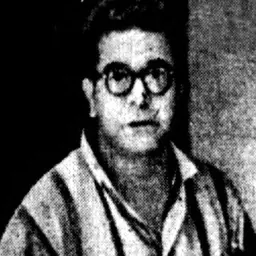
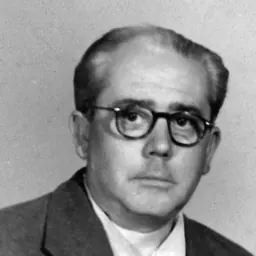
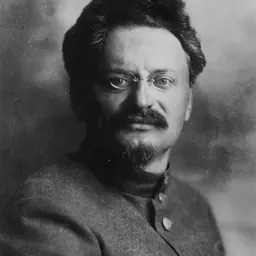



Related people
Same field, nearest in time





Contemporaries
People whose lives overlapped Caridad Mercader's

Frequently asked questions
Who was Caridad Mercader?
Spanish communist and NKVD agent (1892-1975)
When was Caridad Mercader born?
Caridad Mercader was born on 29 March 1892 in Santiago de Cuba.
When did Caridad Mercader die?
Caridad Mercader died on 28 October 1975 in Paris.
What was Caridad Mercader's occupation?
Caridad Mercader was a politician and spy.
What was Caridad Mercader known for?
Caridad Mercader was known for Leon Trotsky and Ramón Mercader.
What nationality was Caridad Mercader?
Caridad Mercader was Spanish.
Sources & further reading
Cite this page
APA: Biography.guide. (2026). Caridad Mercader. https://biography.guide/caridad-mercader/
MLA: "Caridad Mercader." Biography.guide, https://biography.guide/caridad-mercader/.
Chicago: "Caridad Mercader." Biography.guide. https://biography.guide/caridad-mercader/.
Data last updated: 2026-09-22 · Spot an error? Report a correction.
Portrait: Wikimedia Commons · author & licence
Page generated 2026-09-27 05:03 UTC