
Canassatego
Onondaga leader
About Canassatego
Lived 1684 – 1750 (aged 65–66). Canassatego was a traditional leader or chief.
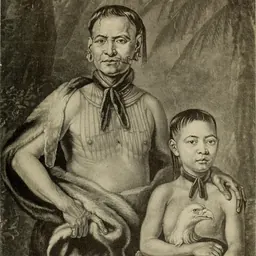
Canassatego (c. 1684–1750; also spelled Canasatego) was a leader of the Onondaga nation who became a prominent diplomat and spokesman of the Haudenosaunee Confederacy in the 1740s. He was involved in several controversial land sales to colonial British officials. He is now best known for a speech he gave at the 1744 Treaty of Lancaster, where he recommended that the British colonies emulate the Haudenosaunee by forming a confederacy. He was reportedly assassinated, perhaps by sympathizers or agents of New France.
Early career Canassatego appears in British historical documents only during the last eight years of his life, and so little is known of his early life. His earliest documented appearance is at a treaty conference in Philadelphia in 1742, But Johansen disagrees, saying that Canassatego held the League title of Tadadaho.
This map shows Pennsylvania's land purchases from Native Americans. Canassatego had a role in the 1736 and 1749 sales, although the Haudenosaunee League nations had a questionable claim to those lands.
In the 1730s, a faction of Haudenosaunee leaders opened a diplomatic relationship with the British Province of Pennsylvania, facilitated by Conrad Weiser, Pennsylvania's interpreter and agent. Pennsylvania agreed to recognize the Haudenosaunee as the owner of all Indian lands in Pennsylvania; the Haudenosaunee, in turn, agreed to sell lands only to Pennsylvania representatives. Canassatego probably attended a 1736 treaty where some Haudenosaunee chiefs sold land along the Susquehanna River to Pennsylvania, although the territory had traditionally been occupied by the Lenape people. The Haudenosaunee denigration of the Lenape as "women" has been the subject of much scholarly writing.
Lancaster treaty In 1744, Canassatego served as a speaker at meetings to negotiate the Treaty of Lancaster. Witham Marshe, a Marylander in attendance, recorded the only written description of Canassatego:
At the treaty conference were representatives of five of the Haudenosaunee nations (except the Mohawk, the easternmost tribe), and the provinces of Pennsylvania, Maryland, and Virginia. With King George's War underway, the British colonies needed to cultivate a good relationship with their Haudenosaunee neighbors, who might otherwise become French allies. After a speech by Canassatego, officials from Maryland and Virginia agreed to pay the Haudenosaunee for land in their colonies, although they believed that the Haudenosaunee had no legitimate claim to those lands. Virginia got the better part of the deal, however: although Canassatego and other Haudenosaunee leaders believed that they had sold only the Shenandoah Valley to Virginia, the official deed gave Virginia much more land than that.
Near the end of the conference, Canassatego gave the colonists some advice:
Canassatego was concerned that the British colonies lacked a coordinated policy to deal with the military threat coming from New France. He made similar recommendations about colonial unity at another conference in 1745. His words became a central part of the Iroquois Influence Thesis, the controversial proposal that the Haudenosaunee Confederacy was a model for the United States Constitution. Canassatego was replaced by Hendrick Theyanoguin as a 6, not 5, Nation diplomat who continued building alliances with Britain's Northern Colonies with his friend William Johnson in 1754. Hendrick Theyanoguin was killed fighting the French a year later. This work, begun by Canassatego and continued by Hendrick Theyanoguin, progressed towards Benjamin Franklin's introducing "Short Hints towards a Scheme for a General Union of the British Colonies on the Continent" (1754), which became the prototype for the U.S. federal system declared in 1776.
Final years Canassatego's final appearance at a treaty conference was in August 1749, one year after the end of King George's War. In Philadelphia, he complained that colonists were settling on Native land along the Susquehanna River. He agreed to sell this land to Pennsylvania, but once again, the written document ceded much more land than what had been agreed upon in negotiations.
Canassatego was reportedly assassinated with poison in September 1750. Contemporary accounts that were recorded said that he was killed for taking bribes in exchange for selling tribal communal lands. Another said that he had been poisoned by agents of New France. Historian William Starna argued that Canassatego was probably assassinated by pro-French Haudenosaunee who wanted to repudiate Canassatego's diplomatic ties with Pennsylvania.
Legacy A fictional version of Canassatego was featured in the 1755 novel Lydia: or Filial Piety, by English writer John Shebbeare. Following a literary convention by which Native American characters were used to satirize Europeans, Canassatego was portrayed as wise and honest, in stark contrast to the scheming Englishmen he encounters.
The US Navy named the USS Canasatego (YN-38/YNT-6/YTM-732), a harbor tug, for Canassatego.
Don’t just read it —
keep it.
Full-length biographies made to live with: read them, listen on the way to work, watch them tonight.
- E-book
- Audio
- Video
Instant download · yours to keep · every purchase keeps this site free
Important facts
People in Canassatego's life
Named in this biography and alive at the same time
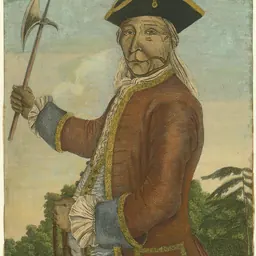
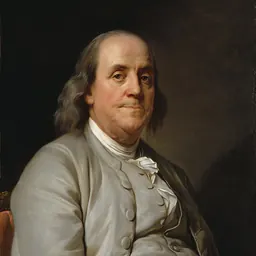
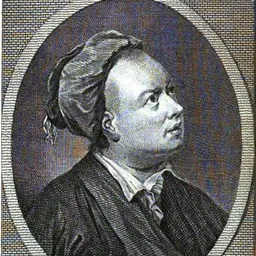

Related people
Same field, nearest in time


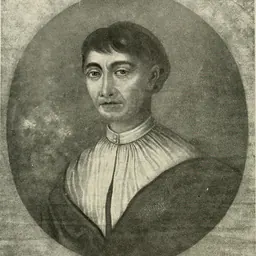


Contemporaries
People whose lives overlapped Canassatego's


Frequently asked questions
Who was Canassatego?
Onondaga leader
When was Canassatego born?
Canassatego was born in 1684.
When did Canassatego die?
Canassatego died in 1750.
What was Canassatego's occupation?
Canassatego was a traditional leader or chief.
Sources & further reading
Cite this page
APA: Biography.guide. (2026). Canassatego. https://biography.guide/canassatego/
MLA: "Canassatego." Biography.guide, https://biography.guide/canassatego/.
Chicago: "Canassatego." Biography.guide. https://biography.guide/canassatego/.
Data last updated: 2026-09-20 · Spot an error? Report a correction.
Page generated 2026-09-27 05:16 UTC