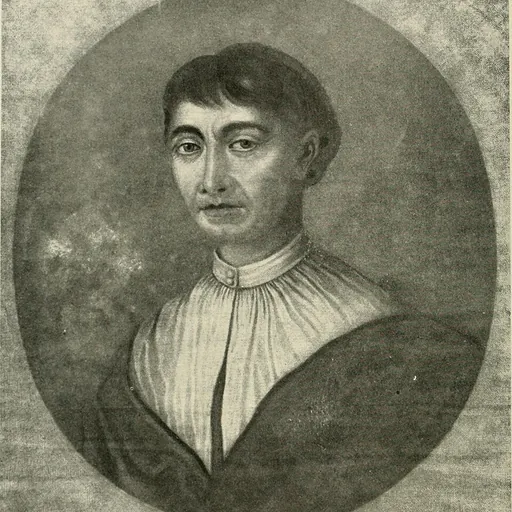
Hendrick Tejonihokarawa
Mohawk Sachem
About Hendrick Tejonihokarawa
Lived 1660 – 1735 (aged 74–75). Hendrick Tejonihokarawa was a traditional leader or chief.
Hendrick Tejonihokarawa, also known as Tee Yee Neen Ho Ga Row and Hendrick Peters ( – ) was a Mohawk chief in the Province of New York. He was one of the Four Mohawk Kings who went to London in 1710 to meet with Anne, Queen of Great Britain and her court to mark a treaty with Great Britain. The chiefs requested the Queen's help in countering French influence in New York and asked for English missionaries to help their people offset French Catholic influence. The Mohawk diplomacy helped the Haudenosaunee preserve their power through the colonial years.
Early life and education Tejonihokarawa was born in about 1660 into the Wolf Clan of his mother; the Mohawk and all Iroquoian nations had a matrilineal kinship system, in which descent and social status were passed through the maternal line. The English translation of his name is "open the door", suggesting he may have had the responsibility for opening the longhouse door to receive visitors.
He was given the name Hendrick Peters in July 1690 when he was baptized by Godfridius Dellius as a Christian and member of the Dutch Reformed Church. His actions helped build the alliance with the English and preserve the Haudenosaunee Confederacy as a key power to be reckoned with in North America in the early 18th century. He met with English leaders at Albany to preserve Mohawk territory to the west throughout the Mohawk River Valley. Other nations of the Haudenosaunee had territories to the west and north of there, closer to the Great Lakes.
He and two other Mohawk chiefs, in addition to a Mahican chief, sailed to London in 1710 to meet with Queen Anne and her court, to mark a treaty. While in London, Tejonihokarawa requested Anglican missionaries to help offset French Catholic influence in Haudenosaunee territory. After the French severely damaged Mohawk villages in 1666, they had forced the people to accept Catholic Jesuits as missionaries. The Jesuits soon set up a base near what later developed as Auriesville, New York, a few miles west of Schoharie Creek. They had been working to recruit Mohawk converts in present-day New York. Numerous converted Mohawk had migrated to the St. Lawrence River area, settling at the mission village of Kahnawake south of Montreal.
Queen Anne sent Anglican missionaries to the New York Colony in 1711, who established a mission and chapel at Fort Hunter. The nearby Mohawk village became largely Christianized within years.
In turn, Queen Anne had asked Tejonihokarawa for help in resettling Palatine German refugees in New York. They had been working at English camps in the Hudson Valley to pay off their passage to the colony and wanted their own lands. Through Governor Robert Hunter, Tejonihokarawa offered Mohawk land in his territory to the refugees, some of whom took land near Schoharie Creek.
Tejonihokarawa was deposed by Wolf Clan matrons in the winter of 1712-1713, apparently because of differences with the missionaries. By 1720, he had been restored to power, as he was noted as sachem in colonial records. In 1723, a group of 100 Germans were given grants of Mohawk land west of present-day Little Falls, in what is now known as the Burnetsfield Patent in the Mohawk Valley, on both sides of the river. They started other settlements as well. This area was upriver and west of existing Dutch and English settlements, as well as the upper Mohawk village of Canajoharie.
Tejonihokarawa also traveled to northern New England, trying to build alliances with the Abenaki there, but he was prevented from meeting with them. They had frequently allied with the French in this period.
Until Barbara Sivertsen's work published in 1996, biographical details concerning Tejonihokarawa, or King Hendrick, have frequently been confused with the similarly named Hendrick Theyanoguin, who was three decades younger.
Don’t just read it —
keep it.
Full-length biographies made to live with: read them, listen on the way to work, watch them tonight.
- E-book
- Audio
- Video
Instant download · yours to keep · every purchase keeps this site free
Important facts
People in Hendrick Tejonihokarawa's life
Named in this biography and alive at the same time

Related people
Same field, nearest in time


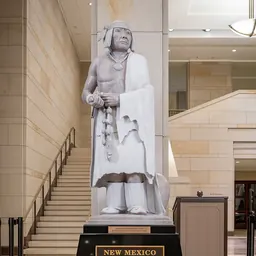

Contemporaries
People whose lives overlapped Hendrick Tejonihokarawa's



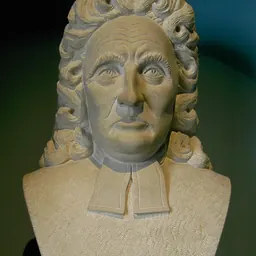

Frequently asked questions
Who was Hendrick Tejonihokarawa?
Mohawk Sachem
When was Hendrick Tejonihokarawa born?
Hendrick Tejonihokarawa was born in 1660.
When did Hendrick Tejonihokarawa die?
Hendrick Tejonihokarawa died in 1735.
What was Hendrick Tejonihokarawa's occupation?
Hendrick Tejonihokarawa was a traditional leader or chief.
Sources & further reading
· Wikipedia: Hendrick Tejonihokarawa
· DBpedia: Hendrick Tejonihokarawa
Cite this page
APA: Biography.guide. (2026). Hendrick Tejonihokarawa. https://biography.guide/hendrick-tejonihokarawa/
MLA: "Hendrick Tejonihokarawa." Biography.guide, https://biography.guide/hendrick-tejonihokarawa/.
Chicago: "Hendrick Tejonihokarawa." Biography.guide. https://biography.guide/hendrick-tejonihokarawa/.
Data last updated: 2026-09-21 · Spot an error? Report a correction.
Portrait: Wikimedia Commons · author & licence
Page generated 2026-09-27 04:59 UTC