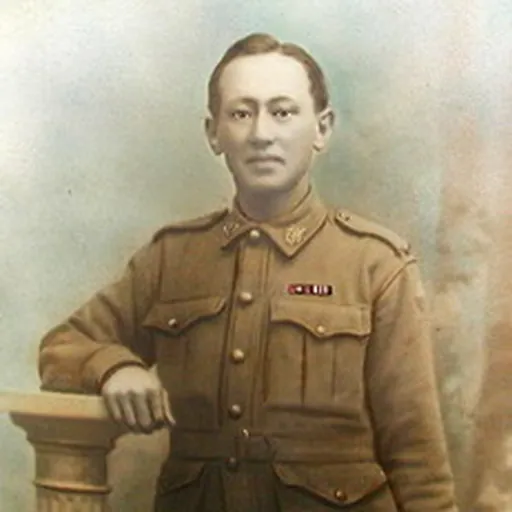
About Caleb Shang
Lived 1884 – 1953 (aged 68). Caleb Shang was a military personnel.
Caleb James Shang (born Duckbour Caleb James Shang; 4 August 1884 – 6 April 1953) was the most highly decorated Chinese Australian soldier who served in the First World War. He was decorated with the Distinguished Conduct Medal twice and received the Military Medal. He served with distinction on the Western Front, primarily as a scout and sniper, until his wounds rendered him unfit for further duties. After returning to Australia, Shang married in Victoria and moved to Queensland, where he and his wife raised their three children. During the Second World War, he served on home defence duties in northern Queensland.
Early life Shang was born on 4 August 1884 in Fortitude Valley, a suburb of Brisbane, Queensland. The family moved to Cairns, and he left school at the age of 12. It was unusual for men of Asian ancestry to join Australia's armed forces at this time in history, since only those of European ancestry were considered eligible for such service.
First World War
Distinguished Conduct Medal Shang joined the 47th Battalion on 7 March 1917, Shang served in the 47th Battalion throughout the heavy fighting around Passchendaele in July–November 1917, including Menin Road, Polygon Wood, and Passchendaele Ridge. On 7 June 1917, Shang served with distinction at Messines Ridge. The Australian Official Historian, Charles Bean recorded Shang's conduct in his notebook, writing:
For his actions, Shang was subsequently recommended for the Distinguished Conduct Medal on 18 June 1917. In his recommendation, the commanding officer of the 47th Battalion, Lieutenant Colonel A. P. Imlay, wrote:
This soldier displayed a contempt for danger and exhibited wonderful endurance and coolness resource and initiative and his conduct certainly inspired everybody he came in contact with ... His conduct throughout excited the admiration of officers and men. with the citation reading:
Bar to Distinguished Conduct Medal In March–April 1918, Shang fought around Dernancourt on the Somme, France, the 12th Australian Brigade and 13th Australian Brigade faced two and a half divisions of German troops and suffered 1,230 casualties. Despite these losses, the fierce resistance of the 4th Australian Division at Dernancourt and the 3rd Australian Division at Villers-Bretonneux effectively halted the German spring offensive. For his actions around Dernancourt, Shang was recommended for a Bar to his DCM on 8 April 1918. In his recommendation, the commander of the 12th Australian Brigade, Brigadier General John Gellibrand, wrote:
Shang was awarded a Bar to the DCM on 25 August 1918, with the citation reading:
For conspicuous gallantry and devotion to duty. He volunteered for an O.P. at start of operations, and reaped a harvest with his rifle till his post was blown up. He then made several trips as runner through the enemy's barrage, and continued to carry ammunition until the withdrawal, which he covered with a Lewis gun.
In further fighting around Amiens at Villers-Bretonneux on 1 May 1918, Shang was recommended for the Military Medal, which was awarded on 13 September 1918. In his recommendation, the commander of the 12th Australian Brigade, Colonel Raymond Leane, wrote:
The 47th Battalion was disbanded on 31 May 1918 due to severe casualties, a lack of reinforcements from Australia, and command and disciplinary problems. were transferred to other units, and Shang was posted to the 45th Battalion. He was wounded in action on 16 August 1918 and evacuated to the United Kingdom. He was discharged from the AIF on 9 April 1919, Described as 'the greatest of Cairns soldiers', he received a hero's welcome upon his arrival at Cairns, and was greeted by the Mayor of Cairns, the 'Returned Soldier's League' and an estimated three thousand people at the wharf. In March 1919, the Cairns Post newspaper raised a public subscription fund in order to provide Shang with a start in civilian life. Over £45 was collected over a period of one week from both the European and Chinese communities of Cairns.
Interwar period Shang resumed civilian life working as a herbalist in Victoria during the interwar years. He married Anna Louise Kassene on 28 April 1923 in Hamilton, Victoria.
Second World War
In the 1940s, few were aware of Shang's distinguished AIF war record and continuing VDC service. Consequently, he suffered the occasional racial slur as a result of the heightened anti-Asian sentiment during the war. Shang marched in the ANZAC Day parade, complete with decorations, in April 1943. Despite many years of active membership with the Returned Sailors and Soldiers Imperial League, this was the only ANZAC Day parade that he ever marched in. Shang's daughter, Delta Shang, stated that her normally modest father participated in the march largely as a response to the racism felt during World War II. and was buried in the Methodist section of the town cemetery. Shang Street in Mooroobool, a suburb of Cairns, is named after him.
Honours and awards
Eligible 1949 On 4 May 1918, Shang's commanding officer, Lieutenant Colonel A. P. Imlay, noted in the 47th Battalion War Diary:blockquote Several recommendations for immediate award were forwarded particularly 3018 Burton A.W. scout and 1779 Sgt WE Brown DCM* + 3204 Pte CJ Shang DCM*. These 2 men have a habit of performing gallant deeds as a matter of course, both are quite fearless and BROWN in the opinion of the Battn should have the V.C. SHANG had already been recommended for it, but to write the story to convince those who decide these awards is too difficult for me to accomplish apparently. If Imlay's note in the Battalion War Diary is assumed to be correct, then it is possible that the recommendation for the Victoria Cross refers to the Dernacourt action on 5 April 1918, since 4 May 1918 entry in the War Diary ("SHANG had already been recommended for it") is written in the context of Shang's recommendation for the Military Medal for action at Villers-Bretonneux on 1 May 1918.
c. This is a Chinese name; the family name is Lee. Lee Wah-shang's family name was Anglicised to become 'Shang.' The arbitrary nature of the Anglicisation of Chinese names can be seen in Sidney Waugh Shang's attestation papers. S. W. Shang enlisted under the surname 'Waughshang,' with the Next of Kin given as "Mother, Mrs Jane Waughshang." Successive administrative corrections were made to this document from 'Waughshang' to 'Waugh,' and finally to 'Shang'. The majority of Shang's service was with 47th Battalion, and it was during this service that he was awarded all of his decorations.
f. According to David Day, it was alleged that Shang and his brothers were involved in opium smuggling and bribed customs officers in doing so.
g. Shang's VDC service records do not note an issue of the Australia Service Medal 1939–1945, as the file was closed at the time of discharge in 1945. The campaign medal was instituted in 1949 and eligibility was revised in 1996. National Archives of Australia service records indicate that Australian World War II campaign medals were typically issued in the early 1950s—around the time of Shang's death. Shang's VDC service records do not indicate an issue to either himself or his next of kin, although they do indicate his eligibility for this campaign medal.
Don’t just read it —
keep it.
Full-length biographies made to live with: read them, listen on the way to work, watch them tonight.
- E-book
- Audio
- Video
Instant download · yours to keep · every purchase keeps this site free
Important facts
People in Caleb Shang's life
Named in this biography and alive at the same time


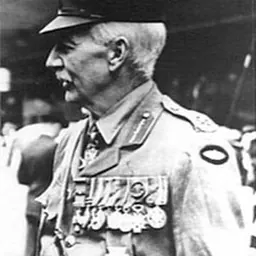


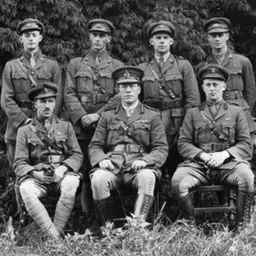
Related people
Same field, nearest in time


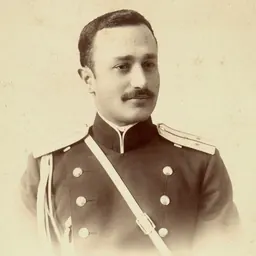



Contemporaries
People whose lives overlapped Caleb Shang's

Frequently asked questions
Who was Caleb Shang?
Australian soldier in World War I
When was Caleb Shang born?
Caleb Shang was born on 4 August 1884 in Brisbane.
When did Caleb Shang die?
Caleb Shang died on 6 April 1953 in Cairns.
What was Caleb Shang's occupation?
Caleb Shang was a military personnel.
Sources & further reading
Cite this page
APA: Biography.guide. (2026). Caleb Shang. https://biography.guide/caleb-shang/
MLA: "Caleb Shang." Biography.guide, https://biography.guide/caleb-shang/.
Chicago: "Caleb Shang." Biography.guide. https://biography.guide/caleb-shang/.
Data last updated: 2026-09-23 · Spot an error? Report a correction.
Portrait: Wikimedia Commons · author & licence
Page generated 2026-09-27 05:06 UTC