
About Calder Willingham
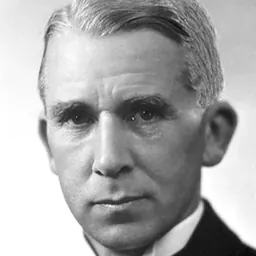
Lived 1922 – 1995 (aged 72). Calder Willingham was an American writer, screenwriter and novelist.
Calder Baynard Willingham Jr. (December 23, 1922 – February 19, 1995) was an American novelist and screenwriter.
Before the age of 30, after three novels and a collection of short stories, The New Yorker was describing Willingham as having “fathered modern black comedy,” his signature a dry, straight-faced humor, made funnier by its concealed comic intent. His work matured over six more novels, including Eternal Fire (1963), which Newsweek wrote “deserves a place among the dozen or so novels that must be mentioned if one is to speak of greatness in American fiction.” He had a significant career in cinema too, with screenplays including Paths of Glory (1957), One-Eyed Jacks (1960), The Graduate (1967) and Little Big Man (1970).
Life and career Willingham was born in Atlanta, Georgia, the son of Eleanor Churchill (Willcox) and Calder Baynard Willingham, a hotel manager. After dropping out of The Citadel, then working for the Office of War Information in Washington, D.C., Willingham moved to New York City where he wrote for 10 years, setting three novels there. During the late 1940s and early 1950s, Willingham was considered at the forefront of the gritty, realistic new breed of postwar novelists: Norman Mailer, James Jones, Truman Capote, Gore Vidal, and others, many of whom comprised the Greenwich Village literary scene at the time. but not before a trial that made the book a cause célèbre in which famous writers were rallying to its defense. Reviews singled out its savage humor and realistic dialogue.
Willingham's next novel appeared six years later, another epic, Providence Island (1969), in which a male television executive is shipwrecked with a repressed, married woman and a plain, shy, androgynous one. The book was not as well reviewed as its predecessor but became a best-seller in paperback. Twentieth Century Fox paid a near-record amount to buy the rights for husband and wife Paul Newman and Joanne Woodward but never made the movie.
Stanley Kubrick first hired Willingham to adapt Stefan Zweig’s novel The Burning Secret, but the project fell through and Kubrick eventually hired Willingham to work on the script of Paths of Glory (1957), of which Jim Thompson had written earlier drafts. The specific contributions by Kubrick, Thompson, and Willingham to the final script were disputed, and the matter went to arbitration with the Writers' Guild. Willingham continued working with Kirk Douglas, the star of Paths of Glory, receiving screen credit for The Vikings (1958), a box-office hit starring Douglas, Tony Curtis and Janet Leigh. Soon after, Kubrick replaced Anthony Mann as director during filming of Spartacus (1960), which Douglas was starring in and producing, and Willingham joined the production to work on the screenplay and battle sequences.
Though Willingham dropped out of the literary scene when he left New York in 1953, he maintained his friendship with Vladimir Nabokov. Broke and isolated, Nabokov was teaching at Cornell University and considering moving from the U.S. Willingham encouraged him to sell his books to Hollywood and passed along a copy of Lolita to Kubrick, who agreed to buy it. Willingham arranged the deal and wrote the first drafts, before giving way to Nabokov, who'd never written a screenplay but contributed significantly and also profited financially. The film was released with a screenplay credited to Nabokov, but is really an amalgam of Willingham, Nabokov and Kubrick's work, and it was nominated for an Academy Award. Willingham's fifth and final collaboration with Kubrick was One-Eyed Jacks (1961) with Marlon Brando. The three collaborated on the story for a year before Kubrick left and Brando directed himself in the film. The film was nominated for seven Academy Awards including Best Picture and Best Screenplay. Willingham's collaboration with actor Dustin Hoffman continued with an adaptation of Thomas Berger’s Little Big Man, for which Willingham was nominated for Writer's Guild Award. They attempted a third collaboration, an adaptation of Malcolm Braly’s prison memoir On The Yard, but it was never made. During this period, Willingham also wrote an extended treatment for the film Patton (1970) and a screenplay for Robert Altman’s Thieves Like Us (1974). blamed a twist of fate, a newspaper strike coinciding with publication of Eternal Fire, limiting its readership. Publisher Donald I. Fine echoed this notion in his re-issue of the book in 1986, and perhaps this is a partial explanation why Eternal Fire, arguably deserving of recognition by the literary awards which would have secured him a brighter place in the postwar pantheon, was overlooked. At the same time, as early as 1969, an article entitled “Calder Willingham: The Forgotten Novelist,” appeared in a literary quarterly and most current references refer to him as one of the under-appreciated talents of his generation.
Novels
End as a Man (1947) Geraldine Bradshaw (1950) Gates of Hell (1951) Reach to the Stars (1951) Natural Child (1952) To Eat a Peach (1955) Eternal Fire (1963) Providence Island (1969) Rambling Rose (1972) The Big Nickel (1975) The Building of Venus Four (1977)
Screenplays
The Strange One (1957) Paths of Glory (1957) (with Stanley Kubrick and Jim Thompson) The Bridge on the River Kwai (1957) (uncredited) The Vikings (1958) Spartacus (1960) (uncredited) One-Eyed Jacks (1961) The Graduate (1967) (with Buck Henry) Little Big Man (1970) Thieves Like Us (1974) (with Robert Altman and Joan Tewkesbury) Thou Shalt Not Commit Adultery (1978) (TV) (with Del Reisman) Rambling Rose (1991)
Don’t just read it —
keep it.
Full-length biographies made to live with: read them, listen on the way to work, watch them tonight.
- E-book
- Audio
- Video
Instant download · yours to keep · every purchase keeps this site free
Important facts
People in Calder Willingham's life
Named in this biography and alive at the same time

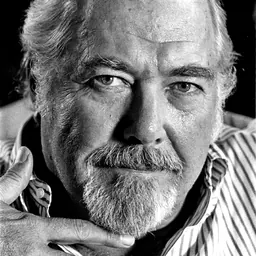



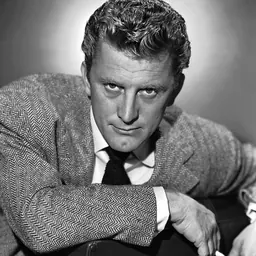


Related people
Same field, nearest in time



Contemporaries
People whose lives overlapped Calder Willingham's

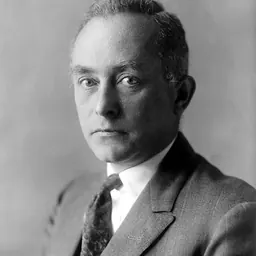

Frequently asked questions
Who was Calder Willingham?
American writer (1922–1995)
When was Calder Willingham born?
Calder Willingham was born on 23 December 1922 in Atlanta.
When did Calder Willingham die?
Calder Willingham died on 19 February 1995 in Laconia.
What was Calder Willingham's occupation?
Calder Willingham was a writer, screenwriter and novelist.
What nationality was Calder Willingham?
Calder Willingham was American.
Sources & further reading
· Wikipedia: Calder Willingham
Cite this page
APA: Biography.guide. (2026). Calder Willingham. https://biography.guide/calder-willingham/
MLA: "Calder Willingham." Biography.guide, https://biography.guide/calder-willingham/.
Chicago: "Calder Willingham." Biography.guide. https://biography.guide/calder-willingham/.
Data last updated: 2026-09-20 · Spot an error? Report a correction.
Page generated 2026-09-27 05:13 UTC