
About C. M. Stephen
Lived 1918 – 1984 (aged 65). C. M. Stephen was an Indian politician.
Chembakassery Mathai Stephen (23 December 1918 – 16 January 1984) was an Indian politician who served as the Union Minister of Communications of India from 1980 to 1982 in the Republic of India. C. M. Stephen was born on 23 December 1918 to Eapen Mathai and Esther of Chembakassery house in Cherukole, Mavelikkara. During his school days, Stephen was active in the Balajanasakhyam (promoted by Malayala Manorama). This helped him to develop leadership qualities, oratorial and organizing skills.
Career After completing B. L., Stephen started his career as a journalist. He also started 'Pouraprabha' an evening daily. Through this daily, he supported the Travancore Congress and attacked the rule of C. P. Ramaswamy Iyer. In 1949, he gave up his career as a journalist and started practising law. In 1951, he joined active politics and in the same year became the D.C.C. president of Kollam.
He was a close associate of veteran Congress leaders P. T. Chacko, Pattom Thanu Pillai and R. Sankar and provided leadership in the Vimochana Samaram during 1958-59 period as an associate of P. T. Chacko, Pattom Thanu Pillai, R. Sankar and others.
He was also one of the founding fathers of Indian National Trade Union Congress, the trade union wing of the Indian National Congress. He won the State elections in 1960, 1965 and 1971. He was also elected as a Member of Parliament from Idukki in the 1976 parliamentary elections. He was a close aide of then Prime Minister Indira Gandhi. He was the leader of the Congress Parliamentary Party - Indira faction during 1978–79.
C. M. Stephen also served in the Union Cabinet under Indira Gandhi, most notably as the Union Minister for Communications (1980–84). Shashi Tharoor in his 'India: From Midnight to the Millennium' quotes Stephen's statement in Parliament that "the telephone was a luxury and not a necessity" as symptomatic of India's failure to invest in infrastructure and communications before the Reforms of 1991.
Dharam Singh gave up the Gulbarga Lok Sabha seat to accommodate C. M. Stephen, the then Union Home Minister in the Indira Gandhi Cabinet, after he lost the election in Delhi to Atal Bihari Vajpayee.
C. M. Stephen was buried at St. Mary Orthodox Cathedral, Mavelikkara.
Don’t just read it —
keep it.
Full-length biographies made to live with: read them, listen on the way to work, watch them tonight.
- E-book
- Audio
- Video
Instant download · yours to keep · every purchase keeps this site free
Important facts
People in C. M. Stephen's life
Named in this biography and alive at the same time
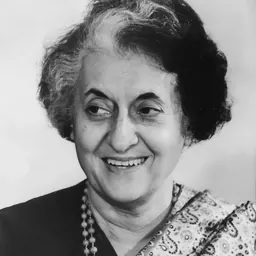
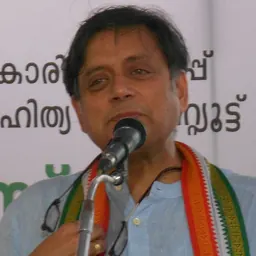

Related people
Same field, nearest in time






Contemporaries
People whose lives overlapped C. M. Stephen's


Frequently asked questions
Who was C. M. Stephen?
Indian politician
When was C. M. Stephen born?
C. M. Stephen was born on 23 December 1918 in Mavelikkara.
When did C. M. Stephen die?
C. M. Stephen died on 16 January 1984 in Mavelikkara.
What was C. M. Stephen's occupation?
C. M. Stephen was a politician.
What nationality was C. M. Stephen?
C. M. Stephen was Indian.
Sources & further reading
Cite this page
APA: Biography.guide. (2026). C. M. Stephen. https://biography.guide/c-m-stephen/
MLA: "C. M. Stephen." Biography.guide, https://biography.guide/c-m-stephen/.
Chicago: "C. M. Stephen." Biography.guide. https://biography.guide/c-m-stephen/.
Data last updated: 2026-09-20 · Spot an error? Report a correction.
Page generated 2026-09-27 05:22 UTC