
Busby Berkeley
American film director and musical choreographer
About Busby Berkeley
Lived 1895 – 1976 (aged 80). Busby Berkeley was an American film director, choreographer, actor, theatre director and director.
Berkeley William Enos (November 29, 1895 – March 14, 1976), known professionally as Busby Berkeley, was an American film director and musical choreographer, best known for his collaboration with Warner Brothers in the early to mid-1930s. Berkeley devised elaborate musical production numbers that often involved complex geometric patterns. His work used large numbers of showgirls and props as fantasy elements in kaleidoscopic on-screen performances.
Early life
Berkeley was born in Los Angeles, California, to the stage actor Francis Enos (1863–1904) and the stage actress Gertrude Berkeley (1864–1946). Among Gertrude's friends, and a performer in Tim Frawly's Stock company run by Busby Berkeley's father, were actress Amy Busby from whom Berkeley gained the appellation "Buzz" or "Busby", and actor William Gillette. Whether he was christened Busby Berkeley William Enos, or Berkeley William Enos, with Busby's being a nickname, is unknown – the "Child's names" entry on his birth certificate is blank. During World War I, Berkeley served in the U.S. Army as a field artillery lieutenant, drilling 1,200 soldiers in complex choreography.
Career Early years During the 1920s, Berkeley was a dance director for nearly two dozen Broadway musicals, including hits such as A Connecticut Yankee. As a choreographer, Berkeley was less concerned with the dancing skills of his chorus girls as he was with their ability to form themselves into attractive geometric patterns. His musical numbers were among the larger and better-regimented on Broadway.
His earliest film work was in Samuel Goldwyn's Eddie Cantor musicals, where he began developing such techniques as a "parade of faces" (individualizing each chorus girl with a loving close-up), and moving his dancers all over the stage (and often beyond) in as many kaleidoscopic patterns as possible. Berkeley's top shot technique (the kaleidoscope again, this time shot from overhead) appeared seminally in the Cantor films, and also the 1932 Universal film Night World (where he choreographed the number "Who's Your Little Who-Zis?").
Groundbreaking choreographer
The "By a Waterfall" production number from Footlight Parade (1933) made use of one of the largest soundstages ever built, specially constructed by Warner Bros. to film Berkeley's creations. Berkeley's numbers were known for starting in the realm of the stage, but quickly exceeding this space by moving into a time and place that could only be cinematic, to return to shots of an applauding audience and the fall of a curtain. He used one camera to achieve this, instead of the usual four, to retain control over his vision so no director could edit the film. As choreographer, Berkeley was allowed a certain degree of independence in his direction of musical numbers, and they were often markedly distinct from (and sometimes in contrast to) the narrative sections of the films. He often didn't even see the other sections of the picture.
Berkeley's popularity with an entertainment-hungry Depression audience was secured when he choreographed five musicals back-to-back for Warner Bros.: 42nd Street, Footlight Parade, the aforementioned Gold Diggers of 1933, Dames, and Fashions of 1934, as well as In Caliente and Wonder Bar with Dolores del Río. Berkeley always denied any deep significance to his work, arguing that his main professional goals were to top himself and never repeat his past accomplishments.
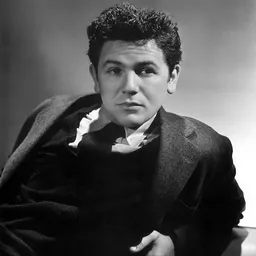
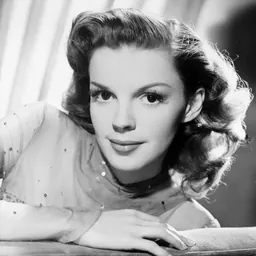
As the outsized musicals in which Berkeley specialized became passé, he turned to directing dramatic stories. The results were 1939's They Made Me a Criminal starring John Garfield, and 1940's Forty Little Mothers, notable for Eddie Cantor's only dramatic screen performance. Berkeley had several well-publicized run-ins with MGM stars such as Judy Garland. In 1943, he was removed as director of Girl Crazy because of disagreements with Garland, but the lavish musical number "I Got Rhythm", which he directed, remained in the picture.
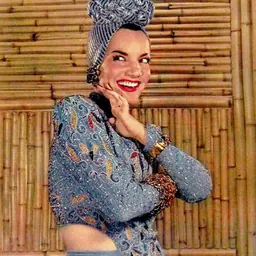
His next stop was at 20th Century-Fox for 1943's The Gang's All Here, in which Berkeley choreographed Carmen Miranda's "Lady in the Tutti-Frutti Hat" number. The film made money, but Berkeley and the Fox brass disagreed over budget matters. Built in 1910, Berkeley owned the home until 1944.
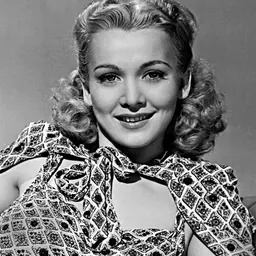
Berkeley was married six times. His wives included actresses Merna Kennedy, Esther Muir, the starlet Claire James, and Etta Dunn, who survived him. He was involved in an alienation of affections lawsuit in 1938 involving Carole Landis, and he was engaged to Lorraine Stein.
Berkeley drank heavily, often having martinis in his daily bath.
In September 1935, Berkeley was responsible for an automobile crash in which two people were killed and five seriously injured. Badly cut and bruised, he was brought to court on a stretcher, where Time magazine reported he heard testimony that made him wince:
'Witnesses testified that motorist Berkeley sped down Roosevelt Highway in Los Angeles County one night, changed lanes, crashing headlong into one car, sideswiped another. Some witnesses said they smelled liquor on him'. He was admitted to a hospital for an extended stay, an experience which severely affected his mental state.
Berkeley died from natural causes on March 14, 1976, in Palm Springs, California at the age of 80. He is buried in the Desert Memorial Park in Cathedral City, California.
Legacy Berkeley was inducted into the National Museum of Dance's Mr. & Mrs. Cornelius Vanderbilt Whitney Hall of Fame in 1988.
Broadway credits A Connecticut Yankee (1927, choreographer) No, No, Nanette (1971, production supervisor)
Filmography
Don’t just read it —
keep it.
Full-length biographies made to live with: read them, listen on the way to work, watch them tonight.
- E-book
- Audio
- Video
Instant download · yours to keep · every purchase keeps this site free
Important facts
People in Busby Berkeley's life
Named in this biography and alive at the same time




Related people
Same field, nearest in time



Contemporaries
People whose lives overlapped Busby Berkeley's
Frequently asked questions
Who was Busby Berkeley?
American film director and musical choreographer (1895-1976)
When was Busby Berkeley born?
Busby Berkeley was born on 29 November 1895 in Los Angeles.
When did Busby Berkeley die?
Busby Berkeley died on 14 March 1976 in Palm Springs.
What was Busby Berkeley's occupation?
Busby Berkeley was a film director, choreographer, actor, theatre director and director.
What nationality was Busby Berkeley?
Busby Berkeley was American.
Sources & further reading
Cite this page
APA: Biography.guide. (2026). Busby Berkeley. https://biography.guide/busby-berkeley/
MLA: "Busby Berkeley." Biography.guide, https://biography.guide/busby-berkeley/.
Chicago: "Busby Berkeley." Biography.guide. https://biography.guide/busby-berkeley/.
Data last updated: 2026-09-22 · Spot an error? Report a correction.
Page generated 2026-09-27 05:26 UTC