
About Bunny Currant
Lived 1911 – 2006 (aged 94). Bunny Currant was a British flying ace.
Christopher Frederick Currant, (14 December 1911 – 12 March 2006) was a British Royal Air Force (RAF) fighter pilot and flying ace of the Second World War. He was credited with at least fifteen aerial victories.
Born in Luton, Currant, who was nicknamed 'Bunny', joined the RAF in 1936 and was posted to No. 46 Squadron once his training was completed. At the time of the outbreak of the Second World War, he was serving with No. 605 Squadron. He flew in the Battle of France and then the subsequent Battle of Britain, achieving a number of aerial victories during the latter. He later served as an instructor and then took command of No. 501 Squadron, flying several offensive sorties to occupied Europe. He was also involved in the making of the film The First of the Few. During the later stages of the war, he commanded No. 122 Wing. After the war he remained in the RAF, serving in staff positions as well as on secondment to the Royal Norwegian Air Force. He retired from the RAF in 1959 and subsequently worked for an engineering firm. He died in 2006 at the age of 94.
Early life Christopher Frederick Currant, who was nicknamed 'Bunny', was born on 14 December 1911 in Luton, Bedfordshire, and went to Rydal School in Wales. He joined the Royal Air Force (RAF) in January 1936, when he was 25; after gaining his wings, he joined No. 46 Squadron as a sergeant pilot in 1937. Based at Kenley at the time, the squadron operated Gloster Gauntlet fighters. He was subsequently posted to No. 151 Squadron, which also operated Gauntlets although these were soon replaced by Hawker Hurricane fighters.
On 15 October Currant destroyed a Bf 109 in the vicinity of Rochester, his last aerial victory of the Battle of Britain. In early November he became commander of No. 605 Squadron, having taken over in an acting capacity following the death of the incumbent, Squadron Leader Archie McKellar. He was awarded a Bar to his DFC, the award announced on 15 November. The published citation read:
Currant was succeeded by Squadron Leader Gerald Edge as commander of No. 605 Squadron at the end of November. He destroyed a Bf 109 over Dover on 1 December. No. 605 Squadron began operating offensively from early 1941, carrying out sorties across the English Channel to northern France. In February, Currant was posted to No. 52 Operational Training Unit at Debden, becoming its chief flying instructor in July. By this time, he held the rank of acting squadron leader.
Later war service
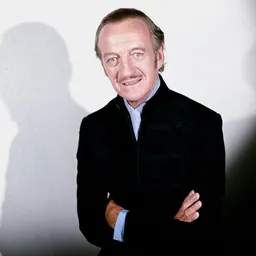
In August, Currant was given command of No. 501 Squadron, which was based at Ibsley and operated the Supermarine Spitfire fighter on offensive sorties to France. It was around this time that he acted in the film The First of the Few, which starred David Niven and was filmed at Ibsley. On 8 November, Currant damaged a Bf 109. He was wounded on 9 March 1942 while on a Circus operation; engaged by three Focke-Wulf Fw 190 fighters, a bullet struck him in the head. He was able to evade his pursuers and make a crash landing at Lympne. After hospital treatment, he returned to duty the following month and, on 17 April, claimed a Bf 109 as probably destroyed.
In February 1943 Currant was given command of No. 122 Wing of the Second Tactical Air Force. Based at Zeals, he led the wing on sorties to France, targeting transportation infrastructure. On account of one of the squadrons under his command including several Belgian pilots, he was awarded the Croix de Guerre by the Belgian government in exile on 9 April 1943. He was Mentioned in Despatches on 11 January 1944.
Currant's wing helped provide aerial cover for the landings at Normandy on 6 June. He was rested from operations soon afterwards and undertook a four-month lecturing tour in the United States. Upon his return he went to No. 84 Group Control Centre, where he was involved in the allocation of targets in support of tactical air operations. He was mentioned in despatches at the start of 1945. He ended the war credited with having shot down fifteen aircraft, five of which being shared with other pilots. He is also credited with the probable destruction of two more aircraft and damaging twelve aircraft.
Postwar service Currant chose to remain in the RAF after the war, being granted a permanent commission as a squadron leader although continuing in his acting rank. He took courses at the Joint Services Staff College and the RAF Staff College, following which he was sent to Washington, DC where he was on the staff of the Joint Chiefs of Staff for three years. He held an administrative role at the RAF station at Wattisham for two years and then served for 12 months as a staff officer in London at the Ministry of Supply. In 1955, he was sent to Norway as an instructor at the Royal Norwegian Air Force Staff College. His initial two-year term was extended for an additional two years at the request of the Norwegian government.
Later life Currant retired from the RAF in January 1959 whereafter he joined an engineering firm in Luton. His employers developed weapons for the RAF. He finally retired in 1976, settling in Somerset. Currant died at Taunton on 12 March 2006, survived by his wife Cynthia, whom he married in 1942, and the couple's four children.
Don’t just read it —
keep it.
Full-length biographies made to live with: read them, listen on the way to work, watch them tonight.
- E-book
- Audio
- Video
Instant download · yours to keep · every purchase keeps this site free
Important facts
People in Bunny Currant's life
Named in this biography and alive at the same time


Related people
Same field, nearest in time

Contemporaries
People whose lives overlapped Bunny Currant's






Frequently asked questions
Who was Bunny Currant?
British flying ace
When was Bunny Currant born?
Bunny Currant was born on 14 December 1911 in Luton.
When did Bunny Currant die?
Bunny Currant died on 12 March 2006 in Taunton.
What was Bunny Currant's occupation?
Bunny Currant was a flying ace.
What nationality was Bunny Currant?
Bunny Currant was British.
Sources & further reading
Cite this page
APA: Biography.guide. (2026). Bunny Currant. https://biography.guide/bunny-currant/
MLA: "Bunny Currant." Biography.guide, https://biography.guide/bunny-currant/.
Chicago: "Bunny Currant." Biography.guide. https://biography.guide/bunny-currant/.
Data last updated: 2026-09-20 · Spot an error? Report a correction.
Page generated 2026-09-27 05:22 UTC