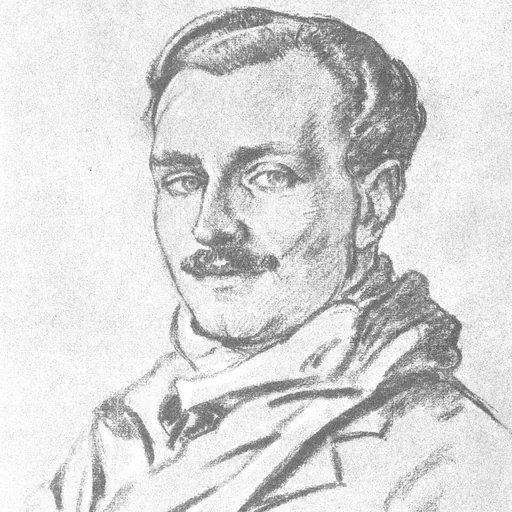
About Archie McKellar
Lived 1912 – 1940 (aged 28). Archie McKellar was a British military personnel.
Squadron Leader Archibald Ashmore McKellar, & Bar (10 April 1912 – 1 November 1940) was a flying ace of the Royal Air Force (RAF) during the Second World War.
McKellar grew up and joined the family business in his native Scotland, but in 1936, aged 24, he joined the RAF and began pilot training. He completed his training in 1938 and was assigned to No. 602 (City of Glasgow) Squadron RAF, an Auxiliary Unit. In 1939 he converted to the Supermarine Spitfire fighter. He experienced his first combat with No. 602 Squadron, credited with two victories soon after the outbreak of war in 1939 against German bombers attacking Royal Navy ships and installations over northern Britain during the "Phoney War" period. McKellar's first victory earned him the distinction of being the first pilot to shoot down a German aircraft over the British Isles during the war.
A year later, he gained fame in 1940 during the Battle of Britain as a part of, and later squadron leader of, No. 605 Squadron RAF, equipped with the Hawker Hurricane fighter. The Auxiliary Unit was moved to southern England and participated in the large air battles. McKellar's combat career proved to be very brief, lasting just over a year. He claimed all but two of his victories within the last two and a half months of his life; 15 August – 1 November 1940. On 7 October 1940 he shot down five Messerschmitt Bf 109s, thus becoming an ace in a day; one of only 24 Allied aces to achieve the feat. At the time of his last mission he had claimed 21 aerial victories and another two shared destroyed against enemy aircraft. Included in this total of 21 air victories are 11 Bf 109s. McKellar, along with Ronald Hamlyn and Brian Carbury, were the only British pilots to achieve the feat of "Ace in a Day" during the Battle of Britain.
On 1 November 1940, one day after the official end of the Battle of Britain, he was killed in action. He took off and engaged a formation of German fighters, one of which he possibly shot down for his 22nd, albeit uncredited, and final victory. McKellar was then shot down himself. It was also the War's first German aircraft shot down onto British soil.
605 Squadron In early 1940, 605 Squadron moved to RAF Drem, as they converted to Hurricanes. McKellar was transferred to No. 605 and promoted to flight lieutenant, assuming the responsibilities of a flight leader on 21 June 1940. McKellar imposed strict discipline, both in standard of dress on the ground and in tactical discipline in the air. Despite his strict methods McKellar was held in high regard. His popularity arose from his desire to help mould his unit into a well-disciplined fighting team.
Hawker Hurricane I R4118 of No 605 Squadron, flown by Bob Foster, McKellar's Squadron comrade who also flew on McKellar's last mission.
On 15 August 1940 No. 605 intercepted a German raid against Tyneside mounted by He 111s based in Norway with Luftflotte 5 (Air Fleet 5). McKellar was credited with three He 111s destroyed during the encounter. For this action he was awarded the Distinguished Flying Cross (DFC) and was gazetted on 13 September 1940 and made reference to the "outstanding leadership and courage" displayed by McKellar.
On 7 September 1940, No. 605 moved on rotation to Croydon Aerodrome under the command of Squadron Leader Walter Churchill. McKellar scored a further four victories in a single mission on 9 September. McKellar attacked with the sun at his back with his squadron, save for one section which was left to provide top cover against Bf 109s. The attack was made head-on to break up the German bomber formation which consisted of a large mass of He 111s. He destroyed three He 111s with a single, 12–second burst. The first He 111 exploded. It damaged a second which rolled over and dived down into the ground. McKellar then moved his fire to a third. Its port wing snapped off. He then destroyed a Bf 109 in the afternoon giving him a fourth success.
McKellar took over from Squadron Leader Churchill on 11 September. He achieved a further three victories 15 September. The raids were made in large formation leading the fighting that day to be christened the Battle of Britain Day. McKellar led 605 into combat twice on that date claiming two Bf 109s and a Do 17. That night, at an hour past midnight, 16 September, he claimed another He 111 shot down. A Medal bar to the DFC followed which cited his "excellent fighting spirit ... particularly brilliant tactician, and has led his Squadron with skill and resource".
On 3 October McKellar became one of the select few pilots of Fighter Command to sit for one of Cuthbert Orde's charcoal portraits. On 7 October his score rose by five victories, all Bf 109s, becoming an Ace in a day. McKellar explained three of the five victories in the combat that day in his combat report;
Thirteen days later, on 20 October 1940, McKellar brought down another Bf 109. Its pilot, Feldwebel Adolf Iburg from 9. Staffel Jagdgeschwader 54 (JG 54—Fighter Wing 54), was slightly wounded in action. Iburg managed to force–land near New Romney and was captured. The victory was credited to him in a post-war account, but there is no official accreditation of the Iburg victory to McKellar by the RAF, though he was credited with another Bf 109 victory on that date.
Death By 1 November 1940 McKellar had claimed 21 victories. Taking a section of No. 605 that included Flight Lieutenant Bob Foster, up to meet a flight of Bf 109 Jabos (Bf 109s equipped with bombs). The section climbed to high altitude to meet the enemy aircraft. In the ensuing battle it is believed McKellar was shot down by II./Jagdgeschwader 27 Hauptmann Wolfgang Lippert. McKellar's Hurricane MkI (V6879) crashed at the side of Woodlands Manor near Adisham, Kent at 18:20hrs.
On 8 November 1940 his actions brought a final award: the Distinguished Service Order (DSO). His DSO was gazetted posthumously on 26 November 1940 and again cited both 'outstanding courage and determination' in leading his squadron. Further recognition came in a Mention in Despatches gazetted on 31 December 1940.
On 16 January 1941 Sir Archibald Sinclair, Secretary of State for Air, visited Glasgow to deliver the eulogy;
As McKellar died outside the Air Ministry's nominal dates for the Battle of Britain (10 July—31 October 1940), he is not listed on the Battle of Britain roll of honour at The RAF Chapel, Westminster Abbey. McKellar is buried at New Eastwood Cemetery, Thornliebank, East Renfrewshire, by Glasgow. McKellar Close in Bushey is named in his honour, one of a number of streets in the area named after Battle of Britain pilots.
List of victories Historian Alfred Price credited McKellar with 17 air victories, three shared destroyed, five probably destroyed and three damaged. Historians Christopher Shores and Clive Williams credit him with 21 air victories, three probably destroyed and three damaged as does E.C.R Baker. The second was Werknummer 3881—Unteroffizier Paul Lege killed in action. Another loss was Werknummer 5391, of 4 Staffel Lehrgeschwader 2 (LG 2—Learning Wing 2). Pilot Unteroffizier Ley missing, presumed killed in action by 605 Hurricanes. Also lost that day was a 2 Staffel Jagdgeschwader 51 (JG 51—Fighter Wing 51) Bf 109, Werknummer 5805, which crash–landed near Calais after combat and was 65% destroyed. A second Bf 109 from the same unit, Werknummer 4103, was also destroyed. The pilot Oberleutnant Viktor Mölders—brother of the famous ace Werner Mölders—was posted as missing in action by the Luftwaffe. No times are given for these losses. 19. 20 October 1940 1 x Bf 109 His first victory that day can be identified as belonging to 3. Staffel Lehrgeschwader 2 (LG 2—Learning Wing). Unteroffizier Franz Mairl was killed in action in Bf 109 Werknummer 2059 Yellow 8 over Ashford, Kent at 10:00. A second enemy also fell that afternoon. Feldwebel Adolf Iburg from 9. Staffel Jagdgeschwader 54 (JG 54—Fighter Wing 54) crash–landed and was captured. The victory McKellar claimed was credited as damaged only. 20. 26 October 1940 1 x Bf 109 21. 27 October 1940 1 x Bf 109 Claimed a Bf 109 at 09:30 over Croydon, Dungeness. The Germans lost 13 Bf 109s to all causes on this date. Seven machines were lost that day to unidentified squadrons over Kent: I./Jagdgeschwader 3 (JG 3—Fighter Wing 3) lost Bf 109E-7 Werknummer 4124. The pilot, Leutnant Wilhelm Busch, was posted missing in action. 8. Staffel JG 27's Bf 109 Werknummer 1329 damaged, force-landed in France after combat 20% destroyed. The same unit's squadron leader Oberleutnant Anton Pointer went missing. 9 Staffel Werknummer 4818 force-landed near Calais 40% destroyed. Pilot Albert Busenkeil was wounded. 2. Staffel Jagdgeschwader 52 (JG 52—Fighter Wing 52) Werknummer 1268 Black 5 was lost over Kent. Karl Bott was posted missing in action. 3. Staffel JG 52 lost Werknummer 2798 Yellow 2. Oberleutnant Ulrich Steinhilper was captured (and later made numerous escape attempts from Canada). In the same unit, Yellow 4, Werknummer 3525, was shot down. Lothar Schieverhöfer missing in action. 22. (Uncredited) 1 November 1940 1 x Bf 109 Logged as a claim over Faversham at 08:15. A Bf 109 did crash near McKellar, and no other RAF pilot claimed it as destroyed. It could have been brought down by McKellar, but remains uncredited.
21 kills
Battle of Britain 80th Anniversary programme McKellar was prominently featured in a Channel 5 programme commemorating the 80th anniversary of the Battle of Britain, presented by Dan Snow and Kate Humble. Entitled The Battle of Britain: 3 Days That Saved the Nation, the programme told McKellar's life story, The iPAPER published a detailed review of the programme, commenting on McKellar's "precocious gift for flying" and noting that his story was "little known".
Don’t just read it —
keep it.
Full-length biographies made to live with: read them, listen on the way to work, watch them tonight.
- E-book
- Audio
- Video
Instant download · yours to keep · every purchase keeps this site free
Important facts
People in Archie McKellar's life
Named in this biography and alive at the same time




Related people
Same field, nearest in time


Contemporaries
People whose lives overlapped Archie McKellar's






Frequently asked questions
Who was Archie McKellar?
British flying ace (1912-1940)
When was Archie McKellar born?
Archie McKellar was born on 10 April 1912 in Paisley.
When did Archie McKellar die?
Archie McKellar died on 1 November 1940 in Adisham.
What was Archie McKellar's occupation?
Archie McKellar was a military personnel.
What nationality was Archie McKellar?
Archie McKellar was British.
Sources & further reading
Cite this page
APA: Biography.guide. (2026). Archie McKellar. https://biography.guide/archie-mckellar/
MLA: "Archie McKellar." Biography.guide, https://biography.guide/archie-mckellar/.
Chicago: "Archie McKellar." Biography.guide. https://biography.guide/archie-mckellar/.
Data last updated: 2026-09-23 · Spot an error? Report a correction.
Portrait: Wikimedia Commons · author & licence
Page generated 2026-09-27 05:07 UTC