
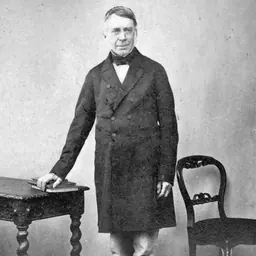
Buckskin Charley
Ute leader
About Buckskin Charley
Lived 1840 – 1936 (aged 95–96).
Sapiah (his Ute name), is also commonly known as Charles Buck and Buckskin Charley (also spelled Buckskin Charlie; 1840–May 8, 1936), (Sapiah was the leader's Ute birth name.) He led a group of Utes to rescue women and children from the White River Agency during the Meeker Massacre that resulted in the deaths of Nathan Meeker and his soldiers. The northern band of Utes were forced out of Colorado after the massacre.
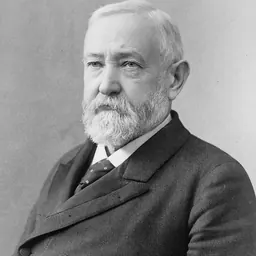
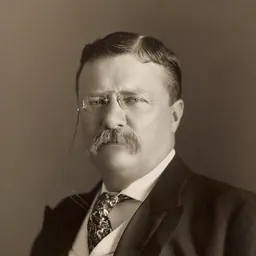
In 1880, Chief Ouray died, and Sapiah and other Ute chiefs negotiated for treaties with the United States government. Sapiah met five or more presidents in Washington, D.C., including Benjamin Harrison who awarded him the Rutherford B. Hayes Indian Peace Medal and Theodore Roosevelt. He attended Roosevelt's inaugural parade. Sapiah sought to coexist with white people in peace. He fought for children's education on the reservation and was opposed to sending children away from their families to American Indian boarding schools.
The government was pressured to remove all Utes from Colorado after the Meeker and Beaver Creek Massacres (1885). But in and after 1894, the government established two reservations in Southern Colorado under federal law: the Ute Mountain Ute Reservation and the Southern Ute Indian Reservation. Sapiah was a farmer and rancher on his allotted 160-acres of land.
Personal life Sapiah was born around 1840 in Colorado or New Mexico. During his childhood, Ute's traditional land spanned most of what is now the state of Colorado. The Tabeguache band was led by Ouray, who came to be seen as the leader of all the Utes. Their son Julian had a wife and at least one child. He was the chief of police at the Pine River Agency
Leader Leader of a Muache band Before 1868, Saphia led a Muache band, ranging over northern New Mexico with the Abiquiú and Tierra Amarilla Indian Agencies, and later over eastern New Mexico. In 1868, when Ouray was the principal chief of the Utes, a treaty was enacted between the Utes and the government that provided land for a reservation in Western Colorado. Other treaties reduced the size of the reservation as more miners and prospectors settled in the area, and Utes from New Mexico were forced to move to Colorado. Ouray designated him the chief of the Muache band of Utes about 1870.
Meeker Massacre White River Utes killed Nathan Meeker and his soldiers at the White River Agency during the Meeker Massacre (September 29, 1879). Sapiah led a group of Utes to the agency to rescue women and children and was later called the "Hero of Meeker Massacre". Sapiah and three other Ute chiefs—Ouray, Severo, and Ignacio—were honored on the Ute Chieftains Memorial Monument on September 24, 1939.
Don’t just read it —
keep it.
Full-length biographies made to live with: read them, listen on the way to work, watch them tonight.
- E-book
- Audio
- Video
Instant download · yours to keep · every purchase keeps this site free
Important facts
People in Buckskin Charley's life
Named in this biography and alive at the same time


Contemporaries
People whose lives overlapped Buckskin Charley's


Frequently asked questions
Who was Buckskin Charley?
Ute leader
When was Buckskin Charley born?
Buckskin Charley was born in 1840.
When did Buckskin Charley die?
Buckskin Charley died on 9 May 1936.
Sources & further reading
Cite this page
APA: Biography.guide. (2026). Buckskin Charley. https://biography.guide/buckskin-charley/
MLA: "Buckskin Charley." Biography.guide, https://biography.guide/buckskin-charley/.
Chicago: "Buckskin Charley." Biography.guide. https://biography.guide/buckskin-charley/.
Data last updated: 2026-09-26 · Spot an error? Report a correction.
Page generated 2026-09-27 05:13 UTC