
About Bruno Kaiser
Lived 1911 – 1982 (aged 70). Bruno Kaiser was a German librarian, german studies and journalist.
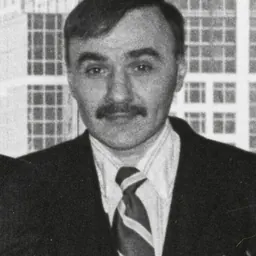
Bruno Kaiser (5 February 1911 – 27 January 1982) was a Marxist scholar of German studies who became a journalist and, during the Nazi period, a resistance activist. In his later years he became, in addition, a distinguished librarian.
Life
Early years Bruno Kaiser was the son of a high school teacher who was also a passionate collector of, among other things, antique prints. In addition to his school education, Bruno Kaiser learned from his father a knowledge of collecting and a love of literature and of collecting that formed the basis for much of his later life. Following the successful completion of his school career he went on to Berlin's Humboldt University where he studied Literary sciences and Art history. He also started contributing to the venerable Vossische Zeitung (newspaper), initially on a voluntary basis and later as a contributing editor. Kaiser's period of study at the university was later terminated before completion Johann Hermann Detmold: Taten und Meinungen des Herrn Piepmeyer ... Mit Zeichnungen von Adolf Schrödter. Mit einem Nachwort von Bruno Kaiser. Buchverlag Der Morgen, Berlin 1961 Jenny Marx als Theaterkritikerin. Zu einer bedeutsamen Wiederentdeckung. In: Beiträge zur Geschichte der Arbeiterbewegung. Berlin 1966, Heft 6, S. 1031–1042 Information über das Schicksal der persönlichen Bücher von Karl Marx und Friedrich Engels. In: Theorie und Praxis. 9 (12.) Jg., Berlin 1963, Sonderheft S. 46 f. Schöne Kinderbücher aus der DDR. Mit einer Einführung von Bruno Kaiser. Bibliographische Angaben von Heinz Wegehaupt. Kinderbuchverlagm Berlin 1965 Klaus Bulling: Bibliographie zur Fruchtbringenden Gesellschaft. Vorrede von Bruno Kaiser. Aufbau-Verlag, Berlin 1965 Die Bücher von Maitland Park. In: Einheit. Zeitschrift für Theorie und Praxis des Wissenschaftlichen Sozialismus hrsg. vom Zentralkomitee der Sozialistischen Einheitspartei Deutschlands. – Berlin 1968, Bd. 23.1968, 4/5, S. 604–605 Die Bibliothek des Instituts für Marxismus-Leninismus beim Zentralkomitee der SED. Ein Sammelband. Institut für Marxismus-Leninismus, Berlin 1969 Bruno Kaiser / Inge Werchan: Ex Libris Marx und Engels. Das Schicksal der Bibliothek von Marx und Engels. Dietz Verlag, Berlin 1967 Alfred Meißner: Heinrich Heine. Erinnerungen. 2. unveränd. Aufl. Hoffmann u. Campe, Hamburg 1856. (Unveränd. Fotomechan. Nachdr. mit einem Nachwort von Bruno Kaiser. Zentralantiquariat d. DDR), Leipzig 1972 Bücher ohne Titel oder die Schwarte auf der Karte. Edition Leipzig, Leipzig 1975 Karl Marx im Bonner Bundestag. Eine Information über überraschende Ergebnisse neuer Forschungsarbeiten. In: Beiträge zur Marx-Engels-Forschung. Dem Wirken Auguste Cornus gewidmet. In: Sitzungsberichte der Akademie der Wissenschaften der DDR. 20. Akademie Verlag, Berlin 1973, S. 29–31 Thomas Schleusing: Es war einmal ... Märchen für Erwachsene. Mit einem Nachwort von Bruno Kaiser. Eulenspiegel-Verlag, Berlin 1979 Vom glückhaften Finden. Essays, Berichte, Feuilletons. Aufbau Verlag, Berlin / Weimar 1981
Exile Kaiser used his exile to study in libraries in Belgium, the Netherlands and France, making a speciality of unearthing and rediscovering long forgotten publications from classical writers whose better remembered works inspired Workers' movements in the twentieth century, notably Friedrich Engels. Despite the restrictions imposed by exile, his life was intricately bound up with literature and with progressive thinking, even where his sources dated back a hundred years or more. For Europe the Second World War was broke out in September 1939 and in May 1940 the fighting moved west with the German invasion of Belgium. Kaiser was interned in Belgium and then moved under detention to France where he was held in several locations, ending up in the Gurs internment camp in the south of the country. Here he suffered a recurrence of his tuberculosis.
In 1943 Kaiser also joined the Swiss branch of the (increasingly Soviet sponsored) Free Germany Movement (BFD / Bewegung Freies Deutschland). During this time he was living at an address in the "vor Schönholz Street" ("Straße vor Schönholz") which after 1953, together with the adjacent "Beatrice Zweig Street" ("Beatrice-Zweig-Straße"), would comprise the Berlin's officially designated "Erich Weinert Quarter" ("Erich-Weinert-Siedlung"), known within East Germany as the home of the literary scholars, artists and other intelligentsia favoured by the authorities. Around this time he also received his doctorate.
In 1950 he set up the International Bibliography of Marxist Periodicals. In the same year a photo-laboratory and bookbinding department were added. Another particular achievement by Kaiser was the location and acquisition of the greater part of the reference libraries of Karl Marx und Friedrich Engels. During his more than two decades Kaiser also published numerous articles and books and built up a substantial reputation in the field of Marxist–Leninist scholarship. His own library and literary archive went to the Berlin State Library.
Awards and honours 1958: Heinrich Heine prize from the Culture Ministry 1958: Medal for Fighters Against Fascism 1933–1945 1969: Patriotic Order of Merit in bronze 1971: National Prize of East Germany 1976: Patriotic Order of Merit in silver 1981: Honorary Doctorate from the Humboldt University of Berlin 1981: Patriotic Order of Merit in gold
Don’t just read it —
keep it.
Full-length biographies made to live with: read them, listen on the way to work, watch them tonight.
- E-book
- Audio
- Video
Instant download · yours to keep · every purchase keeps this site free
Important facts
People in Bruno Kaiser's life
Named in this biography and alive at the same time

Related people
Same field, nearest in time


Contemporaries
People whose lives overlapped Bruno Kaiser's





Frequently asked questions
Who was Bruno Kaiser?
German academic (1911–1982)
When was Bruno Kaiser born?
Bruno Kaiser was born on 5 February 1911 in Berlin.
When did Bruno Kaiser die?
Bruno Kaiser died on 27 January 1982 in Berlin.
What was Bruno Kaiser's occupation?
Bruno Kaiser was a librarian, german studies and journalist.
What nationality was Bruno Kaiser?
Bruno Kaiser was German.
Sources & further reading
Cite this page
APA: Biography.guide. (2026). Bruno Kaiser. https://biography.guide/bruno-kaiser-librarian/
MLA: "Bruno Kaiser." Biography.guide, https://biography.guide/bruno-kaiser-librarian/.
Chicago: "Bruno Kaiser." Biography.guide. https://biography.guide/bruno-kaiser-librarian/.
Data last updated: 2026-09-22 · Spot an error? Report a correction.
Page generated 2026-09-27 05:11 UTC