
Bruno Buozzi
Italian trade unionist and politician
About Bruno Buozzi
Lived 1881 – 1944 (aged 63). Bruno Buozzi was an Italian politician, trade unionist and labor leader.
Bruno Buozzi (31 January 1881 – 4 June 1944) was an Italian socialist politician, trade unionist and anti-fascist resistance leader.
Biography
Early life Buozzi was born in to a working-class family. Forced to leave his studies after primary school, he moved to Milan in the early 1900s, where he began working as a mechanic, joining the Italian Socialist Party (PSI) and the Italian Federation of Metalworkers (FIOM) in 1905. Buozzi headed FIOM as secretary from 1911 to 1925, and from 1911 onwards he was a member of the leadership of the General Confederation of Labour (CGT), remaining a supporter of the reformist current in the PSI.
Interwar period At the 17th Congress of the PSI in Livorno, he followed Giacomo Matteotti and Filippo Turati into the United Socialist Party. He was elected to the Chamber of Deputies of the Kingdom of Italy in 1919, 1921, and 1924. During the political crisis caused by Matteotti's assassination by the Fascists, he supported the Aventine Secession of the Socialists and, together with Turati, represented the USP on the "Committee of Sixteen".
World War II and death After the German occupation of Paris in the spring of 1940, Buozzi moved to Tours and returned to the French capital a few months later, where he was arrested by the Gestapo on March 1, 1941. He was taken to La Santé prison, from where he and his fellow trade unionist Giuseppe Di Vittorio were extradited via Germany to Italy. The Fascist regime exiled him to Montefalco, where he spent two years. A few days after Mussolini's fall, he was liberated on July 30, 1943. Together with Sandro Pertini, who had also been freed from exile, he secured the release of all the prisoners on the island of Ventotene. The Badoglio government appointed him commissioner of the newly formed Industrial Workers' Trade Unions. A few days before the announcement of the Armistice of Cassibile on September 8, 1943, Buozzi and Giuseppe Mazzini, commissioner of the employers' association Confindustria, signed the Buozzi-Mazzini Agreement on September 2. The agreement allowed, for the first time after 18 years of fascist dictatorship, independent, employee-elected representatives in factories.
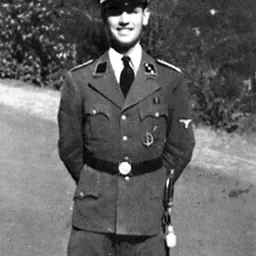
After the announcement of the armistice between the Kingdom of Italy and the Western Allies on September 8, 1943 and the subsequent occupation of Northern Italy by German troops, he went underground, but on April 13, 1944, he was arrested and on the night of June 4, 1944, during the retreat of German troops from Rome, he was shot along with 13 other resistance fighters, presumably on the orders of SS-Hauptsturmführer and deputy Gestapo chief in Rome, Erich Priebke. He was buried in the Verano Cemetery.
After the Liberation, in 1949 the Municipality of Rome erected a monument in Via Giulio Galli, in the locality of La Storta, with the names and professions of the 13 murdered people whose identities were known. Multiple streets and squares in Rome and many other Italian cities were later named after Buozzi.
Don’t just read it —
keep it.
Full-length biographies made to live with: read them, listen on the way to work, watch them tonight.
- E-book
- Audio
- Video
Instant download · yours to keep · every purchase keeps this site free
Important facts
People in Bruno Buozzi's life
Named in this biography and alive at the same time



Related people
Same field, nearest in time





Contemporaries
People whose lives overlapped Bruno Buozzi's




Frequently asked questions
Who was Bruno Buozzi?
Italian trade unionist and politician (1881–1944)
When was Bruno Buozzi born?
Bruno Buozzi was born on 31 January 1881 in Ferrara.
When did Bruno Buozzi die?
Bruno Buozzi died on 4 June 1944 in Rome.
What was Bruno Buozzi's occupation?
Bruno Buozzi was a politician, trade unionist and labor leader.
What nationality was Bruno Buozzi?
Bruno Buozzi was Italian.
Sources & further reading
Cite this page
APA: Biography.guide. (2026). Bruno Buozzi. https://biography.guide/bruno-buozzi/
MLA: "Bruno Buozzi." Biography.guide, https://biography.guide/bruno-buozzi/.
Chicago: "Bruno Buozzi." Biography.guide. https://biography.guide/bruno-buozzi/.
Data last updated: 2026-09-20 · Spot an error? Report a correction.
Page generated 2026-09-27 05:29 UTC