
Brian McClair
Scottish footballer (born 1963)
About Brian McClair
Born 1963. Brian McClair is a British association football player and association football coach.
Club career Early career McClair began his career with Aston Villa on leaving school in 1980, but left after one season (in which Villa were Football League champions) having never played a competitive game.
He then returned to Scotland in the summer of 1981 and signed for Motherwell. Initially a midfielder, manager Jock Wallace converted him to a striker. McClair went on to score 15 league goals in two seasons, including a hat-trick at Fir Park in a 3–0 win over Rangers on 3 January 1983, and both goals in a 2–1 win over Celtic eleven days later.
Celtic In May 1983, Billy McNeill signed McClair for Celtic, for a fee of £100,000. McClair was effectively signed as a replacement for the recently departed Charlie Nicholas. However, McClair would never actually play for McNeill, as the Celtic manager resigned in June 1983 and was replaced by Davie Hay. By the end of an impressive first season at Celtic, McClair had scored 32 goals and established himself as a first team regular. A four-goal haul against Dundee in a 6–2 win during September, an outstanding solo goal in a 5–0 win over Sporting CP in the UEFA Cup, and a goal in the 3–2 extra time defeat against Rangers in the League Cup Final in March 1984 highlighted McClair's goalscoring ability.
The following season saw the arrival of Mo Johnston from Watford and, despite their contrasting personalities, McClair and Johnston would quickly form a deadly goalscoring partnership for Celtic. McClair continued to score regularly for Celtic, and at the end of the season won his first winner's medal, coming on as a substitute in Celtic's 2–1 win over Dundee United in the 1985 Scottish Cup Final.
Despite competition from Alan McInally and Mark McGhee, McClair and Johnston remained the regular pairing playing up front for Celtic. Their goals helped Celtic to a dramatic league championship win in 1985–86. This culminated in a memorable final-day 5–0 win over St Mirren at Love Street, with McClair and Johnston both scoring twice as title-rivals Hearts capitulated to a 2–0 defeat at Dundee.
The 1986–87 season was McClair's last at Celtic. Despite a bright start to the campaign from Celtic, the team's form began to fade during the winter months and they squandered a nine-point lead in the league, which was won by Rangers. Another League Cup final defeat against Rangers (despite an outstanding goal by McClair) and a fourth-round defeat at Hearts in the Scottish Cup saw Celtic finish the season without any silverware. Despite this collective disappointment, McClair was an outstanding success that year. He scored 41 goals in total to finish top scorer in the league with 35 goals, and won both the Scottish Football Writers' Association Player of the Year and the Scottish Players' Player of the Year awards.
In four seasons at Celtic, McClair made 204 appearances in all competitions and scored 126 goals. He won the Scottish Cup in 1985 and the Scottish Premier Division in 1986.
Manchester United McClair joined Manchester United in July 1987 for a transfer fee of £850,000 that was determined by a tribunal. Celtic initially wanted £2 million for him, a fee which would have made him the most expensive player at the time to have signed for any British club, whilst Manchester United had offered only £400,000.
In his first season for Manchester United he scored 24 league goals, becoming the first Manchester United player to surpass 20 league goals in one season since George Best in the 1967–68 season. His first goal for Manchester United came in the third game of the season, a 2–0 home win over Watford. He then scored in the next game, a 3–1 away win over Charlton Athletic. He scored a brace in the 4–2 away win over Sheffield Wednesday on 10 October 1987, and another double in the late December win over defending champions Everton. He managed further braces in the final two games of the season (against Portsmouth and Wimbledon). Only Liverpool's John Aldridge netted more First Division goals that season and, in all competitions, McClair scored a total of 31 goals. He could have had even more, but his late penalty miss at Arsenal in the FA Cup fifth round meant that Manchester United were eliminated with a 2–1 loss in what was a trophy-less season.
1988–89 was a difficult season for United after the progress made in 1987–88. Having spent his first year playing alongside Peter Davenport, McClair now found himself paired with returning hero Mark Hughes (back at Manchester United after two years abroad) and much was expected of the newly formed partnership. By the end of November, however, McClair had scored just twice in the league, whereas Hughes had found the net eight times, with Manchester United finding themselves in mid-table after a run of eight draws and one defeat. Results improved over the next couple of months as United crept to the fringes of the title challenge, but fell away in the final quarter of the season as the club finished 11th. McClair and Hughes both managed 16 goals in all competitions, with Hughes being the club's leading scorer in the league with 14 goals to McClair's 10.
Having scored in both the quarter-final and the replay of the semi-final, he was on the winning side as Manchester United won 1–0 over Crystal Palace in the 1990 FA Cup Final replay at Wembley on 17 May 1990, five days after drawing 3–3 in the first match. In the league, however, it had been a disappointing time for McClair as he scored just five goals and Manchester United finished 13th – their lowest finish since they were relegated from the top flight 16 years earlier. He was now facing competition from the promising young striker Mark Robins, who had scored 10 goals in 23 first team games that season.
He did however score the winning goal for Manchester United in the 1991 UEFA Super Cup against Red Star Belgrade, which followed his role in their European Cup Winners' Cup triumph over Barcelona. McClair had now won the fight to keep his place in the first team as he rediscovered his goalscoring touch and Robins was now struggling to get into the team.
In October 1990, McClair was involved in controversy when in reaction to a late challenge he repeatedly kicked Arsenal's Nigel Winterburn in the back as he lay prone on the ground, sparking a 21-man brawl. The two had a history, as Winterburn had been seen mocking McClair after his penalty miss in the FA Cup fifth round three seasons before. Manchester United had a point deducted for this episode, and Arsenal (who went on to be league champions that season) had two points docked.
In 1991–92, McClair scored the only goal in the 1992 League Cup Final against Nottingham Forest at Wembley. However, he missed out on a league title winner's medal as United's shortage of goals in the second half of the season cost them the championship, which was clinched by Leeds United. Alex Ferguson then made unsuccessful bids for strikers David Hirst and Alan Shearer, before signing Dion Dublin, who was bought as backup for McClair and Hughes.
Having been the main striker for Manchester United during his first season, and then partnered Mark Hughes when the Welshman returned from Barcelona, McClair was switched to a central midfield role when Eric Cantona joined United in November 1992. The casualty of this shift was the veteran midfielder Bryan Robson, who from this point onwards was mostly used as a substitute.
When Roy Keane was signed the following summer, McClair's first team opportunities became increasingly limited. He did, however, manage another cup final appearance and goal at Wembley, coming off the bench to score Manchester United's fourth goal as they beat Chelsea 4–0 in the 1994 FA Cup Final. He was rarely left out of the squad, often coming on as a substitute to play in midfield or attack. In 1993–94, the first season where he was no longer considered a first team regular, he appeared in 26 league games (though started just 12 of them) and scored one goal. In all competitions, he managed a total of six goals from 38 appearances (19 starts, 19 as a substitute). He had a much more active campaign in 1994–95, playing in all but two of the 42 league games, scoring five goals. In total, he played 53 games in all competitions and scored eight goals. However, this number went to Andy Cole at the start of the 1996–97 season, after which McClair wore the number 13 shirt. Later that year, McClair had a hand in another memorable goal, assisting Eric Cantona in his famous chipped goal on 21 December 1996 against Sunderland at Old Trafford. On 15 April 1997 a crowd of over 44,000, including an estimated 10,000 Celtic supporters, attended McClair's testimonial game against his former club Celtic at Old Trafford.
He scored a total of 127 goals for Manchester United, the last two coming against Coventry City in a 4–0 away league win on 22 November 1995, although he made some 60 first team appearances over the next two and a half years (mostly as a substitute). In eleven years at Old Trafford, he made a total of 471 appearances in all competitions. In later years, as his first team opportunities were reduced, McClair became something of a cult hero at Manchester United due to his Choccy's Diary being published in the official Manchester United magazine.
Motherwell At the end of the 1997–98 season, McClair was given a free transfer to complete his playing days elsewhere. He accepted an offer to return to Motherwell, where he spent six months before announcing his retirement.
International career In international football, McClair won 30 caps for Scotland. He made his debut in November 1986 in a 3–0 win over Luxembourg at Hampden Park. The match was a qualifier for Euro 88, and McClair played in midfield behind his Celtic teammate and striker partner, Mo Johnston. Scotland failed to qualify for this tournament, but McClair became a regular in the Scotland squad for the next six years. He made five appearances for Scotland in the qualifiers for the 1990 World Cup. McClair also played for Scotland in a 'B' international against East Germany in April 1990 shortly before the 1990 World Cup. However, although Scotland qualified for this tournament, he failed to make manager Andy Roxburgh's 22-man squad.
Despite his omission, McClair continued to feature regularly for Scotland and represented his country at the 1992 European Championships, where he scored his first international goal in a 3–0 win over the CIS (formerly USSR). His final appearance for Scotland came in June 1993, when he scored the opening goal for Scotland in a 3–1 win over Estonia at Pittodrie.
Management and coaching career McClair returned south of the border in December 1998 to become Brian Kidd's assistant at Blackburn Rovers. But the pair were unable to prevent Blackburn from slipping out of the Premier League, and within a year, both had been sacked. He returned to Old Trafford as a youth team coach soon afterwards.
When Kidd first joined Blackburn after being assistant manager at Manchester United, McClair was one of several high-profile names to be linked with the assistant manager's vacancy at Old Trafford, as was former teammate Steve Bruce, who was then managing Sheffield United.
In 2001, McClair was appointed as Manchester United reserve team manager, and promptly won the Premier Reserve League in his first season as coach. In his second season, he was in charge of the Under-19 team which clinched the 2003 FA Youth Cup. Some players from that team, such as David Jones, Chris Eagles and Kieran Richardson, went on to make appearances in the first team.
At the end of the 2004–05 season, the first team finished trophyless, but the Reserve Teams headed by Ricky Sbragia, with McClair as his assistant, won an unprecedented quadruple of the Pontins' Holidays League, the FA Premier Reserve League, The Pontins' Holidays League Cup and the Premier Reserve League Playoff. His son, Liam, was once a member of the United academy.
McClair left Manchester United after being appointed by the Scottish Football Association in February 2015 as their national performance director, effective from 1 June 2015. McClair succeeded Mark Wotte, who resigned from the position in October 2014.
Personal life Though born in Bellshill, McClair was brought up in Airdrie and supported Airdrieonians as a child.
McClair has three children.
Career statistics Club
International
Scores and results list Scotland's goal tally first, score column indicates score after each McClair goal
+ List of international goals scored by Brian McClairNo.DateVenueOpponentScoreResultCompetition 1 18 June 1992 Idrottsparken, Norrköping, Sweden 3–0 3–0 UEFA Euro 1992 2 1 June 1993 Pittodrie Stadium, Aberdeen, Scotland 1–0 3–1 1994 FIFA World Cup qualification
Honours As a player Celtic Scottish Premier Division: 1985–86 FA Cup: 1989–90, 1993–94 1997 European Cup Winners' Cup: 1990–91 Daily Record Golden Shot: 1983–84, 1986–87 European Bronze Boot: 1986–87 PFA Scotland Players' Player of the Year: 1987 SFWA Footballer of the Year: 1987 Alan Hardaker Trophy: 1992
As a manager Manchester United Reserves Premier Reserve League North: 2001–02
Don’t just read it —
keep it.
Full-length biographies made to live with: read them, listen on the way to work, watch them tonight.
- E-book
- Audio
- Video
Instant download · yours to keep · every purchase keeps this site free
Important facts
People in Brian McClair's life
Named in this biography and alive at the same time

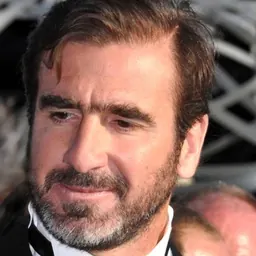




Related people
Same field, nearest in time




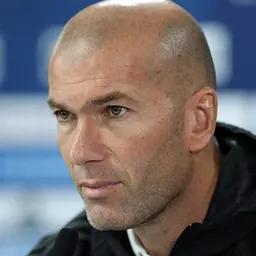
Contemporaries
People whose lives overlapped Brian McClair's


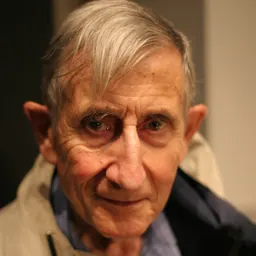
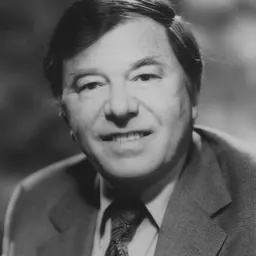

Frequently asked questions
Who is Brian McClair?
Scottish footballer (born 1963)
When was Brian McClair born?
Brian McClair was born on 8 December 1963 in Airdrie.
What is Brian McClair's occupation?
Brian McClair is an association football player and association football coach.
What nationality is Brian McClair?
Brian McClair is British.
Sources & further reading
Cite this page
APA: Biography.guide. (2026). Brian McClair. https://biography.guide/brian-mcclair/
MLA: "Brian McClair." Biography.guide, https://biography.guide/brian-mcclair/.
Chicago: "Brian McClair." Biography.guide. https://biography.guide/brian-mcclair/.
Data last updated: 2026-09-26 · Spot an error? Report a correction.
Page generated 2026-09-27 05:13 UTC