
Alan Shearer
English footballer
About Alan Shearer
Born 1970. Alan Shearer is a British association football player, association football coach and sports commentator.
Early life Alan Shearer was born on 13 August 1970 in Gosforth, Newcastle upon Tyne (then a part of Northumberland), the son of working class parents Anne and sheet-metal worker Alan Shearer. His father encouraged him to play football in his youth, and Shearer continued with the sport as he progressed through school. He was educated at Gosforth Central Middle School and Gosforth High School. Growing up, he played on the streets of his hometown and was originally a midfielder because "it meant [he] could get more involved in the games". Shearer captained his school team and helped a Newcastle City Schools team win a seven-a-side tournament at St James' Park, before joining the amateur Wallsend Boys Club as a teenager. It was while playing for the Wallsend club that he was spotted by Southampton's scout Jack Hixon, which resulted in him spending his summers training with the club's youth team, a time he would later refer to as "the making of me". before prompting national headlines in his full debut at The Dell two weeks later. He scored a hat-trick, helping the team to a 4–2 victory against Arsenal, thus becoming the youngest player – at 17 years, 240 days – to score a hat-trick in the top division, breaking Jimmy Greaves' 30-year–old record. which, during his time at Southampton, enabled him to retain the ball and provide opportunities for teammates. and in the next, four goals in 36 games. His performances in the centre of the Saints attack were soon recognised by the fans, who voted him their Player of the Year for 1991. he scored on his debut, and was strongly linked in the press with a summer move to Manchester United. A possible move for Shearer was being mentioned in the media during late autumn of 1991, but he rejected talk of a transfer and vowed to see out the season with Southampton, resisting the temptation of a possible transfer to the two clubs who headed the title race for most of the season. Speculation of a transfer to Liverpool, who finished the season as FA Cup winners, also came to nothing. In July 1992, Shearer was sold to Blackburn Rovers for a fee of £3.6 million, with David Speedie reluctantly moving to The Dell as part of the deal. Despite Branfoot's claim to be "in the driving seat", Saints failed to include a "sell-on clause" in the contract. Shearer, less than a month off his 22nd birthday, was the most expensive player in British football. In his four years in the Southampton first team, Shearer made a total of 158 appearances in all competitions, scoring 43 goals. Shearer was soon subject to an English transfer record-breaking £3.6 million bid from Blackburn Rovers. Although there was also interest from Manchester United manager Alex Ferguson, Blackburn benefactor Jack Walker's millions were enough to prise the striker from Southampton, and Shearer moved north to Ewood Park in the middle of 1992.
On 15 August 1992, the opening weekend of the first Premier League season, Shearer scored twice against Crystal Palace with two strikes from the edge of the 18-yard box. He missed half of his first season with Blackburn through injury after snapping his right anterior cruciate ligament in a match against Leeds United in December 1992, but scored 16 goals in the 21 games in which he did feature. On the international scene, England had failed to qualify for the 1994 World Cup finals, but Shearer added three more goals to his international tally before embarking on his most successful domestic season as a player to date. The arrival of Chris Sutton for the 1994–95 season established a strong attacking partnership at Blackburn. Shearer's 34 goals, coupled with Sutton's 15, helped the Lancashire club take the Premier League title from archrivals Manchester United on the final day of the season, and the duo gained the nickname "the SAS" (Shearer And Sutton). After being asked by the press how he planned to celebrate winning the title, Shearer replied with "creosoting the fence". Shearer also had his first taste of European football in the UEFA Cup that season, and scored in the second leg as Blackburn went out in the first round, losing to Trelleborgs FF of Sweden. His efforts for the club led to Shearer being awarded the PFA Players' Player of the Year for 1995.
Although the club could not retain the title the following year, Shearer again ended the (now 38-game) season as Premier League top scorer, with 31 goals in 35 games, as Blackburn finished seventh in the league. The previous season's first-place finish also saw the club enter the Champions League. Shearer's only goal in six full Champions League games was a penalty in a 4–1 victory against Rosenborg BK in the final fixture
He passed the 100-goal milestone for Blackburn in all competitions on 23 September 1995, scoring a hat-trick in their 5–1 home win over Coventry City in the Premier League. On 30 December, he scored his 100th Premier League goal, making him the first player to hit the landmark, in a 2–1 home win over Tottenham Hotspur. His final tally for the club was 112 goals in the Premier League and 130 in all competitions. His final goals for the club came on 17 April 1996, when he scored twice in a 3–2 home league win over Wimbledon.
Shearer's international strike rate had also dried up, with no goals in the twelve matches leading up to Euro 96.
1996–2006: Newcastle United After Euro 96, Manchester United and Real Madrid again sought to sign Shearer, and attempted to enter the battle for his signature. Manchester United chairman Martin Edwards and Real Madrid president Lorenzo Sanz stated that Blackburn Rovers refused to let Shearer go to Old Trafford or Estadio Santiago Bernabéu. Ultimately Shearer joined his boyhood club: Newcastle United, Manchester United's title rivals.
On 30 July 1996, for a world transfer record-breaking £15 million (equivalent to £ million today), (The football industry has exploded beyond the inflation rate of the Bank of England.) Financial experts argue, the Bank of England's inflation calculator is an unreliable method to judge transfers.
Shearer's 2019 validated equivalent (£222m) 3 Kylian Mbappé Monaco Paris Saint-Germain £163m 2018 4 João Félix Benfica Atlético Madrid £112.9 2019
Shearer made his league debut away at Everton, on 17 August 1996, and maintained his form during the rest of the season, finishing as Premier League top-scorer for the third consecutive season with 25 goals in 31 Premier League games, as well as winning another PFA Player of the Year accolade, when Newcastle went into the final 15 minutes of the game 3–1 down at home to Leicester City in the league, only for Shearer to win them the game 4–3 by scoring a late hat-trick. The league title still eluded the club, who finished second in the league for a second consecutive year, with Keegan resigning midway through the season. United (now managed by Shearer's former Blackburn manager, Kenny Dalglish) had a good run in the FA Cup; Shearer scored the winning goal in a semi-final victory over Sheffield United as the team reached the final. The team were unable to get on the scoresheet at Wembley, and lost the game 2–0 to Arsenal.
An incident during a game against Leicester City in the league saw Shearer charged with misconduct by the FA, with media sources claiming that video footage showed him intentionally kicking Neil Lennon in the head following a challenge. The referee of the game took no action against Shearer, and he was then cleared of all charges by the FA, with Lennon giving evidence in the player's defence. Former Football Association chief Graham Kelly, who brought the charges against the player, later wrote in his autobiography that Shearer had threatened to withdraw himself from the 1998 World Cup squad if the charges were upheld, which was strenuously denied by Shearer.
An almost injury-free season helped Shearer improve on his previous year's tally in the 1998–99 season, the striker converting 14 goals in 30 league games and replacing Rob Lee as Newcastle captain, but Newcastle finished 13th again, with Ruud Gullit having replaced Kenny Dalglish just after the season got underway. He also helped Newcastle to a second consecutive FA Cup final and qualification for the following season's UEFA Cup, scoring twice in the semi-final against Tottenham Hotspur, but they once again lost 2–0, this time to treble-chasing Manchester United.
On the opening day of the 1999–2000 season, Shearer received the first red card of his career in his 100th appearance for Newcastle. After dropping Shearer to the bench in a Tyne-Wear derby loss against Sunderland, the unpopular Gullit resigned to be replaced by the 66-year-old Bobby Robson. Despite Gullit giving Shearer the captain's armband, reports of a rift between club captain and manager were rife, Gullit's decision to drop Shearer proved deeply unpopular with fans and his departure capped a dismal start to the season. The animosity between Shearer and Gullit was later confirmed by the latter, who reportedly told the striker that he was "...the most overrated player I have ever seen." Robson had tried to sign Shearer for Barcelona in 1997, making a bid of £20 million which would have seen Shearer break the world's transfer fee record for the second time in 12 months. Newcastle's manager at the time, Kenny Dalglish, rejected the offer.
In Robson's first match in charge, Shearer scored five goals in an 8–0 defeat of Sheffield Wednesday. With Robson in charge, the team moved away from the relegation zone, finishing in mid-table and reached the FA Cup semi-finals, but a third consecutive final was beyond them as they were beaten by Chelsea. Shearer missed only one league game and notched up 23 goals. He managed only five goals in 19 games in the league. The 2001–02 season was much better though: Shearer bagged 23 goals in 37 league games as Newcastle finished fourth – their highest standing since 1997 – meaning they would qualify for the following season's Champions League competition. One of the most memorable incidents of the season saw Roy Keane sent off after a confrontation with Shearer during Newcastle's 4–3 win over the Red Devils in September 2001. Shearer also saw red for the second time in his career this season, after allegedly elbowing an opposition player in a match against Charlton Athletic, but this decision was later rescinded.
The 2002–03 season saw Shearer and Newcastle make their return to the UEFA Champions League. Newcastle lost their first three matches in the opening group stage, but Shearer's goal against Dynamo Kyiv, coupled with further wins against Juventus and Feyenoord saw the club progress to the second group stage.
Shearer's Champions League hat-trick against Bayer Leverkusen and a brace against Inter Milan in the second group stage helped him reach a total of seven Champions League goals, along with his 17 in 35 games in the league, and a total of 25 for the season as the team again improved to finish in third place in the Premier League.
After this, Newcastle would have one more chance to progress in the Champions League in early 2003, but Shearer was one of those who failed to score as the team were eliminated in a penalty shootout by Partizan Belgrade in the third qualifying round. United progressed well in that season's UEFA Cup and Shearer's six goals helped the club reach the semi-finals, where they were beaten by eventual runners up Olympique de Marseille. Domestically he also had a good season, with 22 goals in 37 appearances, qualifying once again for the UEFA Cup.
Announcing that this would be his final season before retirement, Shearer's form in the 2004–05 season was patchy; alongside new signing Patrick Kluivert, he scored only seven goals in his 28 games as the club finished the season in 14th place. He decided to continue playing in a player-coach capacity until the end of the following season. and he returned for one more season in the 2005–06 season. This last season saw him break Jackie Milburn's 49-year-old record of 200 goals for Newcastle United (not including his 38 World War II Wartime League goals) when he netted his 201st strike in a home Premier League fixture against Portsmouth on 4 February 2006, becoming the club's highest-ever league and cup competition goalscorer with 201 goals altogether. On 17 April 2006, with three games remaining in his final season as a player, Shearer suffered a tear to the medial collateral ligament in his left knee after a collision during a 4–1 win at Sunderland in which he scored his 206th and final goal in what was his 395th appearance for the club. The injury caused him to miss those final three games, effectively bringing forward his retirement. Shearer finished his final season with 10 goals in 32 league games. with the banner being displayed from 19 April 2006 until 11 May 2006, the day of his testimonial match.
Shearer was awarded a testimonial match by the club, against Scottish side Celtic. All proceeds of the match went to charitable causes. Because of the injury he sustained three games earlier at Sunderland, Shearer was unable to play in the whole match, but he kicked off the game and came off the bench to score a penalty, helping Newcastle win the game 3–2. The match was a sell-out, and saw Shearer perform a lap of honour at the end with his family, with his young son covering his ears due to the volume of noise produced by the crowd in tribute. The striker's goals at this level, coupled with his club form, meant he was soon promoted to the senior squad by coach Graham Taylor. Marking his debut in the 2–0 win against France in February 1992 with a goal, Shearer played only intermittently in the qualifying campaign for the 1994 FIFA World Cup due to injury and the team failed to reach the competition finals.
UEFA Euro 1996 was a more positive experience for both Shearer and England. With England not required to qualify as hosts, Shearer had not scored in 12 games in the 21 months prior, Shearer scored in the 22nd minute of the first game, against Switzerland. Scoring once in the following game against Scotland and twice in a 4–1 win over the Netherlands, In the quarter-finals, England were outplayed by Spain but got through to a penalty shootout after a goalless draw. Shearer scored the first England penalty,
The new England manager Glenn Hoddle appointed Shearer captain for the 1998 FIFA World Cup qualifier against Moldova on 1 September 1996, and the player held onto the captaincy after scoring once in that match and twice in the following game against Poland. He scored a total of five goals in England's successful qualification campaign for the World Cup, adding strikes against Georgia and away to Poland to his tally. but recovered to play in the World Cup finals. He scored England's first goal of the tournament, in a 2–0 win over Tunisia, his only goal in the three group matches. This defeat ended England's participation in what was to be Shearer's only World Cup tournament. This helped England reach a play-off against Scotland; England won the game over two legs and in doing so qualified for the European Championship. By now, Shearer was approaching his 30th birthday, and he announced that he intended to retire from international football after the Euro 2000 tournament. ensuring that England beat Germany for the first time in a competitive match since the 1966 World Cup final. To remain in the tournament, England only required a draw against Romania in the final group match, and Shearer scored a penalty as England went in at half-time 2–1 up, but Romania ultimately won 3–2. he is ranked 7th in the England all-time goalscorers list, level with Nat Lofthouse and Tom Finney. Shearer remained in international retirement despite speculation of a return during the 2002 World Cup and 2004 European Championship campaigns, and further declined an offer to be assistant manager to Steve McClaren after the 2006 World Cup – a position ultimately filled by Terry Venables.
Style of play Widely regarded as one of the best strikers of all time and one of the greatest players in the history of the Premier League, Shearer was often styled as a classic English centre-forward, owing to his strength, physical stature, heading ability and strong shot, which enabled him to be a highly prolific goalscorer. Of his 206 Newcastle goals, 49 were scored with his head. Earlier in his career, especially at Southampton, Shearer played a more creative role: providing chances for fellow strikers, and making runs into space, owing to his link-up play, work-rate, and early development as a midfielder. Later on in his career, Shearer played a more forward role, after his age robbed him of some of his pace. Able to hold the ball up well, he often functioned as a target man, providing balls for other players. Although his strength allowed him to hold on to the ball, his playing style sometimes brought him criticism – most commonly that his play was too physical, and that he used his elbows too aggressively. It was this that contributed to both of his dismissals, although one was later rescinded on appeal. In addition to his playing ability, he also stood out for his leadership qualities throughout his career.
Shearer was noted as a proficient penalty taker for both club and country, and he scored 45 times from the spot for Newcastle, where he was the first-choice taker; with 56 goals from 67 attempts, he is also the most prolific penalty-taker in Premier League history. He also scored five goals from free-kicks for the north-east club. He was known for his accuracy and shooting power from outside the penalty area either when taking set-pieces or from open play.
Managerial career
Early career On his retirement as a player, Shearer responded to speculation of an immediate move into coaching, saying that he would take some personal time off to "enjoy life" for the next couple of years. He was also quoted as saying that he would eventually like to move into management "when the time was right". As of March 2009 he was yet to start the UEFA Pro Licence course, which is required to be permitted to manage a team in the Premier League and European competition.
Reflecting his desire for personal time off to "enjoy life", in July 2006 he turned down a coaching role with England, citing his BBC commitments and desire to be away from the pressure of a job within football. Despite this, Shearer was often linked in the media with managerial or coaching positions at his three former clubs.
Shearer took a brief role in the dugout for his final three games under Glenn Roeder. Shearer had rejected offers of coaching or assistant roles at Newcastle under both the returning Kevin Keegan in February 2008 and Joe Kinnear in November 2008. Shearer had previously had talks about, but never been offered, a full-time manager's role at Newcastle until his appointment on 1 April 2009.
Shearer was unveiled at a press conference the following day by club managing director Derek Llambias. In explaining his acceptance of a managerial role at Newcastle at this time, Shearer stated that he would not have done this for any other club in this position, including his two other previous Premier League clubs. Shearer accepted the surprise offer on the Monday on the condition that he could bring in Iain Dowie as his assistant.
Shearer's first match in charge ended in a 2–0 defeat against Chelsea at St James' Park. On 11 April, Newcastle earned their first point under Shearer with a 1–1 draw with Stoke City at the Britannia Stadium with Andy Carroll scoring a late equalising goal. After a defeat to Tottenham Hotspur and a draw against Portsmouth, his first win for Newcastle came in a 3–1 victory over Middlesbrough that lifted Newcastle from the relegation zone.
On the eve of the final day of the season on 24 May, where all fixtures are played simultaneously, Newcastle faced the prospect of being relegated to the Championship, along with Hull City, Middlesbrough and Sunderland, which would end their 16-year unbroken spell in the Premier League.
Shearer did not get the manager's job on a permanent basis. Chris Hughton stepped up from the coaching staff to take charge of the quest to get Newcastle back into the Premier League, which was achieved at the first attempt as Newcastle finished top of the Championship in the 2009–10 season.
Outside football
Personal life
Shearer met his future wife, Lainya, whilst playing for Southampton. They lived locally with her parents in the city during his second year at the club, and were married on 8 June 1991 at St James' Church, West End, near Southampton. They have three children together. He cited not wanting to uproot his family as a key reason for remaining in England during his career, having had the chance to move to Juventus or Barcelona when leaving Blackburn.
Shearer has previously been part of a consortium run by ex-Newcastle player Terry McDermott that owned several racehorses, including Intersky Falcon.
In August 2026, his daughter married Joe Marchant.
Personal honours
On 6 December 2000, Shearer was given Honorary Freedom of the City of Newcastle upon Tyne, with the citation "in recognition of his role as captain of Newcastle United Football Club and as former captain of England which have enhanced the reputation of the City". Shearer was appointed Officer of the Order of the British Empire (OBE) in the 2001 Queen's Birthday Honours and Commander of the Order of the British Empire (CBE) in the 2016 Birthday Honours for charitable services to the community in North East England.
On 4 December 2006, Shearer was created a Doctor of Civil Law by Northumbria University, at a ceremony at Newcastle City Hall, where the university vice-chancellor declared that "Throughout his career Alan Shearer has been hard-working, committed, disciplined and focused in his endeavours, fighting back from career-threatening injuries with great determination and courage".
On 1 October 2009, Shearer was commissioned as Deputy Lieutenant of Northumberland, having been nominated by the Duchess of Northumberland in her capacity as Lord Lieutenant of Northumberland, and approved for the position by the Queen. In this role, Shearer, along with 21 other deputies, is the stand-in for the Duchess when she cannot fulfill her role as the Queen's official representative in the region at official engagements. Deputies must live within seven miles of the county boundaries, and retain their appointment until age 75. Chancellor Liam Donaldson stated "Newcastle United are my team. Alan Shearer is more than just a local legend, he's probably one of the greatest footballers of all time".
On 26 April 2021, Shearer was announced as the first inductee in the Premier League Hall of Fame.
Media
After his retirement and following guest appearances, Shearer became a regular pundit for the BBC's Match of the Day. He also formed part of the team which covered the World Cups and European Championships from 2006 onwards for the BBC. Since August 2023 Shearer has been a co-host of The Rest Is Football alongside Gary Lineker and Micah Richards. During the 2026 FIFA World Cup the show was broadcast on Netflix.
Former Newcastle chairman Freddy Shepherd announced that, after Shearer finished the 2005–06 season as Newcastle's caretaker assistant manager, he would become the club's "Sporting Ambassador" for the 2006–07 season. However, in September 2008, tabloids reported that Shearer was removed from this largely honorary position by the club's owner Mike Ashley – though these reports were denied by the club.
During his playing career Shearer appeared in commercials for the sports drink Lucozade. He is among a group of high-profile athletic figures in British pop culture to promote the brand, which includes Olympic champions Daley Thompson and Linford Christie, footballer John Barnes, rugby player Jonny Wilkinson, and Tomb Raider heroine Lara Croft.
Shearer features in EA Sports' FIFA video game series; he was included in the FIFA 15 Ultimate Team Legends.
On 10 March 2023, following the suspension of Gary Lineker as the host of Match of the Day for allegedly breaching BBC impartiality rules by criticising the government's asylum policy on Twitter, Shearer alongside other pundits announced that they would not present the following episode of the show in solidarity with Lineker.
In October 2024, Shearer's famous quote from UEFA Euro 2024, pressure is for tyres was used by the HarrisWalz campaign.
In November 2024, it was announced that Shearer is set to manage one of the 12 teams in the upcoming Baller League, a six-a-side football league.
Philanthropy Shearer's Newcastle United-themed Paddington Bear statue on display at the Childline offices in London. It was auctioned for the National Society for the Prevention of Cruelty to Children (NSPCC) During his playing days, Shearer had been involved with the National Society for the Prevention of Cruelty to Children (NSPCC), taking part in the organisation's Full Stop campaign in 1999.
In his testimonial match, he raised £1.64m benefiting fourteen good causes including £400,000 for the NSPCC and £320,000 for completion of the "Alan Shearer Centre", a respite care facility based in West Denton, Newcastle. In October 2006, he became an ambassador for the NSPCC, describing it as "the kick-off to my most important role yet". He has also worked with The Dream Foundation. In 2006, Shearer founded the Alan Shearer Academy Scholarship to aid the development of promising young players in the region.
In 2008, he raised over £300,000 for Sport Relief in a bike ride with fellow Match of the Day presenter Adrian Chiles, the idea for which emerged in an off the cuff question from cycling fan Chiles to Shearer as to how he kept fit since retirement. Shearer also played and scored twice in Soccer Aid, a game involving celebrities and former players at Wembley Stadium in September 2008, to raise money for UNICEF.
On 26 July 2009, Shearer played and scored in the Sir Bobby Robson Trophy match, a charity match held at St James' Park in tribute of Bobby Robson and in aid of his cancer charity the Sir Bobby Robson Foundation. It proved to be Robson's last public appearance, as he died five days later. On 15 October 2009, Shearer became the new patron of the Sir Bobby Robson Foundation.
Career statistics
Club
International
Scores and results list England's goal tally first, score column indicates score after each Shearer goal.
Manager
TeamFromToMatchesWonDrawnLostWin %Newcastle United1 April 200924 May 2009
Honours Southampton Full Members' Cup runner-up: 1991–92
Blackburn Rovers Premier League: 1994–95
Newcastle United FA Cup runner-up: 1997–98, 1998–99
England U21 Toulon Tournament: 1991
England Tournoi de France: 1997
Individual UEFA European Championship Golden Boot: 1996 UEFA European Championship Team of the Tournament: 1996 Football League Cup top scorer: 1990–91, 1992–93 ESM Team of the Year: 1994–95 FIFA World Player of the Year – Bronze award: 1996 Ballon d'Or – Third place: 1996 PFA Team of the Year: 1991–92 First Division, 1992–93 Premier League, 1993–94 Premier League, 1994–95 Premier League, 1995–96 Premier League, 1996–97 Premier League, 2002–03 Premier League PFA Players' Player of the Year: 1994–95, 1996–97 FWA Footballer of the Year: 1993–94 Newcastle United Player of the Year: 1998–99, 1999–2000, 2002–03 Premier League Player of the Year: 1994–95 North-East FWA Player of the Year: 2003 English Football Hall of Fame: 2004 FIFA 100 Premier League 10 Seasons Awards (1992–93 to 2001–02) Domestic and Overall Player of the Decade Domestic and Overall Team of the Decade Outstanding Contribution to the FA Premier League Top Goalscorer (204) Premier League 20 Seasons Awards (1992–93 to 2011–12) Public choice Fantasy Teams of the 20 Seasons Panel choice Fantasy Teams of the 20 Seasons Top Goalscorer (260) Premier League Hall of Fame: 2021 Toulon Tournament 1991 Top Goal Scorer Most Premier League penalties scored: 56 Fewest matches to score 100 Premier League goals: 124 matches (record lasted: ) First player to score 100 Premier League goals Fewest matches to score 100 Premier League home goals: 91 matches Most Premier League goal-involvements: 324 (260 goals, 64 assists) Most Premier League goal-involvements in a season: 47 (34 goals, 13 assists) Most European goals scored for Newcastle United: 30
Orders
Footnotes
Don’t just read it —
keep it.
Full-length biographies made to live with: read them, listen on the way to work, watch them tonight.
- E-book
- Audio
- Video
Instant download · yours to keep · every purchase keeps this site free
Important facts
Family & relationships
People in Alan Shearer's life
Named in this biography and alive at the same time




Related people
Same field, nearest in time

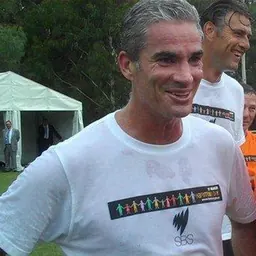
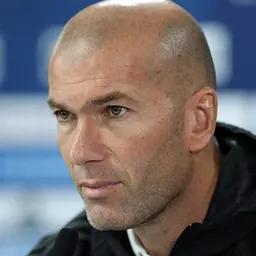

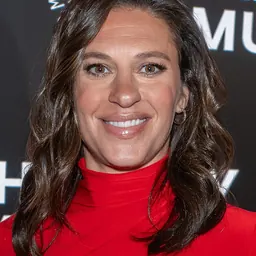
Contemporaries
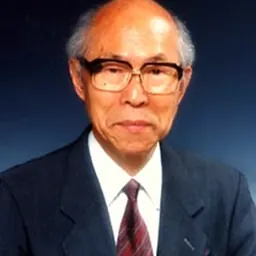
People whose lives overlapped Alan Shearer's
Frequently asked questions
Who is Alan Shearer?
English footballer
When was Alan Shearer born?
Alan Shearer was born on 13 August 1970 in Newcastle upon Tyne.
What is Alan Shearer's occupation?
Alan Shearer is an association football player, association football coach and sports commentator.
What nationality is Alan Shearer?
Alan Shearer is British.
Sources & further reading
Cite this page
APA: Biography.guide. (2026). Alan Shearer. https://biography.guide/alan-shearer/
MLA: "Alan Shearer." Biography.guide, https://biography.guide/alan-shearer/.
Chicago: "Alan Shearer." Biography.guide. https://biography.guide/alan-shearer/.
Data last updated: 2026-09-22 · Spot an error? Report a correction.
Page generated 2026-09-27 05:31 UTC