
About Brian Bolland
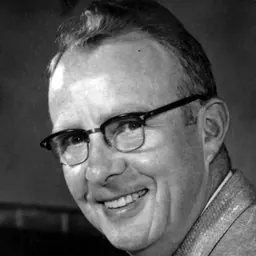
Born 1951. Brian Bolland is a British comics artist.
Brian John Bolland (; born 26 March 1951) is a British comics artist. Best known in the United Kingdom as one of the Judge Dredd artists for British comics anthology 2000 AD, he spearheaded the 'British Invasion' of the American comics industry, and in 1982 produced the artwork alongside author Mike W. Barr on Camelot 3000, which was DC Comics's first 12-issue comicbook maxiseries created for the direct market.
Bolland illustrated the critically acclaimed 1988 graphic novel Batman: The Killing Joke, an origin story for Batman supervillain the Joker, with writer Alan Moore. He gradually shifted to working primarily as a cover artist, producing the majority of his work for DC Comics. Bolland created cover artwork for the Animal Man, Wonder Woman, and Batman: Gotham Knights superhero comic book series. In 1996, he drew and self-penned a Batman: Black and White story, "An Innocent Guy". For DC's Vertigo imprint, Bolland has done covers for The Invisibles, Jack of Fables, and a number of one-shots and miniseries.
In addition to interior and cover art, Bolland has also produced several comic strips and pin-ups as both writer and artist. His most notable are the semi-autobiographical humour strip Mr. Mamoulian and the whimsical rhyming strip The Actress and the Bishop. All strips of both projects were included in the Bolland Strips! collection book, published in 2005. In 2006, he compiled the art book The Art of Brian Bolland, showcasing all of Bolland's work to date and also his work as a photographer.
Early life
Brian Bolland was born in Butterwick, Lincolnshire, England, He grew up in a small village near Boston, Lincolnshire until he was 18 years old. He recalls that "uperheroes crept into my life by stealth," as he actively sought out covers featuring "any big creature that looked vaguely dinosaur-like, trampling puny humans." and Valiant which featured Mytek the Mighty by Eric Bradbury and Steel Claw by Jesus Blasco.
Growing up as an only child with parents that had no interest in art, literature, or music, he embraced the late 1960s pop culture explosion of pirate radio stations, experimental music, recreational drugs, psychedelia, Oz Magazine, "dropping out" and other aspects of hippy culture epitomised by underground comix such as Robert Crumb's Zap Comix. While at art school, Bolland drew and self-published a couple of fanzines and his work was published in British underground magazines Frendz, International Times and OZ. In 1971, his friend Dave Harwood entered printed mass production with his RDH Comix, for which Bolland provided a cover (featuring Norwich Cathedral). Also in 1971, Time Out – an underground magazine producing an illustration of blues guitarist Buddy Guy. He also contributed a smaller, strip entitled "The Mixed-Up Kid" to the Central School of Art's Galloping Maggot, the college newspaper.
2000 AD, Judge Death and Walter the Wobot In 1972, Bolland attended the British Comic Art Convention at the Waverley Hotel in London, and met several influential figures in the current British comics scene, including Dez Skinn, Nick Landau, Richard Burton, Angus McKie and – crucially – Dave Gibbons. Bolland and Gibbons became firm friends. After finishing his college course, Bolland was hit with "the stark reality of unemployment" joined art agency Bardon Press Features. He soon found work doing a number of two-page strips for D.C. Thomson resulted, but Bolland would refer to this period as his "lowest time." Even so, he "was always struggling to get the last eight or ten pages finished," and was occasionally helped by friends, both from his "Norwich School of Art days," Gibbons and future-2000 AD and League of Extraordinary Gentlemen artist Kevin O'Neill.
Bolland writes that starting with Powerman he "found regular employment drawing comics, one of which, Judge Dredd, in 1977–80, turned out to be quite a hit..." Gibbons joined Carlos Ezquerra in "jumping into 2000AD feet first with issue 1 (or Programme, later Prog 1)... but meanwhile [Bolland] would have to keep drawing Powerman on [his] own." "From that point on," writes Bolland, "either he [Landau] or his successor Steve MacManus called me direct whenever they wanted me to do a Dredd story." Soon, though, the writers began to craft serials, and Bolland's distinct abilities with subtle facial expressions, dramatic lighting and the dynamic composition of page layout made him the perfect choice to draw the ongoing sagas, starting with "The Lunar Olympics". finding it "very difficult... [trying] to fill that space most effectively."
Bolland's early work on Judge Dredd was much influenced by McMahon, a talented newcomer whose idiosyncratic style was fuelling the interest in the new character. Bolland thought McMahon was "terrific, the real ideas man on Dredd," but noted that McMahon's approach was "very impressionistic," while the "average comics reader, certainly at the time, does tend to prefer realism." and Judge Anderson.
Later, Landau's Titan "decided they could repackage the Judge Dredd stories in an American comic format with new covers and sell it to America," and did under the brand "Eagle Comics". Bolland provided many of the covers for these compendium issues. He does not "remember doing any sketches to get him right," the "outfit was described somewhat in the script... and details of it were heavily inspired by the look of Kevin O'Neill's Nemesis the Warlock.
Walter the Wobot was an android with a speech impediment who served as Judge Dredd's personal servant robot. Created for comedic relief, Bolland notes that "he great thing about the Judge Dredd strip was it's [sic] ability to slide seamlessly between gritty sci fi adventure, nasty gothic horror, spoofery, all the way to daft comedy." Walter's solo adventures – "Walter the Wobot, Fwiend of Dwedd" – were the latter style. Soon, Bolland was asked to draw "Vampire Circus" (dir. Robert Young, 1972; comic version scripted by Steve Parkhouse), and "pile on the gore" for his first Hammer horror adaptation – although he found much of the "blood painted out" in the printed version. ), paperback book (including the UK Titan editions of George R. R. Martin's Wild Cards anthologies ) and magazine covers (including Time Out and Arkensword and even "drew the hazard cards" for a board game called Maneater. He later "got to know the Games Workshop guys, Steve Jackson and Ian Livingstone," and produced various "games related drawings" including a cover or two for Fighting Fantasy Adventure Game Books, and RPG scenario pamphlets. His cover work for Games Workshop includes the role-playing game Golden Heroes and its only adventure Legacy of Eagles, and the Fighting Fantasy book Appointment with F.E.A.R.
In 1977, Bolland was approached by Syd Jordan to ghost some episodes of Jordan's newspaper strip Jeff Hawke, after fellow fandom-pro artist Paul Neary had already done a fair number of them. Bolland also contributed "A Miracle of Elisha" to Knockabout Comics' Old Bailey OZ Trial Special, written because Old Testament history had piqued the interest of Bolland when living near the British Museum. This page was later reprinted in the Outrageous Tales From the Old Testament volume, which included works from Moore, Hunt Emerson, Gaiman, Gibbons, and Dave McKean, although Bolland's name was left off the cover.
Bolland produced a considerable amount of advertising work, initially because his agent "Barry Coker kept putting advertising jobs my way," including a number of ads for "Palitoy's Star Wars toys." He also drew some of the earliest pieces of advertising artwork for the science fiction and comic shop Dark They Were, and Golden-Eyed, which ran in various fanzines, convention programmes, and magazines such as Time Out and was commissioned by future-Titan Distribution and Forbidden Planet co-founder Mike Lake (who was "working there at the time") c. 1976. As well as the DTWAGE adverts, Bolland and most of his peers also contributed artwork to advertise, and/or feature in programme booklets for the UK Comicon, starting . In 1978, Nick Landau, Mike Lake and Mike Luckman "took their comic distribution business into the highstreet," opening the first Forbidden Planet comics shop, for which Lake asked Bolland to produce the now-famous "People like us shop at... FORBIDDEN PLANET" adverts. Bolland's artwork would also feature on the shop's plastic bags, as well as T-Shirts and "covers for their SF, comic and TV & film catalogues," among other places. Later, when a branch of Forbidden Planet was opened in New York, and at a second location in London, Bolland "did ads for both of them."
DC Comics Bolland was among the first British comics creators to work in the American comics industry, spearheading the so-called "British Invasion" in 1979/80. Bolland recalls that his big break came when Joe Staton attended the Summer 1979 Comicon, and, needing somewhere to work on Green Lantern while in the UK, arranged to stay with the Bollands. Staton called his editor Jack Harris and told him that Bolland, a big Green Lantern fan, would like to draw a Green Lantern cover; Harris agreed. and "Falling Down to Heaven" in Madame Xanadu, DC's first attempt at marketing comics specifically to the "direct market" of fans and collectors. For editor Julius Schwartz, Bolland drew covers around which writers would craft stories, which included two Starro covers for Justice League of America No. 189 and 190 and Superman No. 422 (Aug. 1986). He recalled that, "after I was settled in at DC, scouts from that company came to our "Society of Strip Illustration" meetings to win over a few more of us," The story, dealing with the return of King Arthur to save England from an alien invasion in the year 3000, not only the largest body of work in a single series by Bolland – and his only attempt to draw a monthly title – but was also the first maxi-series from DC or any other publisher. Bolland was not familiar with the Arthurian legends, and initially conceived Merlin as a comical character. The series was graced with considerable media hype, and Bolland found himself invited to San Diego Comic-Con and other conventions. As the series continued, however, Bolland became increasingly meticulous, always trying to improve upon his pages.
Bolland drew a pinup for Superman No. 400 (Oct. 1984) and its companion portfolio. In 1986, Bolland was one of several artists who contributed pages to the anniversary issue Batman No. 400 (Oct. 1986), his offering featuring villains Ra's al Ghul and Catwoman. Around this time, Titan Books were trying to launch a line of comics written by Alan Moore, including a Batman Meets Judge Dredd one-off by Moore and Bolland.
Origin of the Joker in Batman: The Killing Joke. Art by Brian Bolland and John Higgins. After watching the 1928 film The Man Who Laughs, which features a character named Gwynplaine (played by Conrad Veidt) whose rictus grin inspired the visual design of the Joker, Bolland conceived of the 1988 graphic novel Batman: The Killing Joke. The book was written by Alan Moore to great critical acclaim, winning the Eisner Award for Best Graphic Album, and has been regarded as one of the all-time best Joker stories, and one of the greatest Batman graphic novels ever. Director Tim Burton has named The Killing Joke as an influence for his 1989 film adaptation of Batman, specifically the origin of the Joker. It would also prove to be highly influential on future Batman and Joker stories, though it has also been met with criticism for the violence inflicted on the character Barbara Gordon.
Speaking circa 2000, Bolland said that since The Killing Joke he has only drawn comics that he also wrote. In March 2008, the twentieth anniversary hardcover edition of The Killing Joke saw the release of the artwork as Bolland intended it, and is completely recoloured by Bolland himself. The book made The New York Times Best Seller list in May 2009.
In 1996, Bolland wrote and drew the story "An Innocent Guy" for the anthology Batman: Black and White, in which an otherwise normal inhabitant of Gotham City documents his plan to carry out the ultimate perfect crime and assassinate the Dark Knight Detective. Drawing inspiration from a cover by Alex Toth, and intended as an homage to the Silver Age Batman, Bolland wrote in 2006 that "If anyone were to ask me what is the thing I've done in my career that I'm most pleased with, it would be this."
Approached by Batman-editor Mark Chiarello, Bolland was asked whether he would like to draw Batman covers for a new title, Batman: Gotham Knights. Excited by the opportunity, he remarks that a misunderstanding resulted in his being unaware of the first issue being scheduled, resulting in Dave Johnson drawing No. 1 instead, and Bolland joining at issue No. 2. Bolland's first two covers were coloured by editor Chiarello, but from issue No. 5 to No. 47 (his last) they were coloured by the artist himself. As his run progressed, the cover art on Gotham Knights was increasingly done by Chiarello and other artists, and Bolland's first ideas for covers were rejected more often. Eventually, Bolland was told that he'd be done on the title within a few issues, but after discovering that upcoming covers featured Bane prominently (and not the Joker or Penguin as he had been hoping for some time), Bolland offered to leave immediately.
Covers Although his forays into interior artwork are almost universally acclaimed, Bolland is now far more commonly seen as 'just' a cover artist – although he notes that he has never decided to actually solely create covers, having merely explored other jobs from strip work.
Bolland now draws on a computer, eschewing pencil and paper. He cites the influence of Dave Gibbons, who was himself enthusiastic about the capabilities of computers. Starting in 1997, Bolland bought a lot of software and spent ten frustrated months learning the ropes and ultimately finding the liberating ability to adapt his now-solely-onscreen artwork. He states categorically that, in his opinion, drawing on his Wacom tablet is no different from drawing on a pad of paper.
Bolland recalls that, in the wake of The Killing Joke, he received plenty of work offers, but didn't feel ready to make a long commitment. So, instead
Animal Man
The first 63 issues of Animal Man featuring Bolland's artwork covered the tenures of writers Grant Morrison, Peter Milligan, Tom Veitch and Jamie Delano, with Bolland's images maintaining a continuity of style and imagery while the interior work underwent several changes of style and storyline. Initially, he recalls that his cover images derived directly from the script. He would find a scene from the interior art that appeared to make for a good cover, or use a hook on the cover that outlined the plot of the issue.
Describing the art of good covers, Bolland remarks that bquote|ou really have to be constantly thinking of ways that the image on the cover will intrigue and lure in the potential punter. It helps to try and imagine your cover is in a whole bank of thirty or more and you need it to stand out. Newly embracing the use of a computer, Bolland cites The Invisibles Vol 2 No. 11 as his earliest computer-assisted piece of artwork.
For the third series, bquote|we [Bolland and Morrison] talked about trying to make the covers look different in some way, and when DC decided to number the issues backwards [from 12 to 1; to count down to the Millennium], that set me thinking. I remember seeing Peter Greenaway's film Drowning By Numbers, in which they had these numbers placed subtly in every scene, and I really liked that idea. So I began to include elements of the issue number... always trying to think of ways to hide it, or make it an integral design element.
Bolland's style includes the initial 'rough' outline stage, making it easy for the publisher (and, in some cases, the writer) to "sign off" on his designs. In the case of The Invisibles, however, although Morrison officially had final approval on cover art, Bolland described him as generous to the work Bolland came up with. In selected cases, however, Bolland would ask for ideas, and in one specific case "Shelly [Roeberg], the editor... did once relay that Grant wanted an arm coming out of the water holding a gun on the cover of the last issue." ) after that author took over writer (and artist) George Pérez's 1987 post-Crisis relaunch. Bolland recalls his time drawing Wonder Woman fondly, as one of the few occasions he actually sought work rather than being sought for work. He recalls
Bolland's first cover saw Diana next to the headline: "The Stunning return of comics' greatest heroine!" speaking directly to the reader the words "... Miss me?" To prepare for his work, Bolland "clipped pictures of the most beautiful women of the time – Christy Turlington, Stephanie Seymour, etc." saying that he was predominantly interested in their faces, generally doing the body without reference. Interested particularly in drawing the costume, which he feels "has to be one of the sexiest in comics," he soon found the character removed from her normal costume in the storyline. He says that "mages like that... usually arise when you're completely stuck for an idea." The image was so iconic that it was released as a poster and later turned into a statue. Shortly thereafter, Diana underwent another costume change – this time designed by Bolland, and mostly drawn on the interior pages by Mike Deodato. The black costume was roundly disliked, even by its designer, Bolland, who philosophically says only that "it was what was asked for at the time," and – aside from Camelot 3000 – is the lone instance he was asked to design a costume.
Other cover work A rare Marvel cover for Hellstorm: Prince of Lies No. 16 (July 1994). Bolland notes that while he tends not to reuse cover ideas, he does occasionally produce homages to his past covers. Particularly, for the first Eagle Judge Dredd comic issue – which repackaged 2000 AD stories for the American market – on which the positioning of the figures echoed similar covers Bolland had drawn "two or three times for different companies with different characters." ) and the Batman anthology series Batman: Gotham Knights, as well as assorted issues of Tank Girl (for original UK publication Deadline and the two subsequent Vertigo miniseries Tank Girl: The Odyssey and Tank Girl: Apocalypse), Superman, Green Lantern, Batman and many more, including a number of oneshots and miniseries for DC's offshoot Vertigo. From 2007 to 2011, Bolland was the cover artist on Vertigo's Fables spin-off Jack of Fables, replacing previous cover artist James Jean. Bolland's covers also appear on the DC/Vertigo trade paperback collections of Grant Morrison's Doom Patrol, although he only produced some of covers for the individual issues. He recalls that he sent a number of rough artwork that was often rejected, much to his disappointment, as previous cover artist Simon Bisley had been "a hard act to follow."
Long-standing familiarity with DC characters and staff, coupled with high demand have combined with other factors to mean that the vast majority of Bolland's work has been for DC Comics. In The Art of Brian Bolland, he also mentions in passing that a bad experience with a Marvel UK Hulk cover and a later oddity with a She-Hulk cover featuring Howard the Duck have given him a mild "phobia" of Marvel and the company's production line method that overrules his art style. He has however, produced odd covers for Marvel, First Comics, Continuity Comics, Eclipse Comics, New Comics and a dozen other companies, large and small, as well as book, magazine and record covers. For Dark Horse Comics, Bolland has produced several diverse covers, including a couple for Michael Chabon's The Amazing Adventures of the Escapist at the behest of editor Diana Schutz. He recalled that the cover of the tenth issue would've had the style of Hergé's The Adventures of Tintin, but it was cancelled after eight issues.
Bolland is noted by some for his use of bondage imagery, although in a humorous self-referential comment, he quotes this "fact" (cited as from Wikipedia), and states that he is unsure of the sentiment's accuracy. He notes that "I can only think off-hand of a few occasions when I've drawn bondage. A few Wonder Woman covers perhaps, a Flash cover, a 2000 AD cover, a Mr. Mamoulian page... but that's all that I can remember out of many hundreds of images." In 2006's The Art of Brian Bolland, he does suggest that "I trace my mild bondage fetish back to a book of Bible stories that must have been given to my father as a Sunday school gift when he was a child," wherein "was a picture of Shadrach, Meshach and Abednigo [sic]." Such Biblical imagery was bolstered in 1971 by a book bought in Paris "called Les Filles de Papier... large part of [which] was taken up with comic strips about women tied up in fiendish and excruciating positions by mad robots... it was just jaw-droppingly bonkers... and yet... there was something rather appealing about it." Only three of the nude sketches involve scenes of bondage.
Other comics work In addition to his early forays into full interior strip art, and his later focus on covers, Bolland has also produced a number of short – often single pages – strips, numerous pin-ups and a pair of ongoing irregular humour strips. These latter feature Bolland as writer-artist, his now-preferred method of working.
Mr. Mamoulian Among Bolland's other works is the Robert Crumb-esque semi-autobiographical stream of consciousness humour strip Mr. Mamoulian, which was first printed in Paul Gravett's UK pro-zine Escape and later brought to the US in issues of the Dark Horse title Cheval Noir and the Caliber Comics anthology Negative Burn. Bolland recalled that the origins of the character lay in him contemplating middle age on his 36th birthday, and experimenting with drawing "whatever came into my head". The name echoes the character's mammalian look, resembling a hedgehog, although Bolland acknowledges that Armenian-American film director Rouben Mamoulian likely provided an inspiration on the name front. Noting his enjoyment of Berke Breathed's Bloom County, Bolland's own strip wasn't always humorous, reflecting Bolland's own mood at times. Thus the strip became an exposé of Bolland's inner self drawn out of a personal desire to do so, as a forum to explore and express "various interests of mine, various philosophical notions, personal neuroses." Designed to be read individually – indeed, early publication in Escape was in "no particular order" – gradually it became clear that a mildly self-referential wider chronological narrative had been established. For example, a plot concluded on one page might've continued in a future volume.
Bolland wrote in 2006 that Nick Landau of Titan Books was impressed by Mr. Mamoulian and became Bolland's unofficial agent. This strip's origins date back to 1985, when Frederick Manzano commissioned Bolland to "draw 6 plates in my own portfolio bearing my name" for Éditions Déesse, a "small Paris based comic-store-cum-publishers", and Bolland drew in one of the six plates an elderly Bishop (whose face echoed "shamelessly" the work of Alberto Breccia ) and a femme fatale Actress. Bolland was subsequently approached by Garry Leach and Dave Elliot, who were publishing a new comic anthology series, A1. They asked Bolland to draw – and write – a couple page to include in the first issue, and Bolland recalls that it was his first commission as both a writer and an artist. – written by the artist with Joe Pruett alongside hundreds of pieces of artwork and rare photographs. The Art of Brian Bolland covers all of the artist's work to date, under an introduction from close friend Dave Gibbons, an autobiographical essay and sections ranging from his "Influences" (featuring near-unseen examples of Bolland's childhood art), through each of the decades from the 1960s to the present. The book also showcases several of Bolland's own photographs taken in Asia and Russia over twenty years of travelling.
Non-comics work Bolland is also an accomplished photographer, with examples of his work being included in the Image/Desperado book The Art of Brian Bolland. In May 2008, Bolland announced on his website that he had begun making a photo book of a week he spent in Burma in 1988. Some photographs taken by Bolland in Burma are reprinted in the Image-published retrospective The Art of Brian Bolland.
Much in demand for advertisements, Bolland has produced work down the years for bookshops – including pioneering UK Sci-Fi/Comics sellers such as Dark They Were, and Golden-Eyed His work has appeared on the covers of, and inside, numerous publications over the decades, ranging from fanzines to several covers for London-based magazine Time Out and other professional, internationally sold magazines.
Bolland has also produced posters for local theatre groups' amateur stage productions, most notably for his local "village panto" production of Beauty and the Beast in 2004.
Personal life Bolland married his girlfriend, illustrator and sometime-collaborator Rachel Birkett in 1981. She later gave up illustration and became a cook for a vegetarian restaurant, although she has since assisted her husband with his work, acting as colourist, inker, co-artist and ghost. The two have a son.
In 1982, he received an Inkpot Award, and the following year, he was named "Favourite Artist" in the British section of the Eagle Awards.
In 1989, Moore and Bolland's The Killing Joke received an Eisner Award for "Best Graphic Album," while Bolland was named separately as "Best Artist/Penciller/Inker" for the same work. The same year, Bolland won three Harvey Awards; two in the same categories for the same work – "Best Artist" and "Best Graphic Album" – while the third was also The Killing Joke which was separately honoured as the winner of the "Best Single Issue" award.
In 1992, Bolland won an Eisner Award after being named "Best Cover Artist," an honour he received three years in a row (1992–1994), and twice subsequently (1999, 2001) for various works.
In 2007, Bolland added to his Eisner Award wins when The Art of Brian Bolland won the "Best Comics-Related Book" award.
Nominations The Camelot 3000 limited series, which he created with Mike W. Barr, was nominated for the 1985 Kirby Award for Best Finite Series, narrowly losing to Marv Wolfman and George Pérez's Crisis on Infinite Earths. In 2002, he placed second behind Jack Kirby for the title of "Best Artist Ever" in the short-lived National Comics Awards.
Don’t just read it —
keep it.
Full-length biographies made to live with: read them, listen on the way to work, watch them tonight.
- E-book
- Audio
- Video
Instant download · yours to keep · every purchase keeps this site free
Important facts
People in Brian Bolland's life
Named in this biography and alive at the same time






Related people
Same field, nearest in time


Contemporaries
People whose lives overlapped Brian Bolland's


Frequently asked questions
Who is Brian Bolland?
British artist
When was Brian Bolland born?
Brian Bolland was born on 26 March 1951 in Lincolnshire.
What is Brian Bolland's occupation?
Brian Bolland is a comics artist.
What nationality is Brian Bolland?
Brian Bolland is British.
Sources & further reading
Cite this page
APA: Biography.guide. (2026). Brian Bolland. https://biography.guide/brian-bolland/
MLA: "Brian Bolland." Biography.guide, https://biography.guide/brian-bolland/.
Chicago: "Brian Bolland." Biography.guide. https://biography.guide/brian-bolland/.
Data last updated: 2026-09-20 · Spot an error? Report a correction.
Page generated 2026-09-27 05:24 UTC