
About Boyle Travers Finniss
Lived 1807 – 1893 (aged 86). Boyle Travers Finniss was a British and Australian military officer, politician, surveyor, colonial administrator, historian and land owner.
Boyle Travers Finniss (18 August 1807 – 24 December 1893) was the first premier of South Australia, serving from 24 October 1856 to 20 August 1857.
Surveyor Finniss joined Light in a private surveying firm, Light, Finniss & Co. While in private enterprise, Light and Finniss surveyed several towns, including Glenelg and Gawler. Finniss also had several other business interests, but they eventually all failed, and he returned to the public service.
Public service and political career 1864 expedition to the Northern Territory
He was not popular with his men or officers. They expected to spend time exploring and not on tedious duties such as keeping guard on the stores. Finniss had not secured adequate supplies for the expedition, and did not enjoy good relations with the local Aboriginal people.
On 9 August 1864, during one of Finniss's absences, James Manton sent a party on horseback to recover stores which had been plundered by Aboriginals. When approaching the Aboriginal camp, the party was surrounded by spear-carrying warriors, who injured a horse and several men. William Pearson was quite seriously wounded, and fellow-riders Fred Litchfield and Dyer removed him from the scene. When a second party arrived on foot, the tribesmen scattered, but one was shot dead by Alaric Ward.
A month later, the Aboriginal people mounted another raiding party, spearing several horses, which led to a great deal of anger in the depot. Finniss put his son Frederick in charge of an armed party sent out to Chambers Bay, about distant, to assert some kind of control (Finniss's instructions were not published). Dr. Francis Goldsmith, who, apart from his medical duties, had been appointed Protector of Aborigines, demanded a place in the party, but was ordered by Finniss to remain at the depot. The Aboriginal people fled their camp, but one unarmed old man, named as "Dombey", was shot in the back. Having recovered whatever property they could, the party then set fire to the dwellings of the Aboriginal people. Returning to the depot, they were hailed as conquering heroes and each treated to a tot of rum. On 20 September, Finniss appointed his son clerk-in-charge and accountant, in place of Ebenezer Ward, whom Finniss had suspended for disloyalty.
In May 1865, a dissident party of seven men fled to Champion Bay, Western Australia, in a small boat dubbed Forlorn Hope, and Finniss was eventually recalled. He was summoned before a Parliamentary Commission in May 1866 and answered his critics point by point, supported by a printed pamphlet, to the annoyance of influential financier Frank Rymill, a major critic.
Other interests
Finniss was on the board of at least one business, the Duryea Mining Company, and was chairman of directors from 1862.
In 1860, he published a martial anthem The Gathering : A War Song of Australia, and a love song Can'st thou not read?, both set to music by Mrs. A. J. Murray.
Family He married Anne Frances Rogerson on 13 August 1835, who died on 3 January 1858. On 3 May 1878, he married Sophia Florence Maud Lynch. His eldest daughter, Fanny Lipson Finniss (later Morgan), was the first European girl born in South Australia, on 31 December 1836 or 1 January 1837. Finniss's employee, James Hoare, was father of the first boy, on 7 November 1836.
Finniss married Anne Frances Rogerson (1819–1858) on 13 August 1835 at St. Audoen's, Dublin, Ireland Fanny, Fred, William, Julia, Emily, surrounding B. T. Finniss Fanny Lipson Finniss (1837–1865) married Frederick George Morgan (1826–1900) Boyle Travers Nixon Finniss (1839–1853) Julia Howard Finnis (1840–1918) William Charles Maxwell Finniss (1842–1919) Emily Anne Finniss (1844–1929) Henry John Finniss (1845–1846) Frederick Robe Finniss (1847–1908) accompanied his father to Escape Cliffs in 1864 He married again, to Sophia Florence Maud Lynch (1852–1925 ) on 3 May 1878 at St Matthew's Church, Kensington, South Australia They had a further two children: Coraly Newton Maud Finniss (1884–1890) Ethel Maude Mary Finniss (1890–1976)
Legacy In January 1859, Peter Egerton-Warburton reported that he and his group of explorers had found several freshwater springs near Mount Hamilton in northern South Australia, and had named "by far the finest batch of springs yet discovered" Finniss Springs, after B. T. Finniss. Surveyor Edward Giles' group passed the springs in May of that year. By December 1862, there was a cattle station called Finniss Springs Cattle Station, run by John Watherstone.
The Finniss River in South Australia and Finniss River in the Northern Territory are both named after him, as well as the South Australian Electoral district of Finniss.
Finniss Street, in North Adelaide was one of the dozens of street names chosen by the Street Naming Committee in around 1840, to commemorate people of importance to the founding of Adelaide. Boyle Street and Finniss Street in the Adelaide suburbs of Marion and Oaklands Park were named in about 1856.
In 1940, Queen's Own Town, about 60 km south of Adelaide, was renamed Finniss.
Don’t just read it —
keep it.
Full-length biographies made to live with: read them, listen on the way to work, watch them tonight.
- E-book
- Audio
- Video
Instant download · yours to keep · every purchase keeps this site free
Important facts
People in Boyle Travers Finniss's life
Named in this biography and alive at the same time

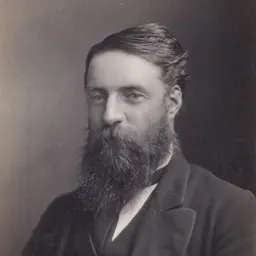


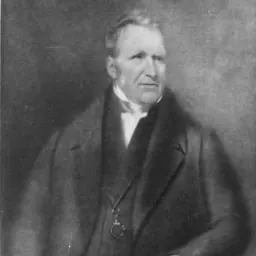


Related people
Same field, nearest in time
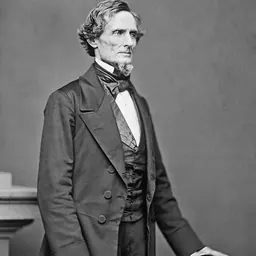
Contemporaries
People whose lives overlapped Boyle Travers Finniss's






Frequently asked questions
Who was Boyle Travers Finniss?
Australian politician
When was Boyle Travers Finniss born?
Boyle Travers Finniss was born on 18 August 1807 in birth at sea.
When did Boyle Travers Finniss die?
Boyle Travers Finniss died on 24 December 1893 in Kensington Park.
What was Boyle Travers Finniss's occupation?
Boyle Travers Finniss was a military officer, politician, surveyor, colonial administrator, historian and land owner.
What nationality was Boyle Travers Finniss?
Boyle Travers Finniss was British and Australian.
Sources & further reading
· Wikipedia: Boyle Travers Finniss
Cite this page
APA: Biography.guide. (2026). Boyle Travers Finniss. https://biography.guide/boyle-travers-finniss/
MLA: "Boyle Travers Finniss." Biography.guide, https://biography.guide/boyle-travers-finniss/.
Chicago: "Boyle Travers Finniss." Biography.guide. https://biography.guide/boyle-travers-finniss/.
Data last updated: 2026-09-20 · Spot an error? Report a correction.
Page generated 2026-09-27 05:32 UTC