
Ebenezer Ward
Politician and journalist in South Australia
About Ebenezer Ward
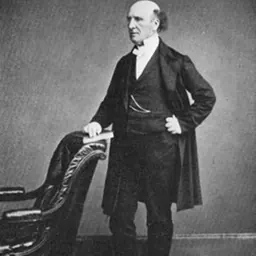
Lived 1837 – 1917 (aged 80). Ebenezer Ward was an Australian and British journalist, politician, newspaper editor, newspaper proprietor and civil servant.
History Ebenezer Ward was born the eldest son of the Rev. Joseph Ward, a member of an old English family, at Russalls, Mersey Island, Essex. He was educated at Dumpton Hall, a school established for the sons of Baptist ministers, near Ramsgate, Kent. It was intended that he join the ministry, but in 1849, he rebelled and decamped for London. He found work as a copy boy at a large printing office in Lincoln's Inn Fields. It was during his short stay there, that Ward acquired his appreciation of Shakespeare while checking proof sheets, which they were printing for Routledge. He next worked for the Morning Post as a reader's boy at 15/ a week. He was promoted to reader, then reviser, and eventually a member of their reporting staff in the gallery of the House of Commons and became proficient in shorthand. He won the confidence of his employers, and at age eighteen he was working with the proprietor's son, Algernon Borthwick, with whom he maintained a long correspondence. While touring the Victoria's important farming centres, he contributed his observations in The Herald and its associated sporting and agricultural journal, Bell's Life. It was also during this time, that he was first urged to stand for Parliament. Finniss promoted his 18-year-old son Frederick to take over much of Ward's responsibilities. Ward rejoined the Telegraph as editor, but was soon given the ultimatum of either discontinuing his Hansard work or leaving the Telegraph. He chose the latter, and continued with Hansard until 1868.
After the subdivision of the Burra electorate in 1884, the Frome district returned Ward at the head of the poll, and he was elected Chairman of Committees and Deputy speaker, where his superlative knowledge of Standing Orders and parliamentary procedure came to the fore.
Achievements Ward's political achievements include the stoppage of the sale of Crown Lands for cash in 1870 and 1871, and the throwing open of the lands on credit selections.
As Minister in the Boucaut Government Ward introduced the Education Act of 1875, which had been drafted by J. P. Boucaut and Sir Samuel Way, who was then Attorney-General.
Ward established experimental farms at Mannahill and Mount Muirhead near Millicent. Abolition of imprisonment for debt was the result of his persistent agitation.
In 1877 Ward and Sir Henry Ayers represented the State at the eighth Intercolonial Conference assembled to consider duplication of the telegraph cable between Europe and Australia. He helped delay adoption the Federal Adopting Bill; he was not opposed to Federation, merely the weak model which was finally arrived at.
For reasons which are unclear, he wrote a patriotic ditty which bears comparison with "Advance Australia Fair" and "Song of Australia": Sing Australia's song of joy, Of virgin ecstasy! United now, she greets the world Reliant, grateful, free!
Her lands have given homes to all, The world has gladly found her, Her sons uphold their fathers' fame! Her ocean walls surround her.
Australia fears no foreign foe, She loves her motherland, She knows her strength, she means the right, Her grip is heart with hand.
With conscience clear and purpose firm, No traitor shall betray her; Brightest of God's great gifts to men, God bless Australia!
Ward was Secretary of the Agricultural and Horticultural Society of S.A. from 1866 to 1868, and the driving force behind that society's "Grand General Show" 7–9 November 1867 held to coincide with Prince Alfred's visit to the State. He was a strong advocate for the Jubilee Exhibition of 1887.
Ward owned a farm at Parawurlie, Yorke Peninsula,
In 1890 Ward bought a property at Grampus Range, 21 km south of Yunta, 49 km east of Oodla Wirra and 54 km south-west of Mannahill and established a homestead there, with an elderly retainer as caretaker. It figured in the maintenance case his estranged wife laid against him; that it was not a fit place for girls to live.
Personality Always a keen political student Ward sought legislative honours ... A splendid rhetorician, a capital debater, and a caustic critic, his style of oratory was convincing, his vocabulary extensive, his diction clear cut and polished, his elocution perfect. The analytical faculty had been well developed in the stern school of harsh experience, so that he was keen to discern the weaknesses of an adversary, and quick to combat antagonistic views. Gifted with considerable histrionic power – more than once displayed on the professional stage – and a voice flexible as any actor could desire, it was a treat to hear him in the best years of his life declaim in passionate periods against an existing wrong which required legislative righting. Although he was curiously deficient in humour, his fluent tongue was a mighty influence for his side and as a 'whip of scorpions' to those who would thwart his will. The first fruits of success proved all too sweet, and the great promise of political youth was never properly fulfilled.
Ward had a series of disputes with the Commissioner of Taxes, in which despite his belligerent rhetoric, he invariably came out the loser. It would be fair to say that The Register had little sympathy for "The Member for Grampus".
Recognition In 1875 a public movement was initiated to secure the presentation of a testimonial to Mr. Ward "in recognition of his political services to South Australia." Over £500 was raised, and the presentation was made at a representative banquet at Gumeracha. and one of his treasured possessions was a railway pass given to him so that he might travel for the purpose of writing about the country, particularly its pastoral and agricultural industries. Arther Ward (c. January 1889 – ) Leslie N(orman) Ward (29 January 1893 – ) served at Gallipoli then a lieutenant in the Royal Aviation Corps, England. Went missing in France later vigneron of Lyndoch (shot down, crashed, broken leg, captured by Germans, repatriated 1918) Ethel Gladys married (1) James Clark, of Grenadier Guards, London on 9 February 1915 (2) Robert Ernest Cussen ( – 3 January 1947) on 3 November 1923
Don’t just read it —
keep it.
Full-length biographies made to live with: read them, listen on the way to work, watch them tonight.
- E-book
- Audio
- Video
Instant download · yours to keep · every purchase keeps this site free
Important facts
People in Ebenezer Ward's life
Named in this biography and alive at the same time




Related people
Same field, nearest in time

Contemporaries
People whose lives overlapped Ebenezer Ward's



Frequently asked questions
Who was Ebenezer Ward?
politician and journalist in South Australia (1837–1917)
When was Ebenezer Ward born?
Ebenezer Ward was born on 4 September 1837 in Westminster.
When did Ebenezer Ward die?
Ebenezer Ward died on 8 October 1917 in Perth.
What was Ebenezer Ward's occupation?
Ebenezer Ward was a journalist, politician, newspaper editor, newspaper proprietor and civil servant.
What nationality was Ebenezer Ward?
Ebenezer Ward was Australian and British.
Sources & further reading
Cite this page
APA: Biography.guide. (2026). Ebenezer Ward. https://biography.guide/ebenezer-ward/
MLA: "Ebenezer Ward." Biography.guide, https://biography.guide/ebenezer-ward/.
Chicago: "Ebenezer Ward." Biography.guide. https://biography.guide/ebenezer-ward/.
Data last updated: 2026-09-26 · Spot an error? Report a correction.
Page generated 2026-09-27 05:13 UTC