
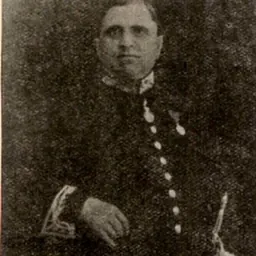
Boris Shcherbina
Soviet politician (1919–1990), vice-chairman of the Council of Ministers
About Boris Shcherbina
Lived 1919 – 1990 (aged 70). Boris Shcherbina was a Russian politician, chernobyl liquidator and railway engineer.
Boris Yevdokimovich Shcherbina (; ; 5 October 1919 – 22 August 1990) was a Soviet politician who served as a Deputy Chairman of the Council of Ministers of the Soviet Union from 1984 to 1989.
Shcherbina was influential in the development of the oil and gas industry in Siberia, particularly in Tyumen Oblast. In 1986, he was appointed head of the commission set to investigate the cause of the Chernobyl disaster and oversee its management. Two years later, he was put in charge of handling refugees caused by the 1988 Armenian earthquake. Shcherbina retired in 1989, before dying in 1990. It is unknown how large of a role radiation caused by Chernobyl played in his death.
Early life and education Boris Shcherbina was born in Debaltsevo, Ukrainian SSR (now Debaltseve in Donetsk Oblast) on October 5, 1919 to the family of a Ukrainian railroad worker. He completed his secondary education in 1937. Further education was interrupted in 1939 when he volunteered to join the army and fight in the Winter War against Finland as part of the 316th ski squadron. After Shcherbina graduated from the Kharkov Institute of Rail Transport Engineers in 1942, he began working as an engineer on the Severo-Donetsk Railway during World War II. Following the advice of experts, Shcherbina increased geological explorations in Tyumen in 1962 to unearth the region's oil and gas potential, with the results coming in not soon after confirming this potential. In the early 60s Tyumen produced 209,000 tons of oil and gas, in 1965 it was producing 953,000 tons. Around 1970, it was now producing 31.4 million tons. In March 1970, he made an unusual disclosure in revealing one of the largest oil fields in the world - the Samotlor field in Tyumen Oblast - through Sovetskaya Rossiya by reporting on its estimated reserves. He also worked to attract young people to Tyumen by constructing youth projects in relation to the Komsomol. As minister, he directed the construction of the Urengoy–Pomary–Uzhhorod pipeline connecting the Urengoi gas field in Western Siberia to Uzhgorod near the Czechoslovak border in Ukraine. A few hours later, the Politburo of the Soviet Union became informed of the disaster. Soviet leader Mikhail Gorbachev and the Chairman of the Council of Ministers Nikolai Ryzhkov decided then to form a commission headed by Shcherbina. Shcherbina was at this point the Deputy Chairman of the Council of Ministers. As head of the commission, he was given the task of both investigating the cause of the disaster and remedying the situation. As Shcherbina was in Siberia at this time, he only arrived in Chernobyl late on the night of 26 April, almost a full day after the explosions. By the time he arrived, two other groups of experts had already been flown to Chernobyl. According to The Washington Post, Shcherbina had initially rejected appeals for an immediate evacuation of the area from civil defence workers, citing "panic is even worse than radiation." He and other officials who arrived in Chernobyl were described as "absolutely incompetent" by Grigori Medvedev, former chief engineer at the No. 1 reactor in Chernobyl and author of The Truth About Chernobyl.
On 6 May, Shcherbina gave the first Soviet news conference on the disaster where he admitted that people living near the nuclear plant had been exposed to its radiation for 36 hours before evacuation, although he didn't state the levels they were exposed to. He also said that local officials had underestimated the size of the accident. This followed widespread foreign criticism of the USSR for its handling of Chernobyl. Although Shcherbina and other officials read out prepared scripts, portions of the conference, such as the possibility of cancer development following radiation exposure, were omitted when shown on Soviet television. In contrast to what he later said to the Politburo on 3 July 1986, Shcherbina said that Chernobyl met all Soviet and international standards. In June 1986, he submitted the commission's report to the Central Committee's Strategic Group containing the commission's findings in non-technical terms.
In a Politburo session on 3 July 1986 chaired by Gorbachev, Shcherbina presented the findings from the commission's investigation where he blamed both the staff of Chernobyl, but also the design of RBMK reactors. Excerpts of the session later published by the head of the Federal Archival Agency of Russia Rudolph Pikhoia disclosed Shcherbina's full presentation to the Politburo. At the session, Shcherbina reported the main findings of the commission's report. He began by laying the blame on the nuclear plant's leadership — the Ministry of Energy and Electrification and the government company SoyuzAtomEnergo — for creating a culture of carelessness and failing to learn from previous accidents. He then described the events that led to the disaster, including design flaws present in RBMK reactors where Shcherbina also reported that the commission found that the Ministry of Medium Machine Building, Kurchatov Institute, and the RBMK reactor designers held some responsibility for the disaster. He described RBMK reactors as being "incompatible with modern safety requirements.”
Two days later on 5 July, the USSR's official press agency TASS reported that the government had replaced Shcherbina with Deputy Prime Minister Vladimir Gusev as head of the Chernobyl commission amid rumours of Shcherbina's declining health and hospitalisation from radiation exposure. In September 1986, Shcherbina was present at the Soviet signing of two treaties from the International Atomic Energy Agency in Vienna in response to the Chernobyl disaster — the Convention on Early Notification of a Nuclear Accident and the Convention on Assistance in the Case of a Nuclear Accident or Radiological Emergency. At the signing, he declared that the USSR "will comply with both conventions.
1988 Armenian earthquake
On 7 December 1988, a devastating earthquake occurred in northern Armenia. In response to the humanitarian crisis, the Soviet government formed a special commission to handle refugees in Armenia and Azerbaijan, and to give material aid to the region. Shcherbina was appointed as head of the commission.
Personal life
Shcherbina was married to Raisa Pavlovna until her death in 1984. The two had one son, Yuri Borisovich Shcherbina.
Shcherbina was a workaholic during most of his life. In his free time, he liked to read scientific articles and books, and to also play chess.
Honours and awards In his position of Minister of Oil and Gas, he was awarded the honorific title of Hero of Socialist Labour in 1983 for major contributions to the development of the country's oil and gas industry, which was the highest award for achievements within the national economy. It is speculated that his death resulted from a radiation-induced cancer caused by his work at the Chernobyl disaster site. Officially, however, it is unknown whether his death was related to radiation, as a 1988 decree that he drafted prevented Soviet doctors from citing radiation as a cause of death or illness. Prior to his death, Shcherbina had suffered from several heart attacks. and of Gyumri in Armenia in 2003. In Tyumen, a boulevard was named in his honour in 2003, and on 10 November 2004, a bust of Shcherbina was erected in Nikolai Nemtsov Square in Tyumen, Tyumen Oblast. The Soviet film depicts Shcherbina, as portrayed by , during the construction of the Urengoy–Pomary–Uzhhorod pipeline.
Don’t just read it —
keep it.
Full-length biographies made to live with: read them, listen on the way to work, watch them tonight.
- E-book
- Audio
- Video
Instant download · yours to keep · every purchase keeps this site free
Important facts
People in Boris Shcherbina's life
Named in this biography and alive at the same time
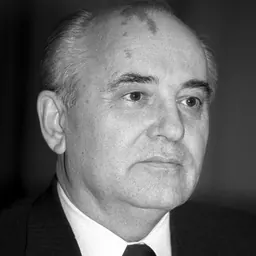

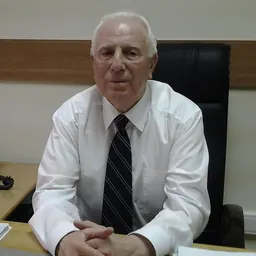

Related people
Same field, nearest in time





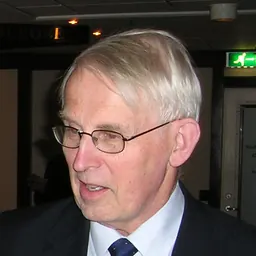
Contemporaries
People whose lives overlapped Boris Shcherbina's
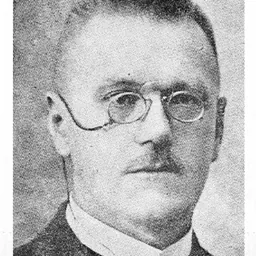


Frequently asked questions
Who was Boris Shcherbina?
Soviet politician (1919–1990), vice-chairman of the Council of Ministers
When was Boris Shcherbina born?
Boris Shcherbina was born on 5 October 1919 in Debaltseve.
When did Boris Shcherbina die?
Boris Shcherbina died on 22 August 1990 in Moscow.
What was Boris Shcherbina's occupation?
Boris Shcherbina was a politician, chernobyl liquidator and railway engineer.
What nationality was Boris Shcherbina?
Boris Shcherbina was Russian.
Sources & further reading
Cite this page
APA: Biography.guide. (2026). Boris Shcherbina. https://biography.guide/boris-shcherbina/
MLA: "Boris Shcherbina." Biography.guide, https://biography.guide/boris-shcherbina/.
Chicago: "Boris Shcherbina." Biography.guide. https://biography.guide/boris-shcherbina/.
Data last updated: 2026-09-20 · Spot an error? Report a correction.
Page generated 2026-09-27 05:17 UTC