
About Boris Rauschenbach
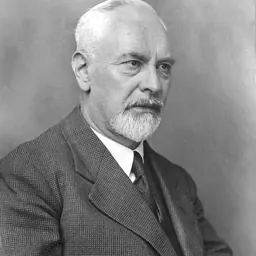
Lived 1915 – 2001 (aged 86). Boris Rauschenbach was a Russian physicist, inventor and university teacher.
Boris Viktorovich Rauschenbach (; born Boris-Ivar Rauschenbach; , Petrograd – 27 March 2001, Moscow) Russian physicist of German ethnicity who worked as an engineer in the former Soviet space program.
Trained as an engineer, he found great success in designing rockets and who developed the theory and instruments for interplanetary flight control and navigation in 1955-1960s. He is also notable for his studies in Christian theology and theory of Art.
Biography
This article, including quotation, is based on Rauschenbach's 1997 book of autobiographic essays, "Pristrastie" (Obsession)
Family roots Boris-Ivar Rauschenbach was born to a protestant family of ethnic Germans, tracing their history to Karl-Friedrich Rauschenbach who settled in Russia in 1766. His father Victor David Rauschenbach, originally a Volga German, was a manager at a leather factory in Saint Petersburg, and the family lived at the factory site until 1925. His mother Lonny Christine Hallik was a Baltic German. The family was bilingual; Rauschenbach said that "I feel myself a German and a Russian at the same time, a peculiar feeling... reflecting reality. We grew up in Russia, immersed in Russian traditions" ("Я чувствую себя одновременно русским и немцем - интересное ощущение... оно отражает реальность. Мы выросли в России, впитали в себя русские обычаи"). Rauschenbach also designed instruments for the Vostok 3-Vostok 6 joint flight and the first Soyuz spacecraft docking systems.
Rauschenbach School Since 1948, Rauschenbach lectured in Physics and Technical Department of Moscow State University, which was converted to an independent Moscow Institute of Physics and Technology (MFTI) in 1951. Rauschenbach chaired Theoretical Mechanics department in MFTI since 1978. His course of lectures in the recent years was 'Dynamics of spaceflight'.
Rauschenbach trained the first cosmonauts in flight dynamics and spacecraft control systems, but after the death of Korolyov in 1965, he gradually stepped aside from active space program and concentrated on academic activities and his studies of art.
Art theories and theology
Rauschenbach later linked his interest to visual art with the problems of docking spacecraft. During docking operation, pilot could see the other spacecraft only on a TV screen. Does it render real objects well enough, wondered Rauschenbach, to bet the lives of two crews on a flat electronic image? This led him to study perspective and human perception of flat images. This applied problem transformed into general interest in humanities: "Art and art studies, faith and religion live forever, and the man is always anxious to step further into the deep of it" ("искусство и искусствознание, вера и религия существуют вечно, и в человеке всегда живет и будет жить какое-то беспокойство, желание проникнуть как можно глубже в сущность всего этого").
Rauschenbach's first published work outside rocketry, "Spatial composition in old Russian art" (1975) and later "Spatial composition in painting" (1980, including world art) were dedicated to mathematical foundations of perspective in art. His mathematics prove the impossibility of rendering correct spatial perspective on a flat sheet. His studies of the difference between the material artwork and human perception of it indicated that perception differs with the subject of an image. Great artists deliberately distorted perspective, and the degree of distortion depends on the subject.
His theological essays, published in the 1990s, concentrate on the proof of Holy Trinity. This work, as well as studies of icons, earned him credits of Russian Orthodox Church. At the age over 70 Rauschenbach experienced clinical death and after that he was rebaptized converting to Orthodoxy.
Awards 1960 - Lenin Prize for automatic circumlunar flight 1961 - Order of Lenin for the first crewed spaceflight 1966 - Correspondent member, Academy of Sciences of USSR 1986 - Member, Academy of Sciences of USSR 1990 - Hero of Socialist Labor 1994 - Demidov Prize for works in mechanics Asteroid 4237 Raushenbakh is named after him.
Don’t just read it —
keep it.
Full-length biographies made to live with: read them, listen on the way to work, watch them tonight.
- E-book
- Audio
- Video
Instant download · yours to keep · every purchase keeps this site free
Important facts
People in Boris Rauschenbach's life
Named in this biography and alive at the same time

Related people
Same field, nearest in time


Contemporaries
People whose lives overlapped Boris Rauschenbach's




Frequently asked questions
Who was Boris Rauschenbach?
Soviet physicist (1915-2001)
When was Boris Rauschenbach born?
Boris Rauschenbach was born on 5 January 1915 in Saint Petersburg.
When did Boris Rauschenbach die?
Boris Rauschenbach died on 27 March 2001 in Moscow.
What was Boris Rauschenbach's occupation?
Boris Rauschenbach was a physicist, inventor and university teacher.
What nationality was Boris Rauschenbach?
Boris Rauschenbach was Russian.
Sources & further reading
· Wikipedia: Boris Rauschenbach
Cite this page
APA: Biography.guide. (2026). Boris Rauschenbach. https://biography.guide/boris-rauschenbach/
MLA: "Boris Rauschenbach." Biography.guide, https://biography.guide/boris-rauschenbach/.
Chicago: "Boris Rauschenbach." Biography.guide. https://biography.guide/boris-rauschenbach/.
Data last updated: 2026-09-20 · Spot an error? Report a correction.
Page generated 2026-09-27 05:24 UTC