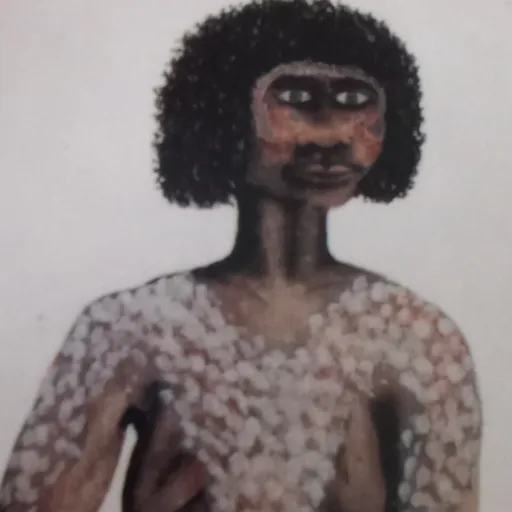
Boorong
Burramattagal cross-cultural pioneer
About Boorong
Lived 1777 – 1813 (aged 35–36). Boorong was an interpreter.
Boorong (c.1777 – c.1813), also known as Booron or Abaroo, was a Burramattagal woman who was the first female Indigenous Australian to establish significant relations with the British colonists of Australia. She was also the first Indigenous Australian to be instructed in Christianity. As a child, she learnt English and became an important interpreter between the Eora people of Port Jackson and the British in the early years of colonisation. In adulthood, Boorong was the third wife of Bennelong and is buried with him near Kissing Point, New South Wales.
Early life Boorong was born into the Burramattagal clan of the Eora people whose country was located around what is now known as Parramatta. Her father was Maugoran and her mother Gooroobera. She had two brothers; Ballooderry and Yeranibi. Her father later married another woman named Tadyera and they had two children; Bidgee Bidgee and Warreweer Wogul Mi, these being Boorong's half-brother and half-sister. Boorong's name was derived from the word meaning "star".
British invasion and forced exile Boorong's family were exiled from their land when Governor Arthur Phillip ordered a military post be established at Rose Hill in late 1788. A detachment of Royal Marines under Lieutenant George Johnston occupied Rose Hill on 2 November 1788 and built an earthwork fort in what is now Parramatta Park.
Another Indigenous smallpox survivor, a boy named Nanbaree, had also been obtained by the British at the colony. Boorong and Nanbaree were taught English and were soon used to help the British communicate with the surviving Eora people living around the harbour. When the British abducted Bennelong and Colebe from Manly Cove and brought them to the settlement, Boorong and Nanbaree assisted in interpreting for them.
In 1790, British officers used Boorong to try and convince Bennelong's wife, Barangaroo, to come and live at the settlement. However, Barangaroo ended up convincing Boorong to leave the colony to reside with her relatives. She returned to the British after only a few weeks when she was chastised by her family for not accepting Yemmerrawanne as a partner.
Boorong died sometime around 1813 when her husband Bennelong died. She is buried alongside Bennelong and Nanbaree in a grave which is located under a residential housing lot at 25 Watson Street, Putney. The Government of New South Wales purchased the property in 2018 with the aim of developing it into a place of commemoration.
Don’t just read it —
keep it.
Full-length biographies made to live with: read them, listen on the way to work, watch them tonight.
- E-book
- Audio
- Video
Instant download · yours to keep · every purchase keeps this site free
Important facts
People in Boorong's life
Named in this biography and alive at the same time
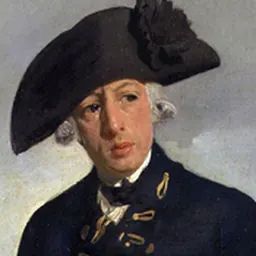
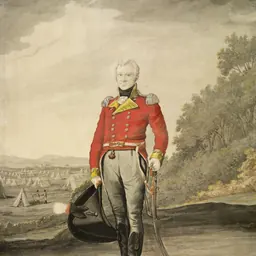
Related people
Same field, nearest in time
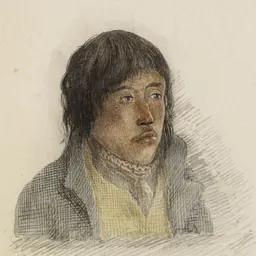



Contemporaries
People whose lives overlapped Boorong's



Frequently asked questions
Who was Boorong?
burramattagal cross-cultural pioneer
When was Boorong born?
Boorong was born in 1777 in Parramatta.
When did Boorong die?
Boorong died in 1813.
What was Boorong's occupation?
Boorong was an interpreter.
Sources & further reading
Cite this page
APA: Biography.guide. (2026). Boorong. https://biography.guide/boorong/
MLA: "Boorong." Biography.guide, https://biography.guide/boorong/.
Chicago: "Boorong." Biography.guide. https://biography.guide/boorong/.
Data last updated: 2026-09-20 · Spot an error? Report a correction.
Page generated 2026-09-27 05:09 UTC