
About Bobbi Sykes
Lived 1943 – 2010 (aged 67). Bobbi Sykes was an Australian human rights defender, poet, biographer and writer.
Roberta "Bobbi" Sykes (16 August 194314 November 2010) was an Australian poet and author. She was a lifelong campaigner for Indigenous land rights, as well as human rights and women's rights.
Early life and education Born Roberta Barkley Patterson in Townsville, Queensland, sometime in the 1940s, Sykes was raised by her white mother, Rachel Patterson, and never knew her father. Sykes says in her autobiography that his identity is unknown, and her mother told her a number of different accounts about him; variously that he was Fijian, Papuan, African American, and Native American. The most consistent and plausible version was that he was an African American soldier stationed in Australia during World War II.
Although she fought hard for Australian Aboriginal rights, she herself was not of Australian Aboriginal descent. She was sometimes criticised for not correcting the record when others assumed she was Aboriginal.
During the 1970s Sykes, along with Sue Chilly (also spelt Chilli), Marcia Langton, and Naomi Mayers, formed the Black Women's Action (BWA) group, which later evolved into the Roberta Sykes Foundation.
She was involved in the creation and early development of the Redfern Aboriginal Medical Service, the National Black Theatre in Redfern, and in the setting up of Aboriginal Islander Dance Theatre in Glebe, which later became NAISDA, which nurtured Bangarra Dance Theatre.
Poetry Sykes's early poetry was published in 1979 in the book Love Poems and Other Revolutionary Actions. The first edition was limited to a thousand copies (with the first 300 numbered and signed). A mass-market edition was published in 1988. Her second volume of poetry was published in 1996. In 1981 she ghosted the autobiography of Mum (Shirl) Smith, an Aboriginal Australian social worker in New South Wales.
Harvard and later activism Sykes received a PhD in education from Harvard University in 1983
She returned to Australia, where she took over running the BWA.
Roberta Sykes Foundation
During the 1970s Sykes, along with Sue Chilly (often spelt Chilli; from Brisbane ), Marcia Langton, and Naomi Mayers, formed the Black Women's Action (BWA) group, which later evolved into the Roberta Sykes Foundation. BWA started publishing a monthly community newspaper for Aboriginal people, Koori Bina, also spelt Koori-Bina (meaning "black ears"; also translated as "listen up" ). Aboriginal journalist John Newfong, already established in mainstream media and inaugural editor and principal writer of quarterly magazine Identity (1971–1982) was also involved. The paper raised awareness of biased coverage of Indigenous issues in mainstream Australian media, and covered Aboriginal unemployment, health issues, and land rights, but struggled on minimal funding, relying on donations to keep going. It was later described as a "hard-hitting, staunchly political newspaper". It criticised cuts to funding that affected Aboriginal organisations and the Fraser government's plans to dismantle Medibank. Along with other Indigenous publications, it covered stories in detail that were not found, or only superficially covered, in mainstream media, such as Aboriginal housing.
Students at Aboriginal Islander Dance Theatre were taught publishing and writing skills to produce the newspaper, which eventually led to their assuming responsibility for its publication. The journal ran from June 1976 to June 1979, before running out of funds. A new magazine, AIM (Aboriginal and Islander Message or Aboriginal-Islander-Message), by Jack Patten (co-founder of the Aborigines Progressive Association) and Percy Reginald Stephensen. She also wrote: "the experience of producing those newspapers within a hostile white environment... because it has the power and resources, has historically defined us".
BWA expanded its scope over time, and started funding small enterprises established by Aboriginal women. In 1979 it raised funds to pay for Sykes to study at Harvard University, where she became the first Aboriginal woman to graduate from an American university. It contributed to several other Black women's educational goals, including Norma Ingram and MaryAnn Bin-Sallik, who both attended Harvard too. BWA played a crucial part in raising public awareness and funds to enable Mum Shirl to pay off the mortgage on her house she was in danger of losing, after giving so much to others throughout her life.
In 1990, Black Women's Action became registered as a tax-deductible entity, changing its name to Black Women's Action in Education Foundation (BWAEF) to reflect the change. Langton, Rob Bryant (later co-founder of Bangarra), Jackie Huggins, Jilpia Jones, Brian Syron and Lili Tuwai became trustees of the foundation. Funds to assist Aboriginal students to achieve goals were raised mainly through small individual donations and community fundraising events.
In 2003 Sykes became ill and participated less in BWAEF activities, but the foundation continued its work until around 2006, when there was an hiatus for a few years.
In late 2008, Sykes asked Danny Gilbert to revive the foundation, and Gilbert suggested a change of name to the Roberta Sykes Indigenous Education Foundation (RSIEF). In 2010, Peter Waters (chair), Jilpia Jones, Shireen Malamoo, Mark McMillan, Richard Potok and Nicole Watson were appointed as trustees, with Potok also taking the role of executive director. RSIEF has continues Sykes' work, supporting a number of Aboriginal and Torres Strait Islander students to undertaking postgraduate study overseas. It also runs a program of bursaries to support short course overseas study.
Awards and nominations 1981: Patricia Weickert Black Writers Award 1994: Australian Human Rights Medal 1997: Age Book of the Year for Snake Cradle 1998: National Biography Award for Snake Cradle 1998: Nita B. Kibble Literary Award for Snake Cradle
Don’t just read it —
keep it.
Full-length biographies made to live with: read them, listen on the way to work, watch them tonight.
- E-book
- Audio
- Video
Instant download · yours to keep · every purchase keeps this site free
Important facts
People in Bobbi Sykes's life
Named in this biography and alive at the same time



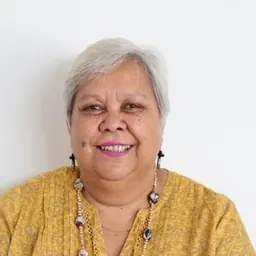

Related people
Same field, nearest in time
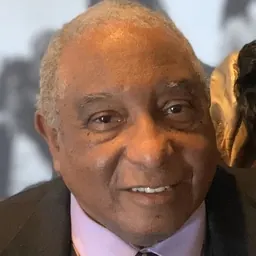

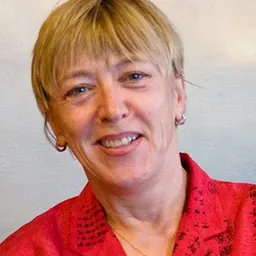
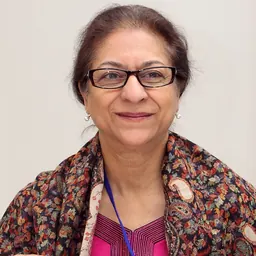
Contemporaries
People whose lives overlapped Bobbi Sykes's



Frequently asked questions
Who was Bobbi Sykes?
Australian poet and author
When was Bobbi Sykes born?
Bobbi Sykes was born on 16 August 1943 in Townsville.
When did Bobbi Sykes die?
Bobbi Sykes died on 14 November 2010 in Sydney.
What was Bobbi Sykes's occupation?
Bobbi Sykes was a human rights defender, poet, biographer and writer.
What nationality was Bobbi Sykes?
Bobbi Sykes was Australian.
Sources & further reading
Cite this page
APA: Biography.guide. (2026). Bobbi Sykes. https://biography.guide/bobbi-sykes/
MLA: "Bobbi Sykes." Biography.guide, https://biography.guide/bobbi-sykes/.
Chicago: "Bobbi Sykes." Biography.guide. https://biography.guide/bobbi-sykes/.
Data last updated: 2026-09-20 · Spot an error? Report a correction.
Page generated 2026-09-27 05:06 UTC