
About Marcia Langton
Born 1951. Marcia Langton is an Australian anthropologist, geographer, academic and actor.
Marcia Lynne Langton (born 31 October 1951) is an Aboriginal Australian writer and academic. she is the Redmond Barry Distinguished Professor at the Melbourne School of Population and Global Health, University of Melbourne. Langton is an activist for Indigenous rights.
Early life and education Marcia Langton was born on 31 October 1951 to Kathleen (née Waddy) and grew up in south-central Queensland and Brisbane as a descendant of the Yiman and Bidjara heritage, both groups being Aboriginal Australian peoples. Her father had no presence in her life. Her mother married Scots-born, ex-Korean War veteran Douglas Langton when Marcia was a year old. Marcia was close to her maternal grandmother Ruby and her sister Teresa.
She and her mother moved often, without secure housing or employment, and she attended nine primary schools. She attended Aspley State High School from 1964 to 1968, On her travels she met US servicemen who had served in the Vietnam War, and became acquainted with Afro American culture and the Black Power movement. After flying to New York City, she was kidnapped by people traffickers, but escaped.
Langton was then appointed assistant head of the Division of Aboriginal and Islander Affairs in Queensland (under the government of Wayne Goss
In 2012 she became the patron of the Indigenous Reading Project, a charitable organisation that uses digital technology to improve the reading ability of Aboriginal and Torres Strait Islander children.
Activism and political views 1970s During the early 1970s, Langton was one of three leaders of the Communist League, a group founded by Queensland doctor John McCarthy, Peter Robb and others in 1972, which merged into the Socialist Workers Party around 1976. and Naomi Mayers formed the Black Women's Action (BWA) group, which later evolved into the Roberta Sykes Foundation. BWA published a monthly community newspaper for Aboriginal people, Koori Bina (meaning "Black ears" ), which ran until June 1979. by Jack Patten (co-founder of the Aborigines Progressive Association) and Percy Reginald Stephensen. She was also involved in a number of other Black community publications, and wrote in the introduction to her 1979 Listing of Aboriginal periodicals: "the experience of producing those newspapers within a hostile white environment... because it has the power and resources, has historically defined us".
Langton went to Canberra for a year in 1977, after being elected general secretary to the Federal Council for the Advancement of Aborigines and Torres Strait Islanders, where she enrolled for an anthropology degree at ANU.
In 2007, Langton supported The Intervention by the Howard government. By this time, along with Noel Pearson, she believed that there was a crisis in over-dependence on welfare among Indigenous people, and there was a need for greater Indigenous responsibility. These views put Pearson and Langton at odds with many other Indigenous activists.
She has argued that settlement with mining companies on Aboriginal land often benefits local interests more than the Australian Government, and that the proposed 2010 resource tax on mining in Australia needed a redesign to support Indigenous rights and employment. She advocated for agreements to be made directly between mining groups and Indigenous owners of the land, with Aboriginal corporations as mediators. Her criticisms of Indigenous litigants have been rebuffed by Indigenous lawyer Tony McAvoy SC.
On 30 October 2019, Langton and Tom Calma were announced as co-chairs of the Senior Advisory Group—convened by Ken Wyatt and consisting of 20 leaders and experts from across the country—of the proposed Indigenous voice to government under the Morrison government. In July 2021 the Indigenous Voice Co-design Process panel released its final report, often referred to as the Calma Langton report, outlining a model of a proposed Voice.
Under the Albanese government elected in 2022, the proposal changed to be an Indigenous Voice to Parliament, enshrined in the Australian Constitution. This change, along with the recognition of Indigenous Australians in the Constitution, was put to a referendum in Australia. The referendum took place on 14 October 2023, and was defeated in all six states and by the national majority.
On 1 November 2023, Langton strongly backed uniform alcohol restrictions across the Northern Territory.
Current roles and views Langton is a frequent media commentator and has served on various high-level committees on Indigenous issues. These have included the Council for Aboriginal Reconciliation, the directorship of the Centre for Indigenous Natural and Cultural Resource Management, the chair of the Indigenous Higher Education Advisory Council and the chair of the Cape York Institute for Policy and Leadership. but is generally apolitical.
Other activities and roles Langton has worked in other countries (notably Canada and East Timor) on the rights of indigenous peoples, with special reference to conservation and environmental issues and has published works on issues of gender and identity, resource management and substance abuse.
She is also known as a film and art critic and has appeared in several films, including Jardiwarnpa: a Warlpiri fire (an episode in the film series Blood Brothers) and Night Cries: A Rural Tragedy.
She has been on the judging panel for the annual Horne Prize since its inception in 2016. She was promoted to officer of the Order of Australia in the 2020 Australia Day Honours for "distinguished service to tertiary education, and as an advocate for Aboriginal and Torres Strait Islander people".
Other recognition has included: 2001: Fellow, Academy of Social Sciences in Australia 2008: Winner, Victorian Premier's Literary Awards, Alfred Deakin Prize for an Essay Advancing Public Debate, for Trapped in the Aboriginal Reality Show 2011: Finalist, Female Actor of the Year, in Deadly Sounds Aboriginal and Torres Strait Islander Music, Sport, Entertainment and Community Awards a continuing role 2017: First Associate Provost at the University of Melbourne 2021: Honorary Fellow of the Australian Academy of Technology and Engineering 2025: Inaugural winner, Rechnitz Memorial Award, Academy of the Social Sciences in Australia
Personal life Langton has a son, who lives in New Zealand, and a daughter who is a lawyer. Rachel Perkins' TV series First Australians (SBS television, 2008), features many commentaries by Langton (feature fiction, directed by Beck Cole and starring Langton)
Footnotes
Don’t just read it —
keep it.
Full-length biographies made to live with: read them, listen on the way to work, watch them tonight.
- E-book
- Audio
- Video
Instant download · yours to keep · every purchase keeps this site free
Important facts
People in Marcia Langton's life
Named in this biography and alive at the same time



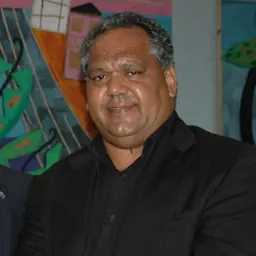


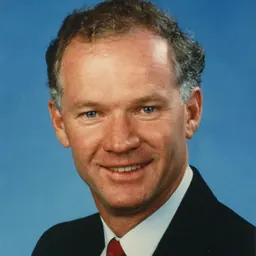
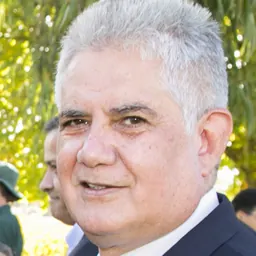
Related people
Same field, nearest in time



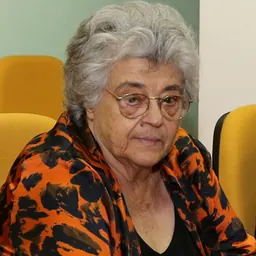
Contemporaries
People whose lives overlapped Marcia Langton's


Frequently asked questions
Who is Marcia Langton?
Australian Aboriginal scholar and activist
When was Marcia Langton born?
Marcia Langton was born on 31 October 1951 in Brisbane.
What is Marcia Langton's occupation?
Marcia Langton is an anthropologist, geographer, academic and actor.
What nationality is Marcia Langton?
Marcia Langton is Australian.
Sources & further reading
Cite this page
APA: Biography.guide. (2026). Marcia Langton. https://biography.guide/marcia-langton/
MLA: "Marcia Langton." Biography.guide, https://biography.guide/marcia-langton/.
Chicago: "Marcia Langton." Biography.guide. https://biography.guide/marcia-langton/.
Data last updated: 2026-09-22 · Spot an error? Report a correction.
Page generated 2026-09-27 05:32 UTC