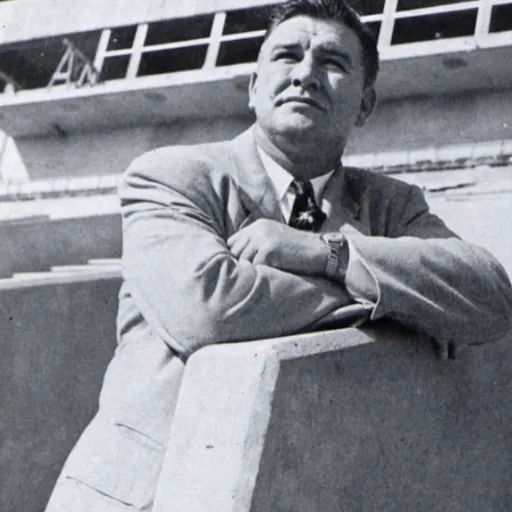
Bob Woodruff
American college football player, college football coach, college athletic director
About Bob Woodruff
Lived 1916 – 2001 (aged 85). Bob Woodruff was an American american football player.
George Robert Woodruff (March 14, 1916 – November 1, 2001) was an American college football player, coach, and sports administrator. Woodruff was a native of Georgia and an alumnus of the University of Tennessee, where he played college football. He was best known as the head coach of the Baylor University and University of Florida football teams, and later, as the athletic director at the University of Tennessee.
Early life and education Woodruff was born in Athens, Georgia, in 1916, and attended high school in Savannah, Georgia. After high school, he enrolled at the University of Tennessee in Knoxville, where he played tackle for the Tennessee Volunteers football team under head coach Robert Neyland. Woodruff graduated from Tennessee in 1939.
Coaching career
Tennessee, Army and Georgia Tech assistant coach
Woodruff stayed in Knoxville after he graduated from the University of Tennessee, working as an assistant coach under Neyland during the 1939, 1940 and 1941 football seasons. He was discharged from the Army as a major in 1946, and accepted an assistant coaching position under Bobby Dodd at Georgia Tech. His 1948 Bears posted a 6–3–2 record and finished with a 20–7 win over Wake Forest in the Dixie Bowl. Woodruff coached his 1949 Bears to a final AP Poll top-20 ranking and an 8–2 record, but the Bears did not receive a bowl bid. In early December 1949, Woodruff became embroiled in a dispute with the Baylor athletic director, Ralph Wolf, which became public when both Woodruff and Wolf resigned their positions within twenty-four hours on December 9 and 10. Although the subject of their dispute was never publicly disclosed, the university announced that Woodruff had withdrawn his resignation and would keep his position on December 14, but Woodruff resigned a second time on January 6, 1950 to become the head football coach and athletic director at the University of Florida.
Florida Gators head coach
After the 1949 season, Woodruff replaced Raymond Wolf as the head football coach at the University of Florida in Gainesville, Florida. Woodruff's annual salary was $5,000 more than that of University of Florida President J. Hillis Miller. He was only 34 years old. Ironically, his first Gators team in 1950 had a stellar offense and a weak defensive squad. With the addition of Rick Casares to the backfield, Woodruff's 1951 Gators scored a 30–21 upset of the heavily favored Alabama Crimson Tide in their homecoming game in Tuscaloosa, Alabama.
The 1952 Gators were Woodruff's most successful team, and the 1952 season included some of his most inspired coaching. After quarterback Haywood Sullivan left school early to accept a professional baseball contract with Boston Red Sox, Woodruff experimented with fullback Rick Casares at quarterback, Woodruff's unconventional replacement, defensive back Doug Dickey, turned out to be exactly what the Gators needed at quarterback—a talented athlete and savvy game manager.
Although Woodruff was a talented administrator, he sometimes had difficulty expressing himself verbally. He would often stop mid-sentence to collect his thoughts, which Charlie LaPradd once described as "With [Woodruff's] long periods of silence, he would make you wonder if he was thirty minutes ahead of you or thirty minutes behind." In a moment of self-deprecating humor, Woodruff once described himself as "the oratorical equivalent of a blocked punt." Woodruff's Gators would not win more than six games again in a season, During his tenure, Woodruff's Gators scored notable upsets, suffered close losses, received their first two NCAA-sanctioned bowl game invitations and their first four final AP poll rankings, but Woodruff's greatest legacy in Gainesville may have been rebuilding the Gators into a team that was consistently competitive against the other major football programs of the SEC, and thereby laying the groundwork for the future successes of Ray Graves' 1960s Florida Gators teams that followed.
Woodruff was inducted into the University of Florida Athletic Hall of Fame as an "honorary letter winner" in 1983.
Athletic director
During his time as the Gators football coach, Woodruff also worked as Florida's athletic director. From 1963 to 1985, Woodruff served as the athletic director at his alma mater, the University of Tennessee.
Head coaching record
Don’t just read it —
keep it.
Full-length biographies made to live with: read them, listen on the way to work, watch them tonight.
- E-book
- Audio
- Video
Instant download · yours to keep · every purchase keeps this site free
Important facts
People in Bob Woodruff's life
Named in this biography and alive at the same time
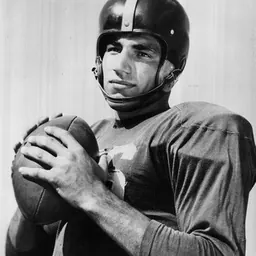

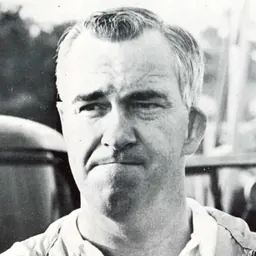

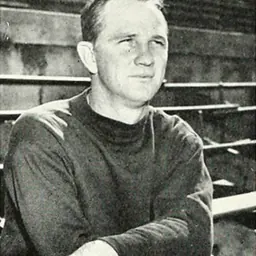

Related people
Same field, nearest in time



Contemporaries
People whose lives overlapped Bob Woodruff's



Frequently asked questions
Who was Bob Woodruff?
American college football player, college football coach, college athletic director (1916-2001)
When was Bob Woodruff born?
Bob Woodruff was born on 14 March 1916 in Athens.
When did Bob Woodruff die?
Bob Woodruff died on 1 November 2001 in Knoxville.
What was Bob Woodruff's occupation?
Bob Woodruff was an american football player.
What nationality was Bob Woodruff?
Bob Woodruff was American.
Sources & further reading
· DBpedia: Bob Woodruff (American football)
Cite this page
APA: Biography.guide. (2026). Bob Woodruff. https://biography.guide/bob-woodruff-american-football-player/
MLA: "Bob Woodruff." Biography.guide, https://biography.guide/bob-woodruff-american-football-player/.
Chicago: "Bob Woodruff." Biography.guide. https://biography.guide/bob-woodruff-american-football-player/.
Data last updated: 2026-09-23 · Spot an error? Report a correction.
Portrait: Wikimedia Commons · author & licence
Page generated 2026-09-27 05:05 UTC