
About Blind Alfred Reed
Lived 1880 – 1956 (aged 75). Blind Alfred Reed was an American musician, songwriter and fiddler.
Blind Alfred Reed (June 15, 1880 – January 17, 1956) was an American folk, country, and old-time musician and singer-songwriter. He was one of the artists who recorded at the Bristol Sessions in 1927, alongside more famous names such as Jimmie Rodgers and The Carter Family. He played the fiddle along with his son Arville, who played the guitar. He is perhaps most well known for the songs "The Wreck of the Virginian" and "How Can a Poor Man Stand Such Times and Live?", the latter of which has been covered many times, including versions by Bruce Springsteen, Ry Cooder, and the New Lost City Ramblers.
Early life Alfred was born completely blind, in Floyd County, Virginia, being the second blind child born to Riley and Charlotte (Akers) Reed. He was raised in a very conservative family, the son of a farm laborer, and he acquired a violin at a young age. Later, he began performing at county fairs, in country schoolhouses, for political rallies, and in churches. He even played on street corners for tips. He used to sell out printed copies of his compositions for ten cents each.#tag:ref| Tribe, p. 27 Reed continued to perform locally until 1937 when a statute was passed prohibiting blind street musicians.#tag:ref| Tribe, p. 28
Legacy Reed's lyrics, all of which he composed himself, were ostensibly very conservative, but always were presented with a sense of humor; for example "Why Do You Bob Your Hair, Girls?" was an over-the-top commentary against women's hair style fashion of the 1920s, in which women who wore a shingle-bob were instructed to "ask Jesus to forgive" their hair style. More than half of the songs he recorded were religious or political or spoke out against society's ills. Because of his social commentary, which was somewhat uncommon then, some people today consider Reed an early "protest" singer.
In 2007, Blind Alfred Reed was inducted into the West Virginia Music Hall of Fame, alongside other famous musicians from West Virginia. Also in 2007, a tribute album to Blind Alfred, named for one of his songs, was released. Always Lift Him Up: A Tribute to Blind Alfred Reed features nineteen of Reed's most famous songs, recorded by artists from West Virginia, such as Little Jimmy Dickens, Tim O'Brien and Ann Magnuson.
In 2020, Reed's song "How Can A Poor Man Stand Such Times and Live" was added to the Grammy Hall of Fame.
Original discography
Matrix Title Record # Recording date 39725 "The Wreck of the Virginian" Victor 20836 July 28, 1927 39726 "I Mean To Live For Jesus" Victor 20939 July 28, 1927 39727 "You Must Unload" Victor 20939 July 28, 1927 39728 "Walking In the Way With Jesus" Victor 20836 July 28, 1927 40790 "Explosion In the Fairmount Mines" Victor 21191 December 19, 1927 40791 "Fate of Chris Lively and Wife" Victor 21533 December 19, 1927 40792 "Why Do You Bob Your Hair, Girls?" Victor 21360 December 19, 1927 40793 "Always Lift Him Up and Never Knock Him Down" Victor 21360 December 19, 1927 40794 "The Prayer of the Drunkard's Little Girl" Victor 21191 December 19, 1927 57571 "Woman's Been After Man Ever Since" Victor V-40196 December 3, 1929 57572 "Why Do You Bob Your Hair, Girls? - No.2" Victor V-40196 December 3, 1929 57573 "There'll Be No Distinction There" Victor 23550 December 3, 1929 57574 "We've Just Got To Have 'Em, That's All" Victor V-40290 December 3, 1929 57575 "Beware" Victor 23550 December 3, 1929 57576 "The Railroader" Unissued December 3, 1929 57742 "The Old Fashioned Cottage" Victor 23650 December 4, 1929 57743 "How Can A Poor Man Stand Such Times and Live" Victor V-40236 December 4, 1929 57744 "Black and Blue Blues" Victor V-40290 December 4, 1929 57745 "Bonnie Little Girl" Unissued December 4, 1929 57746 "You'll Miss Me" Victor 23650 December 4, 1929 57747 "Money Cravin' Folks Victor V-40236 December 4, 1929
Discography How Can A Poor Man Stand Such Times And Live?...The Songs Of Blind Alfred Reed (Rounder Records, 1001, 17981, 1972) Complete Recorded Works in Chronological Order (Document DOCD-8022, 2 March 1998) Appalachian Visionary (Dust-to-Digital 48, 2016)
Don’t just read it —
keep it.
Full-length biographies made to live with: read them, listen on the way to work, watch them tonight.
- E-book
- Audio
- Video
Instant download · yours to keep · every purchase keeps this site free
Important facts
People in Blind Alfred Reed's life
Named in this biography and alive at the same time
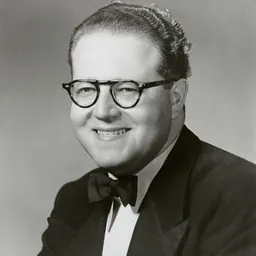



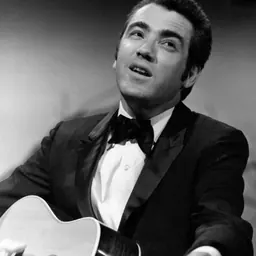
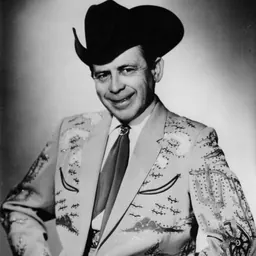
Related people
Same field, nearest in time
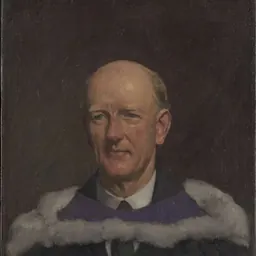



Contemporaries
People whose lives overlapped Blind Alfred Reed's




Frequently asked questions
Who was Blind Alfred Reed?
American musician (1880–1956)
When was Blind Alfred Reed born?
Blind Alfred Reed was born on 15 June 1880 in Floyd County.
When did Blind Alfred Reed die?
Blind Alfred Reed died on 17 January 1956.
What was Blind Alfred Reed's occupation?
Blind Alfred Reed was a musician, songwriter and fiddler.
What nationality was Blind Alfred Reed?
Blind Alfred Reed was American.
Sources & further reading
· Wikipedia: Blind Alfred Reed
Cite this page
APA: Biography.guide. (2026). Blind Alfred Reed. https://biography.guide/blind-alfred-reed/
MLA: "Blind Alfred Reed." Biography.guide, https://biography.guide/blind-alfred-reed/.
Chicago: "Blind Alfred Reed." Biography.guide. https://biography.guide/blind-alfred-reed/.
Data last updated: 2026-09-20 · Spot an error? Report a correction.
Page generated 2026-09-27 05:32 UTC