
About Bill Hearn
Lived 1914 – 1949 (aged 35). Bill Hearn was an Australian australian rules football player.
Roger Musgrove "Bill" Hearn (4 March 1914 – 3 November 1949), also known as William Hearn, was an Australian rules footballer who played with Richmond in the Victorian Football League (VFL).
A talented local footballer during his time in Ballarat and then Minyip, which bookended his short league career at Richmond, Hearn later joined the Australian Army as part of the Second Australian Imperial Force. Altering his birth year and changing his name to William to avoid rejection for prior criminal convictions, Hearn spent four years at war before his discharge in late 1945. He ultimately died in 1949 at 35 years of age, estranged from his family and residing in the remote outback town of Oodnadatta, South Australia.
Early life The son of Richard William Hearn (1875–1934), and Sarah Jane Hearn (1877–1947), née Dempsey, Roger Musgrove Hearn, known as "Bill", was born at Bungaree, Victoria on 4 March 1914.
Football career Local football in Ballarat (1932–1934) In 1932, Hearn played 11 games and scored 16 goals as an 18-year-old for Golden Point in the Ballarat Football League (BFL). The following season, he transferred to the South Ballarat in the same league to play alongside brother Donald, better known as "Mike".
In 1934, Hearn first tried out with in the VFL, but was unsuccessful in graduating to their playing list. Instead of returning to South Ballarat, Hearn instead transferred to Lascelles in the Mallee Football Association in June to play alongside another of his brothers, John. However, Hearn soon reneged on his transfer and stayed at South Ballarat, eventually playing in that year's grand final as they won the premiership over Horsham in the Ballarat–Wimmera League.
League career for Richmond (1935) In 1935, Hearn was eventually cleared to Richmond, and he played in 6 games, scoring 5 goals, for the First XVIII, and in 8 games, scoring 7 goals, for the Second XVIII. He was also selected to play for Richmond in its exhibition match, against the Tasmanian Football League's representative team, at North Hobart on 3 August 1935. However, at the last minute he was replaced in the team.
Return to local football; prison sentence (1936–1939) In May 1936, Hearn returned to South Ballarat and was transferred back to the club. Later that month, Hearn went on trial in Ballarat for break-and-enter and theft, having stolen watches and money from a local bookmaker. He pleaded guilty the following month and was sentenced to six months' hard labour, which would be suspended if Hearn paid a £25 bond, abstained from drinking for six months, and was of good behaviour for two years.
Lured by the draw of his brother Mike, Hearn moved to Minyip in the Wimmera Football League in 1937, where he would go on to play his best football. Hearn won Minyip's leading goalkicker award in 1939, with 41 goals, and was described as a "match-winner".
Midway through August 1939, Hearn and his younger brother Leslie were arrested on account of a spate of late-night robberies at Minyip businesses. At Minyip Police Court later that month, Hearn pleaded guilty to three charges of shop-breaking, while the charge against Leslie was dismissed. At Horsham General Sessions in September, Hearn again pleaded guilty to all three charges, and was "sentenced to six months' imprisonment with hard labour on each charge, the sentences to be concurrent". He also admitted to his prior conviction for housebreaking in Ballarat in 1936. Neither brother was selected in the side's practice match squads later that month, and so Hearn went west, joining Coleraine in the Western District Football League. Hearn dominated the league, booting six goals in the grand final to steer Coleraine to premiership victory in a match where he was described as being "in rare form in attack".
War service On 11 August 1941, Hearn enlisted with the Australian Army as part of the Second Australian Imperial Force (AIF). He falsified details on his attestation form, giving his name as William Hearn and changing his year of birth to 1913 to avoid being refused acceptance due to prior convictions. During Hearn's four-and-a-quarter years in the Army, he attained the rank of Private yet committed numerous misdemeanours, of which at least 16 offences were listed on his service and casualty forms. The judge said "Hearn's clumsy action appeared to be the result of liquor". Estranged from his family, Hearn's death certificate listed him of "no fixed abode" and with "no relative recorded".
Don’t just read it —
keep it.
Full-length biographies made to live with: read them, listen on the way to work, watch them tonight.
- E-book
- Audio
- Video
Instant download · yours to keep · every purchase keeps this site free
Important facts
People in Bill Hearn's life
Named in this biography and alive at the same time

Related people
Same field, nearest in time




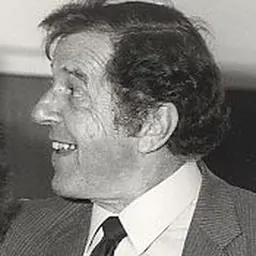
Contemporaries
People whose lives overlapped Bill Hearn's




Frequently asked questions
Who was Bill Hearn?
Australian rules footballer
When was Bill Hearn born?
Bill Hearn was born on 4 March 1914 in Bungaree.
When did Bill Hearn die?
Bill Hearn died on 3 November 1949 in Oodnadatta.
What was Bill Hearn's occupation?
Bill Hearn was an australian rules football player.
What nationality was Bill Hearn?
Bill Hearn was Australian.
Sources & further reading
Cite this page
APA: Biography.guide. (2026). Bill Hearn. https://biography.guide/bill-hearn/
MLA: "Bill Hearn." Biography.guide, https://biography.guide/bill-hearn/.
Chicago: "Bill Hearn." Biography.guide. https://biography.guide/bill-hearn/.
Data last updated: 2026-09-20 · Spot an error? Report a correction.
Page generated 2026-09-27 05:22 UTC