
About Big Walter Horton
Lived 1917 – 1981 (aged 64). Big Walter Horton was an American musician.
Walter Horton (April 6, 1921 – December 8, 1981), known as Big Walter (Horton) or Walter "Shakey" Horton, was an American blues harmonica player. A quiet, unassuming, shy man, he is remembered as one of the premier harmonica players in the history of blues. Willie Dixon once called Horton 'the best harmonica player I ever heard'. Also known as 'Mumbles', He was playing the harmonica by the time he was five years old when his father gave him a harmonica as a gift.
1930s In the 1930s he played with numerous blues performers in the Mississippi Delta region. Horton likely spent a short period of time in Chicago in 1938. It is generally accepted that he was first recorded in Memphis, backing the guitarist Little Buddy Doyle on Doyle's recordings for Okeh Records and Vocalion Records in 1939. These recordings were acoustic duets, in a style popularized by Sleepy John Estes and his harmonicist Hammie Nixon, among others. It can be heard—upon listening to players such as Hammie Nixon—that Horton was heavily influenced by such earlier styles of harmonica playing. On these recordings, Horton's style was not yet fully realized, but there were clear hints of what was to come.
1940s Horton eventually stopped playing the harmonica for a living, because of poor health Horton is likely to have developed his musical skills during these times, considering the difference between the styles in his recordings from 1939 and those of the 1950s. Horton had a daughter named 'Christine' in 1945 or 1946 (along with five other children born in unknown years). After being fired from the Muddy Waters band, Walter moved back to Memphis and recorded again with Sam Phillips at Sun Studio. Horton was among the first to be recorded by Philips for Sun Records in Memphis. For his recordings for Sun, Horton was accompanied by the young pianist Phineas Newborn, Jr., who later was a well-known jazz pianist. Horton's instrumental track "Easy", recorded around this time, was based on Ivory Joe Hunter's "I Almost Lost My Mind". During the early 1950s he appeared on the Chicago blues scene, frequently playing with Memphis and Delta musicians who had also moved north, including the guitarists Eddie Taylor and Johnny Shines.
1960s Horton was active in the Chicago blues scene during the 1960s, as blues music gained popularity with white audiences. From the early 1960s onward, he recorded and frequently performed as a sideman with Taylor, Shines, Johnny Young, Sunnyland Slim, Willie Dixon and many others. Finland, and England. He toured usually as a backing musician and, in the 1970s, he performed at blues and folk music festivals in the United States and Europe, frequently with Dixon's Chicago All-Stars. He also performed on recordings by blues and rock stars.
In the late 1970s, if in town, Horton played the Sunday matinees at B.L.U.E.S, with Homesick James and Floyd Jones,(who had switched from guitar to bass), and he toured the United States with James, Guido Sinclair, Eddie Taylor, Richard Molina, Bradley Pierce Smith and Paul Nebenzahl, and he performed on National Public Radio broadcasts. Two of the compilation albums of his work are Mouth-Harp Maestro and Fine Cuts. Also notable is the album Big Walter Horton with Carey Bell, released by Alligator Records in 1972. His final recordings were made in 1980. in a neighbor's apartment.
Other information Walter Horton has a daughter named Christine, who has children herself. Walter also named and recorded a song (in a similar style to "Louise") for her in his 1970 album, Big Walter Horton with Carey Bell. and would give lessons to his admirers.
Horton's mother was Emma McNaire Horton, his father was Albert Horton, and he had six children and 8 grandchildren at the time of his death. Many of his relatives outlived him, including his parents. His wife was Fannie Horton.
He lived in near-poverty for most of his life. This was due to the fact that he was ignored by record companies and radio stations during his later life, without regular band or regular income.
Horton, David "Honeyboy" Edwards, Kansas City Red, Floyd Jones, Sunnyland Slim.
Don’t just read it —
keep it.
Full-length biographies made to live with: read them, listen on the way to work, watch them tonight.
- E-book
- Audio
- Video
Instant download · yours to keep · every purchase keeps this site free
Important facts
People in Big Walter Horton's life
Named in this biography and alive at the same time
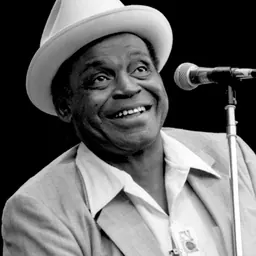
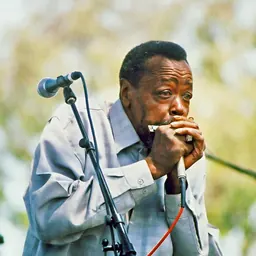






Related people
Same field, nearest in time

Contemporaries
People whose lives overlapped Big Walter Horton's

Frequently asked questions
Who was Big Walter Horton?
American blues harmonica player (1921–1981)
When was Big Walter Horton born?
Big Walter Horton was born on 6 April 1917 in Horn Lake.
When did Big Walter Horton die?
Big Walter Horton died on 8 December 1981 in Chicago.
What was Big Walter Horton's occupation?
Big Walter Horton was a musician.
What nationality was Big Walter Horton?
Big Walter Horton was American.
Sources & further reading
· Wikipedia: Big Walter Horton
Cite this page
APA: Biography.guide. (2026). Big Walter Horton. https://biography.guide/big-walter-horton/
MLA: "Big Walter Horton." Biography.guide, https://biography.guide/big-walter-horton/.
Chicago: "Big Walter Horton." Biography.guide. https://biography.guide/big-walter-horton/.
Data last updated: 2026-09-20 · Spot an error? Report a correction.
Page generated 2026-09-27 05:32 UTC