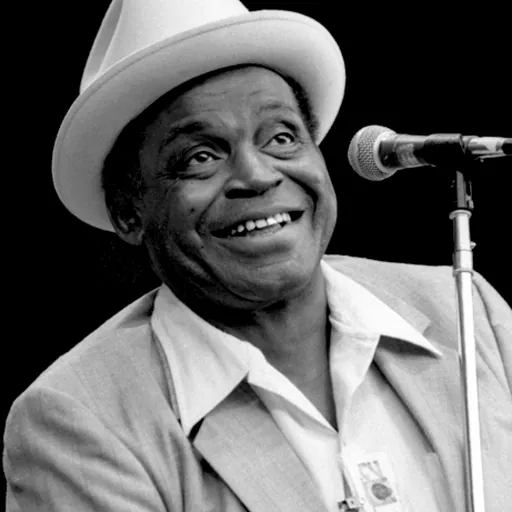
About Willie Dixon
Lived 1915 – 1992 (aged 76). Willie Dixon was an American singer-songwriter, blues musician, record producer, boxer, recording artist and music arranger.
William James Dixon (July 1, 1915 – January 29, 1992) was an American blues musician, vocalist, songwriter, arranger and record producer.
Dixon's songs have been recorded by countless musicians in many genres as well as by various ensembles in which he participated. A short list of his most famous compositions includes "Hoochie Coochie Man", "I Just Want to Make Love to You", "Little Red Rooster", "My Babe", "Spoonful", and "You Can't Judge a Book by the Cover". These songs were written during the peak years of Chess Records, from 1950 to 1965, and were performed by Muddy Waters, Howlin' Wolf, Little Walter, and Bo Diddley; they influenced a generation of musicians worldwide.
Dixon was an important link between the blues and rock and roll, working with Little Walter, Chuck Berry, and Bo Diddley in the late 1950s. He was one of 14 children. His mother, Daisy, often rhymed things she said, a habit her son imitated. At the age of seven, young Dixon became an admirer of a band that featured pianist Little Brother Montgomery. He sang his first song at Springfield Baptist Church at the age of four. Dixon was introduced to blues when he served time on prison farms in Mississippi as a young teenager. Later in his teens, he learned to sing harmony from a local carpenter, Theo Phelps, who led a gospel quintet, the Union Jubilee Singers, in which Dixon sang bass; the group regularly performed on the Vicksburg radio station WQBC. He began adapting his poems into songs and even sold some to local music groups.
Adulthood Dixon left Mississippi for Chicago in 1936. A man of considerable stature, standing 6 feet 6 inches tall and weighing over 250 pounds, he took up boxing, at which he was successful, winning the Illinois State Golden Gloves Heavyweight Championship (Novice Division) in 1937. Around 1939, he became a professional boxer and worked briefly as Joe Louis's sparring partner, but after four fights he left boxing in a dispute with his manager over money.
Dixon met Leonard Caston at a boxing gym, where they would harmonize at times. Dixon performed in several vocal groups in Chicago, but it was Caston that persuaded him to pursue music seriously. Caston built him his first bass, made of a tin-can and one string. Dixon's experience singing bass made the instrument familiar. After the war, he formed a group named the Four Jumps of Jive. By 1951, he was a full-time employee at Chess, where he acted as producer, talent scout, session musician and staff songwriter. Dixon later recorded for Bluesville Records. From the late 1960s until the mid-1970s, Dixon ran his own record label, Yambo Records, and two subsidiary labels, Supreme and Spoonful. He released his 1971 album, Peace?, on Yambo and also singles by McKinley Mitchell, Lucky Peterson and others.
Dixon is considered one of the key figures in the creation of Chicago blues. He worked with Chuck Berry, Muddy Waters, Howlin' Wolf, Otis Rush, Bo Diddley, Little Walter, Sonny Boy Williamson II, Koko Taylor, Little Milton, Eddie Boyd, Jimmy Witherspoon, Lowell Fulson, Willie Mabon, Memphis Slim, Washboard Sam, Jimmy Rogers, Sam Lay and others.
In December 1964, the Rolling Stones reached number one on the UK Singles Chart with their cover of Dixon's "Little Red Rooster". In the same year, the group also covered "I Just Want To Make Love To You" on their debut album, The Rolling Stones.
Copyright battles In his later years, Dixon became a tireless ambassador for the blues and a vocal advocate for its practitioners, founding the Blues Heaven Foundation, which works to preserve the legacy of the blues and to secure copyrights and royalties for blues musicians who were exploited in the past. In 1989 he received a Grammy Award for his album Hidden Charms.
Dixon died of heart failure on January 29, 1992, in Burbank, California. He was buried in Burr Oak Cemetery, in Alsip, Illinois.
After his death, his widow, Marie Dixon, took over the Blues Heaven Foundation and moved the headquarters to Chess Records. Dixon was posthumously inducted into the Rock and Roll Hall of Fame in the category Early Influences (pre-rock) in 1994. On April 28, 2013, both Dixon and his grandson Alex Dixon were inducted into the Chicago Blues Hall of Fame.
In 2007, Dixon was honored with a marker on the Mississippi Blues Trail in Vicksburg.
The actor and comedian Cedric the Entertainer portrayed Dixon in Cadillac Records, a 2008 film loosely based on the early history of Chess Records.
In 2020, Rolling Stone ranked him as the 12th greatest bass player and mentioned him as history's most influential bluesman. Rolling Stone also placed him at number 51 on their list of "The 100 Greatest Songwriters of All Time".
Songs
Dixon wrote or co-wrote more than 500 songs. Several have become blues standards, including "Help Me", "Hoochie Coochie Man", "I Can't Quit You Baby", "I Ain't Superstitious" "I'm Ready", "Little Red Rooster", "My Babe", and "Spoonful". Other Dixon compositions that reached the record charts include "Evil" (Howlin' Wolf), "I Just Want to Make Love to You" (Muddy Waters), "Pretty Thing" (Bo Diddley), "The Seventh Son" (Willie Mabon), "Wang Dang Doodle" (Koko Taylor), and "You Can't Judge a Book by the Cover" (Bo Diddley). In the 1960s, Dixon's songs were adapted by numerous rock artists.
Discography Albums Year Title Label Number Comments 1959 Willie's Blues Bluesville BVLP-1003 With Memphis Slim 1960 Blues Every Which Way Verve MGV-3007 With Memphis Slim 1960 Songs of Memphis Slim and "Wee Willie" Dixon Folkways FW-2385 1962 Memphis Slim and Willie Dixon at the Village Gate Folkways FA-2386 Live, with Pete Seeger 1963 In Paris: Baby Please Come Home! Battle BM-6122 With Memphis Slim, 1962 1970 I Am the Blues Columbia PC-9987 With the Chicago All Stars; also released on DVD, 2003 1971 Willie Dixon's Peace? Yambo 777-15 With the Chicago All Stars 1973 Catalyst Ovation OVQD-1433 Quadraphonic pressing 1976 What Happened to My Blues Ovation OV-1705 1983 Mighty Earthquake and Hurricane Pausa PR-7157 1985 Willie Dixon: Live (Backstage Access) Pausa PR-7183 With Sugar Blue, Clifton James, Montreux, Switzerland, 1985 1988 Hidden Charms Bug/Capitol C1-90593 Grammy-winning album 1988 The Chess Box–Willie Dixon Chess/MCA CHD2-16500 Mix of Dixon's own with well-known Chess artists' recordings 1989 Ginger Ale Afternoon Varèse Sarabande VSD-5234 Soundtrack for movie of the same name 1990 The Big Three Trio Columbia/Legacy C-46216 Recorded 1947–1952 1993 Willie Dixon's Blues Dixonary Roots RTS 33046 EAN: 8712177013760 1995 The Original Wang Dang Doodle: The Chess Recordings Chess/MCA CHD-9353 Recorded 1954–1990 (some previously unreleased recordings) 1996 Crying the Blues: Live in Concert Thunderbolt CDTB-166 Live, with Johnny Winter and the Chicago All Stars, Houston, TX, 1971 1998 Good Advice Wolf 120,700 Live, with the Chicago All Stars, Long Beach, CA, 1991 1998 I Think I Got the Blues Prevue 17 2001 Big Boss Men: Blues Legends of the Sixties Indigo (UK) IGOXCD543 Live, Houston, TX, 1971–72 (six tracks) 2008 Giant of the Blues Blues Boulevard 250196 EAN: 5413992501960
Don’t just read it —
keep it.
Full-length biographies made to live with: read them, listen on the way to work, watch them tonight.
- E-book
- Audio
- Video
Instant download · yours to keep · every purchase keeps this site free
Important facts
People in Willie Dixon's life
Named in this biography and alive at the same time


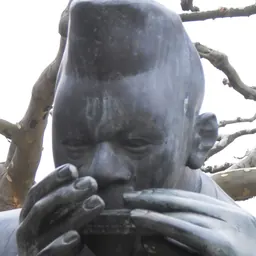
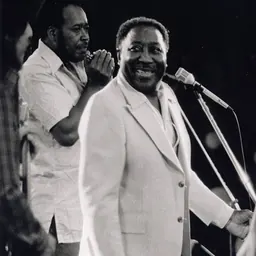
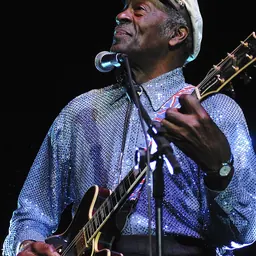

Related people
Same field, nearest in time




Contemporaries
People whose lives overlapped Willie Dixon's





Frequently asked questions
Who was Willie Dixon?
American blues musician (1915–1992)
When was Willie Dixon born?
Willie Dixon was born on 1 July 1915 in Vicksburg.
When did Willie Dixon die?
Willie Dixon died on 29 January 1992 in Burbank.
What was Willie Dixon's occupation?
Willie Dixon was a singer-songwriter, blues musician, record producer, boxer, recording artist and music arranger.
What nationality was Willie Dixon?
Willie Dixon was American.
Sources & further reading
Cite this page
APA: Biography.guide. (2026). Willie Dixon. https://biography.guide/willie-dixon/
MLA: "Willie Dixon." Biography.guide, https://biography.guide/willie-dixon/.
Chicago: "Willie Dixon." Biography.guide. https://biography.guide/willie-dixon/.
Data last updated: 2026-09-20 · Spot an error? Report a correction.
Portrait: Wikimedia Commons · author & licence
Page generated 2026-09-27 04:58 UTC