
About Bertha Lane Scott
Lived 1860 – 1938 (aged 77–78). Bertha Lane Scott was a police officer.
Bertha Lane Scott (born Bertha Francis Lane; October 1860 – July 17, 1938) was an American anti-suffragist, socialite, and civic volunteer. She is sometimes credited as Mrs. William Forse Scott and she is best known for heading the Publications Committee of the New York State Association Opposed to Woman Suffrage (NYSAOWS); she produced pamphlets, open letters, and newspaper essays that argued women’s political participation would undermine family life and was unnecessary because, she maintained, men already represented women’s interests. A sought-after speaker, Scott helped found anti-suffrage societies across the United States and regularly testified before the New York Legislature against removing the word “male” from the state’s suffrage clause. Outside her activism she was prominent in Yonkers society and, in 1918, became that city’s first (honorary) policewoman, charged with safeguarding children’s welfare.
Biography Bertha Francis Lane (née) was born in October 1860, in Cincinnati, Ohio. She is the daughter of Col. Philander Parmele Lane (1821–1899), noted Cincinnati manufacturer and mother Sophia Bosworth (1831–1921) in Cincinnati, Ohio. She received her education in Cincinnati, Boston, New York, and Europe. Her siblings were Lucia M. Lane; Harry M. Lane; George Lane; Laura (Lane) Thompson; Helen (Lane) McKaye; and Florence Lane.
She married William Forse Scott, an American Civil War veteran and author of The Story of a Cavalry Regiment (1893), detailing the service of the Fourth Iowa Veteran Volunteers.
Anti-suffrage activism Scott, a supporter of woman suffrage, she had reversed her position by 1909 and was serving as vice-president of the Guidon Club, a New York–based anti-suffrage organization. As vice president, Scott traveled to Minnesota in November 1913 to establish local anti-suffrage organizations. Her efforts in the Minneapolis–Saint Paul area resulted in the formation of three groups by the end of 1913: the Minneapolis Association Opposed to the Further Extension of Suffrage to Women, the St. Paul Association Opposed to Woman Suffrage, and the Minnesota Association Opposed to Woman Suffrage, led by prominent women such as Lavinia Gilfillan, Ella Pennington, and Florence Carpenter. These women also engaged in philanthropic and educational initiatives alongside their political activism.
Scott was also the movement’s most visible platform speaker. During the New York shirtwaist strike of 1909, which gained traction among wealthy suffragists, factory owners like Rosenthal Brothers & Co. enlisted Scott to address non-union women. Her speeches emphasized personal liberty, law, and order, countering the suffragists’ growing influence and reinforcing anti-union values. At a 1911 suffrage hearing in Albany, Scott delivered a rebuttal to suffragist leaders like Harriet May Mills and Dr. Anna Howard Shaw, arguing that women wielded sufficient influence without voting rights.
In 1910, Scott publicly debated suffragist leader Henrietta Wells Livermore at the Amackassin Club in Yonkers, an event held to raise funds for the Fairview Garden School. The debate drew significant local attention and marked Scott as a leading anti-suffragist voice in the city.
In the lead-up to the New York suffrage referendum, Scott’s writings were featured beyond her home state. The Milwaukee Free Press, an anti-suffrage-leaning newspaper in Wisconsin, included her work in a recurring Sunday feature titled Should Women Have the Ballot? during the summer and fall of 1912. Her arguments appeared alongside those of national suffragists such as Belle Case La Follette.
In January 1914, she responded critically to The Up-To-Date Woman, a suffragist publication circulated in Yonkers, sending a rebuttal letter to local newspapers. Her opposition placed her in direct contrast with Livermore and other prominent suffrage advocates in the region. In another letter to The New York Times in 1913, Scott criticized what she perceived as declining morality in women’s dress and behavior, linking it to broader cultural shifts influenced by international commerce and secular altruism. She warned that these changes, alongside diminishing respect for authority and religion, threatened representative government and traditional womanhood.
In 1915, Scott publicly criticized Katharine Bement Davis, a Progressive candidate advocating suffrage and political reform. While acknowledging Davis’s intelligence, Scott argued that her “womanly qualities” made her unfit for public office.
Marriage, civic service, and death A marriage license issued by the Probate Court of Hamilton County, Ohio, documents the union of William Forse Scott and Bertha Frances Lane on June 17, 1884. Both were residents of Hamilton County at the time, and their application was formally sworn before the judge of the probate court. The license affirms that there were no legal objections to the marriage and that both parties were of lawful age. The ceremony was performed by Rev. W. W. Lyle, a Minister of the Gospel.
According to the 1920 United States Census, the Scott household resided at 87 Depew Street in Yonkers, New York. The head of the household, William F. Scott, was 62 years old, married, born in Pennsylvania, and worked as a lawyer in general practice. His wife, Bertha L. Scott, age 59, was born in Ohio. Their son, Philip L. Scott, 23, was single, born in New York, and employed as a construction engineer. According to the census, both William and Bertha Scott’s parents were born in the United States. The Book of Woman's Power — Funk & Wagnalls Company (1911) Woman's Relation to Government — North American Review (1910) Business of Being Woman — New York Times (1912)
Immorality in Dress — New York Times (1913) Constitutional Changes — New York Times (1913)
Don’t just read it —
keep it.
Full-length biographies made to live with: read them, listen on the way to work, watch them tonight.
- E-book
- Audio
- Video
Instant download · yours to keep · every purchase keeps this site free
Important facts
People in Bertha Lane Scott's life
Named in this biography and alive at the same time


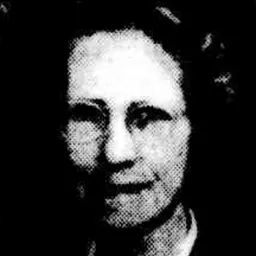
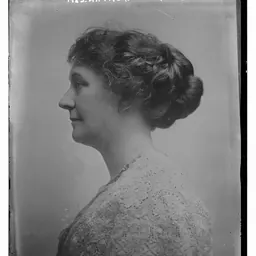
Related people
Same field, nearest in time



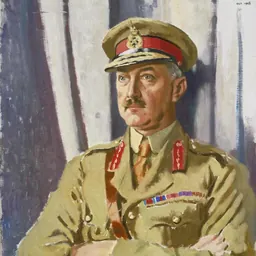

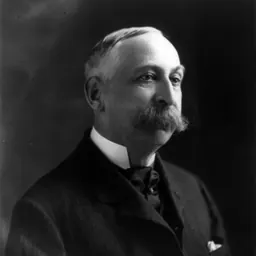
Contemporaries
People whose lives overlapped Bertha Lane Scott's

Frequently asked questions
Who was Bertha Lane Scott?
American anti-suffragist and socialite (1860-1938)
When was Bertha Lane Scott born?
Bertha Lane Scott was born in 1860.
When did Bertha Lane Scott die?
Bertha Lane Scott died on 17 July 1938.
What was Bertha Lane Scott's occupation?
Bertha Lane Scott was a police officer.
Sources & further reading
· Wikipedia: Bertha Lane Scott
Cite this page
APA: Biography.guide. (2026). Bertha Lane Scott. https://biography.guide/bertha-lane-scott/
MLA: "Bertha Lane Scott." Biography.guide, https://biography.guide/bertha-lane-scott/.
Chicago: "Bertha Lane Scott." Biography.guide. https://biography.guide/bertha-lane-scott/.
Data last updated: 2026-09-20 · Spot an error? Report a correction.
Page generated 2026-09-27 05:23 UTC