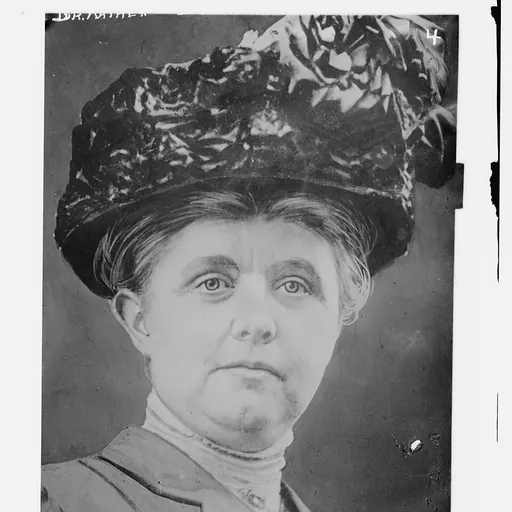
Katharine Bement Davis
American criminologist and social reformer
About Katharine Bement Davis
Lived 1860 – 1935 (aged 75). Katharine Bement Davis was an American criminologist, teacher, nutritionist, social reformer, suffragette and economist, known for Correction Commissioner, Human female sexuality and New York City.
Katharine Bement Davis (January 15, 1860 – December 10, 1935) was an American Progressive Era social reformer and criminologist who became the first woman to head a major New York City agency when she was appointed Correction Commissioner on January 1, 1914. Davis was a former school teacher from upstate New York, who later became one of the nation's first female doctorates when she received her Ph.D. in economics from the University of Chicago in 1901.
Katharine Bement David was designated as one of the three most distinguished women in America by the Panama-Pacific Exposition, alongside Zelia Nuttall and Jane Addams. Davis was also remembered for her pioneering science-based prison reform and groundbreaking research about female sexuality. For her relief work during the 1908 Messina earthquake, she was honored with the Red Cross Medal presented to her by President Taft, receiving honors also from Pope Pius X and from King Victor Emmanuel.
Biography She was born in Buffalo, New York, on January 15, 1860, to Oscar Bill Davis and Frances Freeman. She was the oldest of five children—three girls and two boys. Katharine's mother Frances was a strong proponent of women's rights and a zealous advocate for women's suffrage.
The College Settlement on Philadelphia's St. Mary's Street served a district of indigent blacks and Russian immigrants. Davis moved into the house as "head worker". While in Philadelphia, Davis worked with W. E. B. Du Bois, who was then at the University of Pennsylvania conducting groundbreaking research on blacks in urban America. Davis noted in the Settlement's annual report that "the investigation into the condition of the colored people of . . . the seventh ward which contains about 10,000 Negroes, nearly one fourth the entire number in the city" would be carried out "by means of house-to-house canvass." In 1897, Davis quit her job at the Philadelphia College Settlement House and moved to Chicago, Illinois. Davis studied political economy under Thorstein Veblen and minored in sociology under George E. Vincent. Shen then took a job at Bedford Hills Reformatory. Besides the administration building, the campus included "a reception hall, four cottages, a laundry building, a powerhouse, a gate house, and a stable". The reception hall had two wings, one wing modeled after a traditional prison with three tiers of 24 cells each, and the other wing contained rooms accommodating 42 inmates. Davis left Bedford in 1914 when Mayor John Purroy Mitchel selected Davis to head the Correction Commission making her the first woman to lead an agency in New York City. Rockefeller established the agency as a result of his appointment in 1911 to a special grand jury to investigate white slavery in New York City. The Bureau's work was influenced by the view that there was a biological basis for crime. During the Bureau's early years the main focus was on prostitution, vice, and political corruption. During later years, the Bureau shifted its emphasis towards criminology. The Bureau stopped granting new appropriations in 1934, and by 1937, all prior commitments were completed. Davis had hoped to continue work at the Bureau until her age of retirement, but Rockefeller made it clear that there was no room in the Bureau for her. The results of this research would help her compile and publish Factors in the Sex Life of Twenty-Two Hundred Women in 1929. Davis was not always leaning towards eugenics however, she first gave equal weighting to heredity and environment, describing the two as "hopelessly entangled."
Retirement Back in 1928, Katherine Bement Davis was not able to continue her activities due to her worsened health, in regards to her gallbladder specifically. Consequently, by the year of 1928, she retired from the Bureau of Social Hygiene. After her retirement, she was honored for her contributions. Consequently, on February 2, 1928, the Waldorf-Astoria ballroom was filled with Progressive Era reformers to honor Davis at a testimonial dinner. The guests including Eleanor Roosevelt, Jane Addams, Carrie Chapman Catt, Rev. Harry Emerson Fosdick, Walter Lippman, Judge William McAdoo, John D. Rockefeller Jr., Lillian Wald and Felix Warburg.
Later life, death, and legacy During her lifetime Davis was honored numerous times by a variety of organizations. The Panama-Pacific Exposition designated her one of the three most distinguished women in America. With this she was invited to an exposition, and there became known for her lectures. Davis also received honorary degrees from Mount Holyoke College, Western Reserve and Yale universities.
Davis's research on female sexuality and her founding of the United States' first committee for studying sexual behaviors made her a pioneering sexologist during a time when Victorian standards of sexuality was being challenged.
Davis retired to Pacific Grove, California, with her sisters. She died in her home, on December 10, 1935, from cerebral arteriosclerosis and complications with her heart and gallbladder.
King Victor Emmanuel and the Pope gave honor to Davis for providing aid to refugees of the 1908 Italian earthquake. In Palermo, a system of road she sponsored is named after her.
Throughout her life, Davis was an advocate for social reforms. A poll in 1921 sponsored by the League of Women Voters would name her of the twelve greatest living Americans of her sex.
Selected works (1925) A Study of Certain Auto-Erotic Practices (1929) Factors in the Sex Life of Twenty-Two Hundred Women
Don’t just read it —
keep it.
Full-length biographies made to live with: read them, listen on the way to work, watch them tonight.
- E-book
- Audio
- Video
Instant download · yours to keep · every purchase keeps this site free
Important facts
People in Katharine Bement Davis's life
Named in this biography and alive at the same time





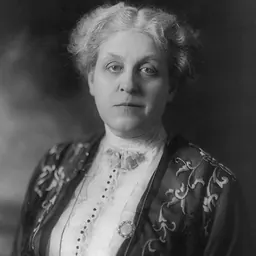

Related people
Same field, nearest in time

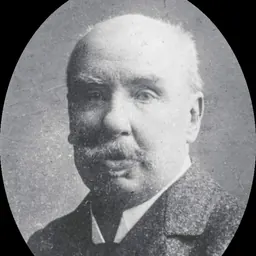
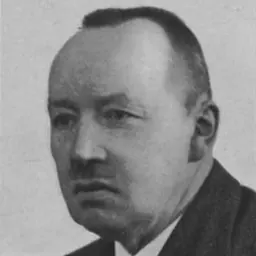

Contemporaries
People whose lives overlapped Katharine Bement Davis's


Frequently asked questions
Who was Katharine Bement Davis?
American criminologist and social reformer (1860-1935)
When was Katharine Bement Davis born?
Katharine Bement Davis was born on 15 January 1860 in Buffalo.
When did Katharine Bement Davis die?
Katharine Bement Davis died on 10 December 1935 in California.
What was Katharine Bement Davis's occupation?
Katharine Bement Davis was a criminologist, teacher, nutritionist, social reformer, suffragette and economist.
What was Katharine Bement Davis known for?
Katharine Bement Davis was known for Correction Commissioner, Human female sexuality and New York City.
What nationality was Katharine Bement Davis?
Katharine Bement Davis was American.
Sources & further reading
· Wikipedia: Katharine Bement Davis
· DBpedia: Katharine Bement Davis
Cite this page
APA: Biography.guide. (2026). Katharine Bement Davis. https://biography.guide/katharine-bement-davis/
MLA: "Katharine Bement Davis." Biography.guide, https://biography.guide/katharine-bement-davis/.
Chicago: "Katharine Bement Davis." Biography.guide. https://biography.guide/katharine-bement-davis/.
Data last updated: 2026-09-20 · Spot an error? Report a correction.
Page generated 2026-09-27 05:09 UTC