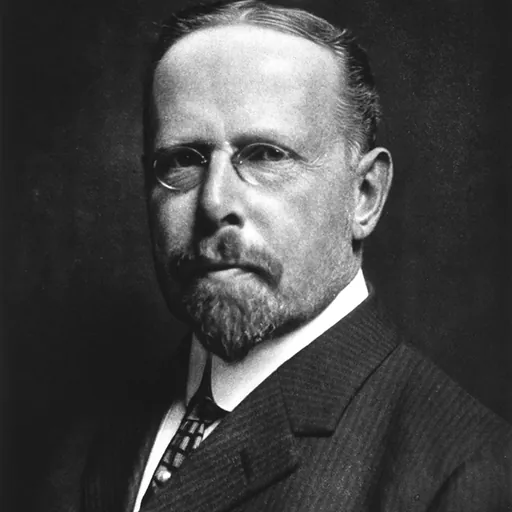
About Bernard Sachs
Lived 1858 – 1944 (aged 86). Bernard Sachs was an American neurologist, psychiatrist and physician.
Bernard Sachs (January 2, 1858 – February 8, 1944) was an American neurologist.
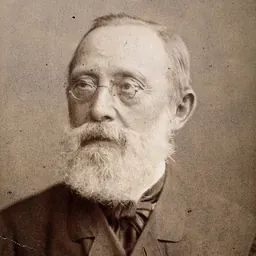
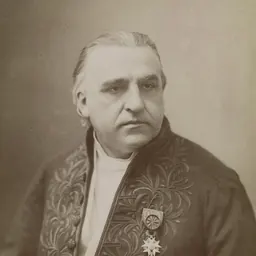
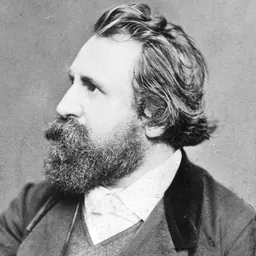
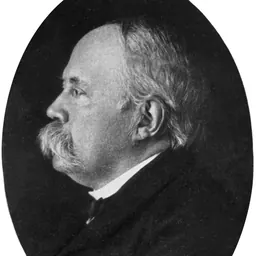
Early life and education Sachs was born on January 2nd, 1856 in New York City. His family was of German-Jewish origins. After graduating with a B.A. from Harvard in 1878, Sachs travelled to Europe and studied under some of the more prominent physicians of the time, such as Adolf Kussmaul, Friedrich Daniel von Recklinghausen, Friedrich Goltz, Rudolf Virchow, Karl Friedrich Otto Westphal, Theodor Meynert, Jean-Martin Charcot, and John Hughlings Jackson. Later, in 1885, Sachs translated Meynert's classic treatise Psychiatrie into English.
Career After returning to the United States, he settled into a private practice in New York, and became one of America's leading clinical neurologists. He was an instructor at New York Polyclinic Hospital, and a consultant at Mount Sinai Hospital, the Montefiore Home for Chronic Disease, and Manhattan State Hospital. In addition, he was publisher of the Journal of Nervous and Mental Disease (1886–1911) and president of the American Neurological Association (1894 and 1932).
Sachs published several books, including Nervous and Mental Disorders from Birth through Adolescence, a reference work intended for professionals. In 1926 he published The Normal Child, a popular manual on child rearing intended for the general public. In the latter book he advocated a common-sense approach to parenting and the rejection of psychological theories, especially Freudian psychology. His older brother Samuel Sachs, was a co-founder of Goldman Sachs. His eldest brother Julius Sachs was a notable educator at Columbia University and founded Sachs Collegiate Institute. His nephew, Ernest Sachs (1879–1958), also became a notable physician. His daughter Helen married Nathan Straus Jr.
Publications by Sachs concerning Tay–Sachs disease "On arrested cerebral development, with special reference to its cortical pathology", in: – Journal of Nervous and Mental Disease, Chicago, 1887; 14: 541–553. – Journal of Nervous and Mental Disease, Chicago, 1892, 17: 603–607. – Journal of Nervous and Mental Disease, Chicago, 1896, 21: 475–479. "Amaurotic Family Idiocy (Tay–Sachs disease)" in: "Modern medicine: its theory and practice, in original contributions by American and foreign authors", edited by William Osler, assisted by Thomas McCrae. Philadelphia and New York: Lea & Febiger, 7 volumes, 1907–1910. Volume 7, chapter XXI, pp. 868–874.
Don’t just read it —
keep it.
Full-length biographies made to live with: read them, listen on the way to work, watch them tonight.
- E-book
- Audio
- Video
Instant download · yours to keep · every purchase keeps this site free
Important facts
People in Bernard Sachs's life
Named in this biography and alive at the same time


Related people
Same field, nearest in time

Contemporaries
People whose lives overlapped Bernard Sachs's


Frequently asked questions
Who was Bernard Sachs?
American neurologist (1858–1944)
When was Bernard Sachs born?
Bernard Sachs was born on 2 January 1858 in Baltimore.
When did Bernard Sachs die?
Bernard Sachs died on 8 February 1944 in New York City.
What was Bernard Sachs's occupation?
Bernard Sachs was a neurologist, psychiatrist and physician.
What nationality was Bernard Sachs?
Bernard Sachs was American.
Sources & further reading
Cite this page
APA: Biography.guide. (2026). Bernard Sachs. https://biography.guide/bernard-sachs/
MLA: "Bernard Sachs." Biography.guide, https://biography.guide/bernard-sachs/.
Chicago: "Bernard Sachs." Biography.guide. https://biography.guide/bernard-sachs/.
Data last updated: 2026-09-23 · Spot an error? Report a correction.
Portrait: Wikimedia Commons · author & licence
Page generated 2026-09-27 05:06 UTC