
Bernard Fergusson, Baron Ballantrae
Military leader, historian, viceroy
About Bernard Fergusson, Baron Ballantrae
Lived 1911 – 1980 (aged 69). Bernard Fergusson, Baron Ballantrae was a British historian, military personnel, politician, military officer and governor-general.
Brigadier Bernard Edward Fergusson, Baron Ballantrae, (6 May 1911 – 28 November 1980 ) was a British Army officer and military historian who served as the tenth governor-general of New Zealand from 1962 to 1967. He was the last British-born person to hold the position.
Early life and family Fergusson was the third son and fourth child of Sir Charles Fergusson, 7th Baronet, and his wife Lady Alice Mary Boyle, a daughter of David Boyle, 7th Earl of Glasgow. His older brother was Sir James Fergusson, 8th Baronet, of Kilkerran. Both of his grandfathers had previously served as governors of New Zealand and his father had served as governor-general.
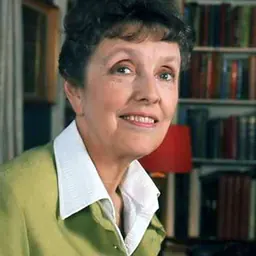
On 22 November 1950 Fergusson married Laura Margaret Grenfell (1920−1979), daughter of Arthur Morton Grenfell, sister of Dame Frances Campbell-Preston, and sister-in-law of Joyce Grenfell. Laura was killed in an accident in 1979 when gales blew a tree onto the car in which she was travelling. She and Bernard had one child, George (Geordie), who served as the British high commissioner to New Zealand from 2006 to 2010 and governor of Bermuda from 2012.
Military career, 1931–1946 Fergusson was educated at Eton College and the Royal Military College, Sandhurst. From the latter, he was commissioned as a second lieutenant into the Black Watch on 27 August 1931. He served with the 2nd Battalion of his regiment in the British Mandate of Palestine during the Arab revolt and later became aide-de-camp (ADC) to Major General Archibald Wavell, then General Officer Commanding the 2nd Infantry Division in England, on 11 March 1937. At the outbreak of the Second World War, he was on the Directing Staff at the Royal Military Academy, Sandhurst.
In 1940, Fergusson was serving as a brigade major for the 46th Infantry Brigade before becoming a general staff officer in the Middle East, where he also saw active service with Free French forces in Syria and with the Black Watch in Tobruk. In 1942 he served briefly in the Joint Planning Staff in Delhi, before transferring to Orde Wingate's embryonic Chindit force experimenting with Long Range Penetration campaigns. He commanded No. 5 Column in Wingate's 1943 campaign (Operation Longcloth) in Japanese-occupied Burma, for which he was appointed a Companion of the Distinguished Service Order (DSO). In October 1943 he was promoted to acting brigadier and given command of the 16th Infantry Brigade, which was converted into a Chindit formation for operations in the deep jungles of Burma miles behind Japanese lines. He commanded this brigade throughout the Chindit operations of 1944 (Operation Thursday). 16 Brigade, alone of the Chindit brigades, went into Burma on foot in a five week march through very difficult terrain. He established a stronghold, "Aberdeen", in keeping with Wingate's strategic vision and led an unsuccessful assault on the airfields at Indaw before his Brigade was flown out. He was Director of Combined Operations from 1945 to 1946.
At Farran's subsequent trial, Fergusson refused to testify on grounds that he might incriminate himself. The Palestine government announced that no action would be taken against Fergusson. Following Farran's acquittal, Fergusson was relieved of his duties in Palestine and returned to Britain.
Military career, 1947–1958 Fergusson commanded 1st Battalion, the Black Watch in Germany from 1948 to 1951, was Colonel (Intelligence) at Supreme Headquarters Allied Powers Europe (SHAPE), at Versailles. He later commanded the 153rd (Highland) Brigade in Perth..
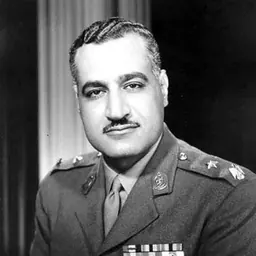
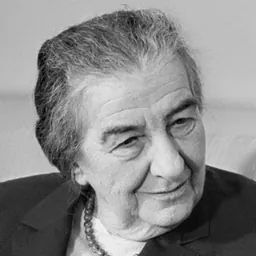
He was appointed Director of Psychological Warfare operations during the Suez Crisis, a joint invasion of Egypt by the British, French and Israelis to take control of the Suez Canal. Despite drafting an extensive campaign of psychological warfare for use during the crisis, the actual operations when the Royal Air Force (RAF) commenced aerial campaigns against Egyptian targets were very different and ultimately made little impact on Egyptian morale or public opinion. Psychological warfare radio broadcasts made under Fergusson's direction and directed at Egypt stated that President Gamal Abdel Nasser was under the influence of Zionism and urged Egyptians to attack Israel, which elicited diplomatic protests from future Israeli Prime Minister Golda Meir.
Fergusson's final military appointment was as Commander of 29 Brigade, based in Dover (1957-58).
Governor-General of New Zealand Fergusson as Governor-General (left) with the Mayor of Shannon, Mr P. K. Robinson. Fergusson worked as a writer, based in Ayrshire, Scotland between 1958 and 1962, writing the official history of Combined Operations (The Watery Maze), and serving as a correspondent for the Sunday Times and Sunday Telegraph. In 1962 he was appointed governor-general of New Zealand, serving until 1967. Although he had the physical appearance of a very traditional British officer, he became a popular governor-general. He was an early and strong advocate for greater knowledge and respect on the part of pākehā (European) New Zealanders for Māori language and tikanga. He was the first governor or governor-general to speak Māori since Governor George Grey (governor 1845-53).
Later career
He was a member of the International Observer Team (1968-69) during the Nigerian Civil War, founding chair of the Scottish Trust for the Physically Disabled from 1971, chair of the British Council 1972-76, Lord High Commissioner to the General Assembly of the Church of Scotland 1973 and 1974, and Honorary Colonel of the Black Watch 1969-76. and made a Knight of the Thistle (KT) in 1974.
Due to his relationship with Tainui, a Ngāruawāhia primary school, Te Kura Kaupapa o Bernard Fergusson, was named after him in 1966. Over the years, many students from the school would go on to receive the memorial scholarship.
Honours and awards
Arms
Don’t just read it —
keep it.
Full-length biographies made to live with: read them, listen on the way to work, watch them tonight.
- E-book
- Audio
- Video
Instant download · yours to keep · every purchase keeps this site free
Important facts
People in Bernard Fergusson, Baron Ballantrae's life
Named in this biography and alive at the same time





Related people
Same field, nearest in time
Contemporaries
People whose lives overlapped Bernard Fergusson, Baron Ballantrae's






Frequently asked questions
Who was Bernard Fergusson, Baron Ballantrae?
Military leader, historian, viceroy (1911-1980)
When was Bernard Fergusson, Baron Ballantrae born?
Bernard Fergusson, Baron Ballantrae was born on 6 May 1911.
When did Bernard Fergusson, Baron Ballantrae die?
Bernard Fergusson, Baron Ballantrae died on 28 November 1980 in London.
What was Bernard Fergusson, Baron Ballantrae's occupation?
Bernard Fergusson, Baron Ballantrae was a historian, military personnel, politician, military officer and governor-general.
What nationality was Bernard Fergusson, Baron Ballantrae?
Bernard Fergusson, Baron Ballantrae was British.
Sources & further reading
· Wikipedia: Bernard Fergusson, Baron Ballantrae
· DBpedia: Bernard Fergusson, Baron Ballantrae
Cite this page
APA: Biography.guide. (2026). Bernard Fergusson, Baron Ballantrae. https://biography.guide/bernard-fergusson-baron-ballantrae/
MLA: "Bernard Fergusson, Baron Ballantrae." Biography.guide, https://biography.guide/bernard-fergusson-baron-ballantrae/.
Chicago: "Bernard Fergusson, Baron Ballantrae." Biography.guide. https://biography.guide/bernard-fergusson-baron-ballantrae/.
Data last updated: 2026-09-26 · Spot an error? Report a correction.
Page generated 2026-09-27 05:16 UTC