
About Benjamin Moore
Lived 1748 – 1816 (aged 67). Benjamin Moore was an American christian minister, anglican priest and bishop.
Benjamin Moore (October 5, 1748 – February 27, 1816) was the second Episcopal bishop of New York and the fifth President of Columbia University. He is remembered for having given Holy Communion to Alexander Hamilton on his deathbed, and for being the father of Clement Clarke Moore, the reputed author of the 1823 Christmas poem "A Visit From St. Nicholas."
Early life Moore was born in Newtown, New York, now known as Elmhurst, Queens, in 1748, the son of Samuel Moore and Sarah (née Fish) Moore. He was the great-great-grandson of John Moore, the first Independent minister allowed in New England, and great-grandson of Capt. Samuel Moore, on whose property the Newtown Pippin apple was first cultivated.
He attended King's College (now Columbia University), graduating in 1768 with a degree of A.B. Moore received a master's degree from King's College in 1771, alongside Founding Father Gouverneur Morris. He traveled to England and was ordained deacon in the Anglican Church by Bishop Richard Terrick in Fulham Palace on June 24, 1774. He was also named president pro tempore of Kings College and served until the arrival of the Continental Army in the city in April 1776 caused the college to close and disperse.
Trinity rector Charles Inglis was an outspoken Tory who welcomed the subsequent British occupation of New York. Moore continued to work at his side but stayed publicly neutral on the political questions surrounding the American Revolutionary War. After the British defeat Inglis left for England, and Moore was elected Trinity's rector in 1783. Returning Patriot church members, among them Declaration of Independence co-author Robert R. Livingston and soon-to-be New York Mayor James Duane, objected to the choice, and in early 1784 Moore agreed to step aside in favor of Samuel Provoost, the only Anglican priest in New York who had openly supported the Revolution.
The Episcopal Church of the United States of America (ECUSA) became independent of the Anglican Church after the war, establishing its own organization of dioceses, and Provoost was elected the first bishop of New York in 1786, a position he held concurrently with the Trinity rectorship. Moore continued in his duties as assistant rector until 1800, when Provoost resigned and Moore was elected rector. which in 1789 awarded him the degree of doctor of sacred theology. That same year, Moore was elected President of Columbia College, as the compromise choice of a board of trustees deadlocked between Episcopal and non-Episcopal members. A contemporary explained the choice thusly: "While he was a true, consistent, and I may add, an uncompromising Episcopalian, he was neither an aggressive or prescribing one." Because of his church responsibilities he neither taught nor was involved in the details of administration.
In 1811, Moore had a stroke. He resigned as Columbia's president, and asked for the election of an additional coadjutor bishop to assist him. John Henry Hobart was elected to the post that year.
Personal life In 1779, Moore married Charity Clarke, daughter of English officer Major Thomas Clarke, who had stayed in the colony after his service in the French and Indian War, and Mary Stilwell Clarke. Thomas Clarke had acquired a large country estate along the Hudson River in Manhattan that he dubbed Chelsea, after the Royal Hospital Chelsea, a retirement home for soldiers in London, England, and his widow and daughter continued to live there after his death in 1776. Charity Clarke wrote letters to a cousin in London in the 1760s and 1770s that are still cited as examples of early patriotic sentiment, but she and her mother stayed in British-occupied New York during the Revolutionary war.
The Moores had one child together, Clement Clarke Moore (1779–1863), who is credited and is most widely known as the author of the Christmas poem "A Visit from St. Nicholas." They inherited the Chelsea estate and passed it on to their son, who developed it into the neighborhood of Chelsea, Manhattan.
On February 27, 1816, Moore died in Greenwich Village, New York. He was buried at Trinity Church. North Moore Street, Manhattan, is named in his honor.
Don’t just read it —
keep it.
Full-length biographies made to live with: read them, listen on the way to work, watch them tonight.
- E-book
- Audio
- Video
Instant download · yours to keep · every purchase keeps this site free
Important facts
Family & relationships
People in Benjamin Moore's life
Named in this biography and alive at the same time


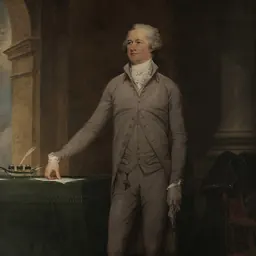
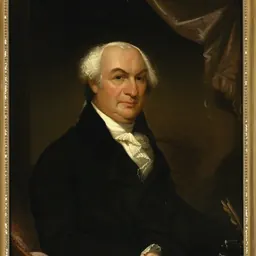
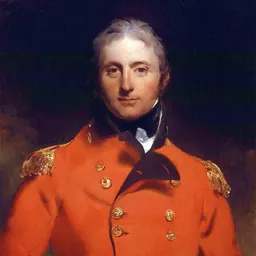
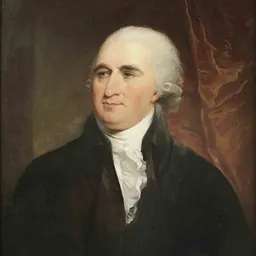
Related people
Same field, nearest in time



Contemporaries
People whose lives overlapped Benjamin Moore's





Frequently asked questions
Who was Benjamin Moore?
Episcopal bishop of New York (1748-1816)
When was Benjamin Moore born?
Benjamin Moore was born on 5 October 1748 in Elmhurst.
When did Benjamin Moore die?
Benjamin Moore died on 27 February 1816 in Greenwich Village.
What was Benjamin Moore's occupation?
Benjamin Moore was a christian minister, anglican priest and bishop.
What nationality was Benjamin Moore?
Benjamin Moore was American.
Sources & further reading
· DBpedia: Benjamin Moore (bishop)
Cite this page
APA: Biography.guide. (2026). Benjamin Moore. https://biography.guide/benjamin-moore/
MLA: "Benjamin Moore." Biography.guide, https://biography.guide/benjamin-moore/.
Chicago: "Benjamin Moore." Biography.guide. https://biography.guide/benjamin-moore/.
Data last updated: 2026-09-20 · Spot an error? Report a correction.
Page generated 2026-09-27 05:25 UTC