
About Benjamin Kidd
Lived 1858 – 1916 (aged 58). Benjamin Kidd was a British sociologist, philosopher, writer and official.
Benjamin Kidd (9 September 1858 – 2 October 1916) was a British sociologist whose first job was a civil service clerk, but by persistent self-education, he became internationally famous by the publication of his book Social Evolution in 1894. Kidd argued that the "evolution of society and of modern civilization" is caused not by reason or science, but by the force of "religious beliefs." The book had worldwide circulation and impacted the Social Gospel movement.
Kidd is reckoned as a founder of sociology as a discipline. Influenced by Darwinism and evolution, Kidd sought and found analogies between the evolution of human society and of the biological organism.
Kidd's prolific writings had a major impact at the time. However, the world was so different after the First World War that Kidd's work became relegated to historical interest.
Early life Benjamin Kidd was born in County Clare, Ireland, on 9 September 1858, the first of eleven children of Benjamin Kidd (1831–1914), a constable in the Royal Irish Constabulary, and his wife, Mary Rebecca (1833–1916). The son did not have "early advantages of education or social position." However, his "self-belief and drive" were so strong that Kidd's life became a "rags to riches" story.
In 1887, Kidd married Maud Emma Isabel Perry of Weston-Super-Mare. They had three sons: Franklin and twins John and Rolf. He spent his seventeen years as a clerk preparing for his mission. His preparation began as reading books written by others.
Social Evolution Royalties from the publication of his Social Evolution in 1894 allowed Kidd to leave his job. In short order, he went from being an obscure clerk to the internationally famous social prophet toward which he had long worked.
Kidd wrote Social Evolution with "self-confidence and conviction" that its content was of vast importance. The major theme of the book (and later works), is that religion is "the chief agency in promoting philanthropy and the political enfranchisement." In contrast, Kidd views reason as "selfish and short-sighted." The term "social evolution" was first used in 1853. It saw parallels between the new theories of biological evolution and the evolution of societies. Kidd wrote about these parallels in the "Application of the Doctrine of Evolution to Sociological Theory" as the Preface to the Encyclopædia Britannica 1902, Vol 5.
Social Evolution passed through several editions and was translated into German (1895), Swedish (1895), French (1896), Russian (1897), Italian (1898), Chinese (1899), Czech (1900), Danish (1900), and Arabic (1913). A third reason for the book's success was that Kidd predicted a future in which workers would have equal rights and opportunities. This optimism appealed to the workers who in the Gilded Age were often "consigned to lives of bitter toil with little hope for advancement."
Précis of Social Evolution
"The very foundations of human thought have been rebuilt" by the emergence of Darwinian science (viii). To those "who have caught the spirit of Darwinian science" of evolution, a basic question is whether "religious systems have a function to perform in the evolution of society".
An evolution of society has occurred unlike anything in "previous history", and it has been "religion" that effected it. People have always turned toward the "Super-natural" rather than the natural, toward the "ultra-rational" rather than the rationale for "sanctions" for their conduct.
Kidd came into the Social Gospel movement when, during his to America, he met the leading clergymen of the movement including Washington Gladden, Lyman Abbott. William D. P. Bliss, and Josiah Strong.
Kidd was now an international celebrity. As such, he faced numerous requests for interviews, articles, and lectures. His fame so "frightened" him that he mostly declined requests and thus missed out on lucrative fees. He remained a "withdrawn personality" who was "ill at ease" in public.
Responses to Social Evolution Social Evolution was marked by its ambiguity. It oscillated between "utopian socialism" and "doomsday economism" that would lead to "global conflict between the great powers." While expressing appreciation for "socialist theory," Kidd stated that socialism was not viable in practice. The ambiguity in Kidd's writing was so pronounced that he was called a "Christian socialist" by some, but pro-business by others. Thus, it was that Social Evolution was both "fiercely attacked" and "fiercely supported."
Support Support for Social Evolution came from notable readers. The philanthropist Charles Booth described the book as "striking and original." Alfred Marshall, an influential economist, found the book so exciting and interesting that it spawned an acquaintanceship with Kidd.
Lester Frank Ward, "the acknowledged founder of American sociology," called the "tone" of Social Evolution "generally healthy."
In an obituary for Kidd, Social Evolution was praised for its "originality and force." One scholarly book expressed "grave distrust of the process by which Mr. Kidd reaches his conclusion" and "of the terms in which he formulates" it.
Theodore Roosevelt found the book's "argument is so loose" that it could be construed as meaning contradictory things. The central point of Kidd's argument is "radically false."
The Oxford Dictionary of National Biography''' (1927) described Social Evolution as "incoherent," "full of pretentious rhetoric," and like "sensational journalism." Academic circles never took Kidd's work seriously.
Principles of Western Civilization (1902) Kidd's Principles of Western Civilization (1902) received negative reviews as reported in The Review of Reviews. The review in the Positivist Review used such terms as "imbecility," "sonorous fatuity," "rank nonsense," and "metaphysical bamboozlement." The review in the Fortnightly Review called Kidd's history "muddled and perverted" and described the book as "a wordy confusion . . . without real definiteness or point."
Last years quote="Kidd's writings had been important documents of their time. They faded into obscurity as circumstances changed after the First World War." — —Oxford Dictionary of National Biography a retrogression that repudiated the Christian altruistic sanction of loving one's enemies.
Kidd's hope for the future hung on the influence of women. His praise of women in the chapter "Woman is the Psychic Centre of Power in the Social Integration" appealed to feminists. Kidd viewed women as "anti-pagan, i.e. unselfish, and devoted to the interests of the race," all "in accordance with Christian altruism.
Historiography A list of assessments of Kidd by historians since 1915, names over a dozen.
One assessment of Kidd summarized his thinking as follows: Kidd was "inspired" by Karl Marx and Herbert Spencer (mostly Spencer), but he also "criticized" them. He agreed with Marxists that the "members of the ruling class were not superior." He believed that the "ruling families were degenerating so that new rulers had to be recruited from below." Kidd thought the "white race" possessed "intellectual superiority" because of its "accumulated knowledge," not (as racists held) because of an innate endowment. He "agreed with racists that the English race was superior" in the "ability to organize and to suppress egoistic instincts to the benefit of the community and the future."
Another historian, Robert C. Bannister assessed Kidd in the context of Social Darwinism. In Bannister's reading, Kidd caused a "flurry" by his "pop sociology." It won Kidd an immediate recognition, but in the long run "confounds and embarrasses later generations."
Works In addition to the five books listed below, Kidd "produced a prolific amount of occasional journalism, contributions to journals, encyclopaedias, reviews, columns, interviews, and letters for weeklies in Britain and America." The interview in the United States that was published in The Outlook: A Family Paper (1 September 1894) under the title of "The Future of the United States" evoked widespread comment for its optimism.
Social Evolution (1894) Control of the Tropics (1898) Principles of Western Civilisation (1902) Individualism and After: The Herbert Spencer Lecture 1908 Two Principal Laws of Sociology (1909) The Science of Power (1918) A Philosopher with Nature (1921)
Don’t just read it —
keep it.
Full-length biographies made to live with: read them, listen on the way to work, watch them tonight.
- E-book
- Audio
- Video
Instant download · yours to keep · every purchase keeps this site free
Important facts
Family & relationships
People in Benjamin Kidd's life
Named in this biography and alive at the same time
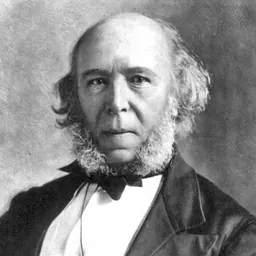

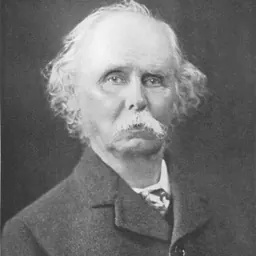


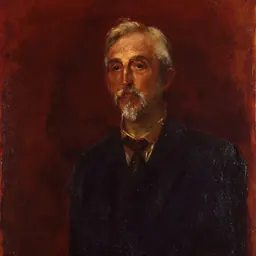

Related people
Same field, nearest in time
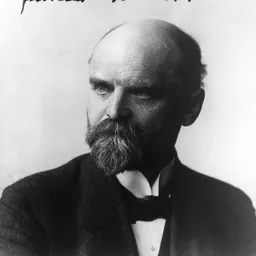


Contemporaries
People whose lives overlapped Benjamin Kidd's





Frequently asked questions
Who was Benjamin Kidd?
British sociologist (1858–1916)
When was Benjamin Kidd born?
Benjamin Kidd was born on 9 September 1858 in County Clare.
When did Benjamin Kidd die?
Benjamin Kidd died on 2 October 1916 in South Croydon.
What was Benjamin Kidd's occupation?
Benjamin Kidd was a sociologist, philosopher, writer and official.
What nationality was Benjamin Kidd?
Benjamin Kidd was British.
Sources & further reading
Cite this page
APA: Biography.guide. (2026). Benjamin Kidd. https://biography.guide/benjamin-kidd/
MLA: "Benjamin Kidd." Biography.guide, https://biography.guide/benjamin-kidd/.
Chicago: "Benjamin Kidd." Biography.guide. https://biography.guide/benjamin-kidd/.
Data last updated: 2026-09-22 · Spot an error? Report a correction.
Page generated 2026-09-27 05:33 UTC