
About Robert Ezra Park
Lived 1864 – 1944 (aged 79). Robert Ezra Park was an American sociologist, criminologist, writer, university teacher, journalist and ecologist, known for Human ecology and Race relations.
Robert Ezra Park (February 14, 1864 – February 7, 1944) was an American urban sociologist who is considered to be one of the most influential figures in early U.S. sociology. Park was a pioneer in the field of sociology, changing it from a passive philosophical discipline to an active discipline rooted in the study of human behavior. He made significant contributions to the study of urban communities, race relations and the development of empirically grounded research methods, most notably participant observation in the field of criminology. From 1905 to 1914, Park worked with Booker T. Washington at the Tuskegee Institute. After Tuskegee, he taught at the University of Chicago from 1914 to 1933, where he played a leading role in the development of the Chicago School of sociology.
Park is noted for his work in human ecology, race relations, human migration, cultural assimilation, social movements, and social disorganization He played a large role in defining sociology as a natural science and challenged the belief that sociology is a moral science. He saw sociology as "...a point of view and a method for investigating the processes by which individuals are inducted into and induced to cooperate in some sort of permanent corporate existence, society."
Biography Childhood and early life Robert E. Park was born in Harveyville, Luzerne County, Pennsylvania, on February 14, 1864, to parents Hiram Asa Park and Theodosia Warner Park. Immediately following his birth, the Park family moved to Red Wing, Minnesota, where he grew up. Suggesting something of a criminology credential, Park later recalled an encounter with bandit Jesse James, who young Park provided with directions to a local blacksmith's shop. He was not considered a promising student, but he liked learning about the people in his town and their ancestries, a niche which would prove to be useful throughout his life. Park graduated high school in 1882, finishing tenth overall in a class of thirteen. Park was interested in attending college after high school, but his father did not consider his son "study material" and did not support the boy's plan. As a result, Robert ran away from home and found a job working on a railroad. In Berlin, Park read a book on the logics of social sciences by Russian author Bogdan A. Kistyakovski, who studied under philosopher Wilhelm Windelband. He worked in various journalistic capacities, such as being a police reporter, general reporter, and feature writer and city newspaper editor and wrote muckraking stories and investigative pieces and articles that called for techniques of "scientific reporting," which he later realized was similar to survey research. His experience as a journalist helped shape his view on the world and how people should study it. He was not satisfied with just reporting current events. Park wanted to dive deeper than the surface of these events and understand the underlying long-term significance of the events.
Work Human ecology Park coined the term human ecology, the study of the relationship between humans and their natural, social, and built environments. The term has been described as an attempt to apply the interrelations of human beings a type of analysis previously applied to the interrelations of plants and animals. Park himself explains human ecology as, "fundamentally an attempt to investigate the processes by which the biotic balance and social equilibrium are disturbed, the transition is made from one relatively stable order to other". Bogardus acknowledges that Park is the father of human ecology, proclaiming, "Not only did he coin the name but he laid out the patterns, offered the earliest exhibit of ecological concepts, defined the major ecological processes and stimulated more advanced students to cultivate the fields of research in ecology than most other sociologists combined." The cycle has four stages: contact, conflict, accommodation, and assimilation. The first step is contact followed by competition. Then, after some time, a hierarchical arrangement can prevail – one of accommodation – in which one race was dominant and others dominated. In the end assimilation occurred. Park declared that it is "a cycle of events which tends everywhere to repeat itself" and that it can also be seen in other social processes."
Critiques
Park's theory of conflict has been discredited for a number of reasons, and his theories and contributions in sociology have largely been neglected and forgotten over time.
In the years following the heyday of the Chicago school, Park's reputation took a downfall, and his idea of "symbolic interactionism" was subsequently pushed aside. Park was frequently called a conservative when it came to his theory of the race relations cycle. Critics of Park misinterpreted his theory of race relations, believing that Park meant to assert that progression through the four stages was inevitable; current discourse debates whether Park meant anything of the sort. Within Park's theory of conflict, race relations exists merely as a specific case of this greater theory. Racial groups, or any other kind of group can remain in the conflict stage indefinitely.
Park was further criticized for perceived racist tendencies. Already in his work as an editorial secretary of the Congo Reform Association, Park defended the idea of a noble white civilizing mission to elevate an allegedly savage African population. During his years at the Tuskegee Institute, this nostalgia for European imperialism was complemented by a stereotypical depiction of black peasants in the South as a primitive counterpart of the negative tendencies Park identified in modern city life. These early views on imperialism and race have been called a form of "romantic racism" that strongly influenced his later more elaborated sociological perspectives on the same issues. As already the black Marxist Oliver C. Cox, a student of Park, has warned, this racial essentialism eventually led Park to a mystification of race relations in the Jim Crow era as a natural solution to racial conflict.
In his essay Education in its relation to the conflict and fusion of cultures, Park can be quoted: The Negro is, by natural disposition, neither an intel-lectual nor an idealist, like the Jew; nor a brooding introspective, like the East African; nor a pioneer and frontiersman, like the Anglo-Saxon. He is primarily an artist, loving of life for its sake. His métier is expression rather than action. He is, so to speak the lady among the races.
Park's belief in inherited racial temperaments, though racist, was somewhat offset by his belief in "social inheritance" working in tandem with "biological inheritance". Put simply, he thought that while some races are more predisposed to certain temperaments, a whole person is also made up of their social qualities. Park also supported Franz Boas' conclusion that there was no scientific evidence to indicate that "Blacks were as a group intellectually inferior to Whites".
The works of sociologists Louis Wirth and Rose Hum Lee illustrate the downfalls of Park's thinking, specifically in relation to adhering to his views on ethnic groups in America. Park's conclusions that the complete assimilation of Jews, Christians, and Chinese folks have occurred was shown within Wirth and Hum Lee's work to be untrue.
Major works The Man Farthest Down: A Record of Observation and Study in Europe (with Booker T. Washington), 1912 Introduction to the Science of Sociology (with E.W. Burgess), 1921 Old World Traits Transplanted: The Early Sociology of Culture, 1921 The Immigrant Press and Its Control, 1922 The City: Suggestions for the Study of Human Nature in the Urban Environment, 1925 Proceedings: The Concept of Position in Sociology Proceedings, 1925 The University and the Community of Races, 1932 Cultural Conflict and the Marginal Man, 1937 An Outline of the Principles of Sociology, 1939 American Sociology: The Story of Sociology in the United States through 1950, 1951 Human Communities: The City and Human Ecology, 1952 Societies, 1955
Impact Park's impact on the field of sociology is palpable yet often goes unrecognized. The majority of the sociologists born in the nineteenth century borrowed and concentrated in other fields and their work was considered sociological after the fact. and Louis Wirth created a theoretical basis for sociology which emphasized the more methodological approach which we recognize today. The Chicago school of thought regarding urban ecology still guides much of the work conducted in this field today. Additionally, Erving Goffman, who is considered to be the most influential sociologist of the twenty-first century, embraced the legacy of Park by adopting more qualitative methods when constructing predictive empirical science in contrast to positivist sociological trends.
Don’t just read it —
keep it.
Full-length biographies made to live with: read them, listen on the way to work, watch them tonight.
- E-book
- Audio
- Video
Instant download · yours to keep · every purchase keeps this site free
Important facts
People in Robert Ezra Park's life
Named in this biography and alive at the same time


Related people
Same field, nearest in time

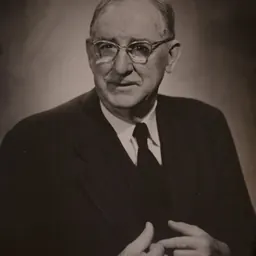
Contemporaries
People whose lives overlapped Robert Ezra Park's



Frequently asked questions
Who was Robert Ezra Park?
American sociologist (1864–1944)
When was Robert Ezra Park born?
Robert Ezra Park was born on 14 February 1864 in Harveyville.
When did Robert Ezra Park die?
Robert Ezra Park died on 7 February 1944 in Nashville.
What was Robert Ezra Park's occupation?
Robert Ezra Park was a sociologist, criminologist, writer, university teacher, journalist and ecologist.
What was Robert Ezra Park known for?
Robert Ezra Park was known for Human ecology and Race relations.
What nationality was Robert Ezra Park?
Robert Ezra Park was American.
Sources & further reading
Cite this page
APA: Biography.guide. (2026). Robert Ezra Park. https://biography.guide/robert-ezra-park/
MLA: "Robert Ezra Park." Biography.guide, https://biography.guide/robert-ezra-park/.
Chicago: "Robert Ezra Park." Biography.guide. https://biography.guide/robert-ezra-park/.
Data last updated: 2026-09-26 · Spot an error? Report a correction.
Page generated 2026-09-27 05:14 UTC