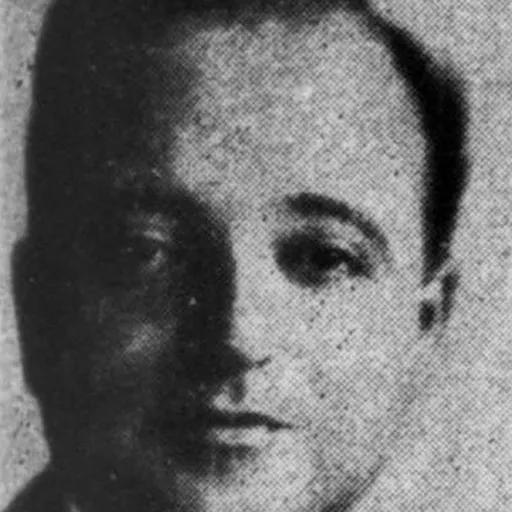
About Louis Wirth
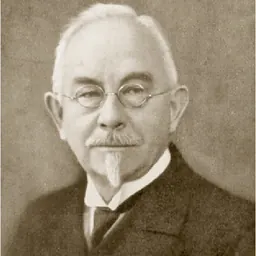
Lived 1897 – 1952 (aged 54). Louis Wirth was an American sociologist.
Louis Wirth (August 28, 1897 – May 3, 1952) was an American sociologist and member of the Chicago school of sociology. His interests included city life, minority group behavior, and mass media, and he is recognised as one of the leading urban sociologists. He spent most of his academic career at the University of Chicago.
He was the first president of the International Sociological Association (1949–1952) and the 37th president of the American Sociological Association (1947).
Early life Louis Wirth was born in the small village of Gemünden in the Hunsrück, Germany. He was one of seven children born to Rosalie Lorig (1868–1948, from Butzweiler/Eifel) and Joseph Wirth. Gemünden was a pastoral community, and Joseph Wirth earned a living as a cattle dealer. The family was Jewish and both of his parents were religiously active.
Wirth migrated in 1911 at the age of 14 to the United States where he lived with his older sister at his uncle's home in Omaha, Nebraska in 1911. He earned a Ph.B. degree in 1919, M.A. degree in 1925, and Ph.D. degree in 1926, all from the University of Chicago.
Research He was a part of Chicago School of Sociology. After completing his PhD at the University of Chicago, he was on the staff at the university. He was appointed at Tulane University over the period 1928–1929, but returned to University of Chicago after that. In this essay Wirth used Weber's notion of the ideal type, seeing the urban and the rural as constituting two distinct types of community at opposite ends of a continuum.
His research was mostly concerned with how Jewish immigrants adjusted to life in urban America, as well as the distinct social processes of city life. Wirth was a supporter of applied sociology, and believed in taking the knowledge offered by his discipline and using it to solve real social problems.
Wirth writes that urbanism is a form of social organization that is harmful to culture, and describes the city as a "Substitution of secondary for primary contacts, the weakening of bonds of kinship, the declining social significance of the family, the disappearance of the neighborhood and the undermining of traditional basis of social solidarity". Wirth was concerned with the effects of the city upon family unity, and he believed urbanization leads to a "low and declining urban reproduction rates ... families are smaller and more frequently without children than in the country". According to Wirth, marriage tends to be postponed, and the proportion of single people is growing, leading to isolation and less interaction.
But Wirth also stressed the positive effects of city life: "The beginning of what is distinctively modern in our civilization is best signalized by the growth of great cities"; "metropolitan civilization is without question the best civilization that human beings have ever devised"; "The city everywhere has been the center of freedom and toleration, the home of progress, of invention, of science, of rationality" or: "the history of civilization can be written in terms of the history of cities".
The profound social understanding of minority groups that Wirth obtained first-hand as a Jewish immigrant in America, can equally be applied to understanding the problems of other minority groups in society, such as ethnic minorities, the disabled, homosexuals, women and the elderly, all of whom have also suffered, and/or continue to suffer prejudice, discrimination and disenfranchisement from the more numerically dominant members of a host society. It is in this respect that Wirth's path-breaking and insightful work still amply rewards detailed study even today, some seventy years after his original investigations.
A good example of Wirth's work, which includes a comprehensive bibliography, is On Cities and Social Life, published in 1964.
Personal life Soon after arriving in the United States in 1911, Louis met and married Mary Bolton. The couple had two daughters, Elizabeth (Marvick) and Alice (Gray).
He died of a heart attack shortly after giving a lecture at the University of Buffalo in 1952.
Don’t just read it —
keep it.
Full-length biographies made to live with: read them, listen on the way to work, watch them tonight.
- E-book
- Audio
- Video
Instant download · yours to keep · every purchase keeps this site free
Important facts
People in Louis Wirth's life
Named in this biography and alive at the same time

Related people
Same field, nearest in time


Contemporaries
People whose lives overlapped Louis Wirth's


Frequently asked questions
Who was Louis Wirth?
German American sociologist (1897-1952)
When was Louis Wirth born?
Louis Wirth was born on 28 August 1897 in Gemünden.
When did Louis Wirth die?
Louis Wirth died on 3 May 1952 in Buffalo.
What was Louis Wirth's occupation?
Louis Wirth was a sociologist.
What nationality was Louis Wirth?
Louis Wirth was American.
Sources & further reading
Cite this page
APA: Biography.guide. (2026). Louis Wirth. https://biography.guide/louis-wirth/
MLA: "Louis Wirth." Biography.guide, https://biography.guide/louis-wirth/.
Chicago: "Louis Wirth." Biography.guide. https://biography.guide/louis-wirth/.
Data last updated: 2026-09-22 · Spot an error? Report a correction.
Portrait: Wikimedia Commons · author & licence
Page generated 2026-09-27 05:04 UTC