
About Benito di Paula
Born 1941. Benito di Paula is a Brazilian singer, pianist, composer and recording artist.
He settled down and raised a family in São Paulo, where he developed his career, becoming the great symbol of Samba Paulista. Between the 70s and 80s he achieved great fame, having sold 50 million records until today, being the 5th largest record seller in Brazil. In addition to Brazil, Di Paula sold records in other countries, recorded in languages such as Spanish, French, Italian, Finnish, German and others, with a total of 4 million records sold in Europe. He has more than 35 recorded LPs, with an important part of his work being re-released on CD, due to his great success.
Biography Childhood Born in Nova Friburgo on November 28, 1941, Uday Vellozo is the son of José Vellozo, a railway worker at Leopoldina Station, and Maria, who also had 12 other children. It was a family of humble origins. His father descended from gypsies and knew how to play several string instruments in an amateur way. He had a Carnival block, with the name "Good people doesn't mix with us", and a Regional group. Watching him play, Uday also learned some instruments.
Beginning as a singer Uday Vellozo achieved national fame as Benito di Paula, a name chosen by him and Alfredo Motta, a great promoter of his career who invited him when he was between 15 and 16 years old to sing at the Avenida Hotel, located on Dante Laginestra Street, in downtown from Nova Friburgo. Initially, they chose the artistic name "Benito" for Uday, to which they later added "di Paula", with the aim of "Italianizing" the singer's name. At the age of 17, he went to serve in the Army in Rio de Janeiro. He lived in Morro da Formiga (Ant Hill), in the Tijuca, North Zone of the city, where he was a crooner at nightclubs, mainly at the Balalaika nightclub, in Copacabana, however he earned not much money. One day, a couple friends invited him to earn twice as much in São Paulo. Benito continued to play the piano in nightclubs Santos and in the city of São Paulo, as well as at Samba Cathedral, in the Bixiga neighborhood, where he often performed. And from this year until the middle of the next decade, he makes compositions and appearances while playing in nightclubs in Rio de Janeiro.
In 1966 he released two of his songs on a compact disc by the label Continental, which included the first song from 1956 on one side, and "Bem Feito", on the other, the first being accompanied by Portinho & sua Orquestra and the second by Os Brasas. In 1968 another compact was recorded, in this one, there was, in addition to his song, "Canção para o Nosso Amor", a recording of "Andança", a song by Beth Carvalho. In the first copies of this compact, there was still his born name, Uday Vellozo, on the cover, but soon after he changed to his artistic name by which he became known, Benito di Paula . With that, shortly after, he delivered three new songs for an album together with other artists, whose name was Para Você; the songs were "Mocidade é Alegria", "Mestre" and "Natal no Brasil"; in addition to also recording a composition by J.M. Ferreira and Mariza Saboya, "Espera". The song "Canção para o Nosso Amor" earned Benito, the main soundtrack of the telenovela Nino, o Italianinho by TV Tupi from 1969, in addition to the album itself. Even at that time, his music had a rhythm that resembled rock and soul, Roberto Carlos style, and melancholy romantics. In the same year, he delivered compositions and lyrics to other artists, such as Ronnie Von, on his album "A Misteriosa Luta Do Reino De Parassempre Contra O Império De Nunca Mais", the song "Foi Bom".
In 1970, he released the single "Hei John/Faça de Mim Uma Ilha", which competed and won the Chico Viola Prize of the same year, given by TV Record, and as a result, in 1971 the recording company Copacabana invited him to record an LP record as a crooner, whose LP name was "Benito di Paula", which included "Jesus Cristo" (Roberto and Erasmo Carlos), "Azul da cor do mar" (Tim Maia) and "Apesar de Você", by Chico Buarque. For that last song, he was censored from being played on the radio and had his records recalled from stores. On this same album, he also performed four compositions of his own, including "Violão Não Se Empresta a Ninguém", which was the song that ended up selling the LP. This, being in 1972 the 66th most played song on the radio.
Shortly after Di Paula's historic performance on the Chacrinha show, still on the now defunct TV Tupi, Chico Buarque, in the midst of the recordings for the LP of the soundtrack of Carlos Diegues, When Carnival Comes, Buaque would leave the house for the studio whistling the melody. A single hearing of the song was enough for Chico's prodigious musical memory to immediately register the lyrics and melody of the song. Even more curiously, after a moment along the way, Chico's brain began to spontaneously offer him variations on Benito di Paula's original lyrics, in the more well-known "buarquian style", by then already consolidated. Chico took advantage of the musicians present at the session that day to record his version of the song. The recording would not see the light of day, being left out of the final version of the album and Chico ended up never presenting it to the composer.
His second LP "Ela", from 1972, took some of his tracks to other places, such as the United States. But in 1973 he burst onto the charts with the third "Um Novo Samba", in whose cover he already appeared with his mustache and goatee, long hair, in addition to chains, earrings, bracelets etc.. The great success of this album was the song "Retalhos de Cetim", which became the 2nd most played in all media of the year, being its biggest success until then. In this "Um Novo Samba", Benito created his own style of playing samba, but this generated a lot of controversy among some of the critics at the time, who began to call what he did "samba-joia", by combining traditional samba with piano and arrangements romantic and jazzistic. However, this Samba-joia did not please Benito, who never stopped mentioning it as a pejorative term, since it identifies itself as being of the Samba genre. Being impelled by "Retalhos de Satin", Benito became one of the great names of the Brazilian Popular Music of the 70s. This same composition opened the doors to success in Brazil and abroad, having been recorded by Jair Rodrigues, by the orchestra of Paul Mauriat and by the guitarist American Charlie Byrd, also appearing among the compositions selected by the historian Jairo Severiano as one of the greatest hits of the year 1973. The simple compact had sold more than 150 thousand copies.
In 1976 he still continued and released an album with the name "Brasil Som 76", but was soon replaced by Elizeth Cardoso, this album not being widely distributed. However, he released a career album, which featured three songs that once again became radio hits, and they were "Tudo Está No Seu Lugar", a song made for his mother and family, "Do Jeito Que A Vida Quer", another tribute to Ataulfo Alves, and "Maria Baiana Maria", which yielded a single single just for this song. With all these songs gaining fame with each album released, Benito is nominated for the Press Trophy of best singer of the same year, competing against Roberto Carlos and Chico Buarque, and ends up winning the award. He also makes his first appearance at the Golden Globe from Rede Globo, with the song "Vai Ficar Na Saudade" , yielding a music video in the same year.
In the year 1977 he released a song on his album "Benito di Paula" entitled "Osso Duro de Roer", where he made a clear statement that he was still alive, because the same journalists that called him "tacky", "cheesy" and "out of style" had also said that Benito had leukemia and that he had even died. In addition to having also made "Assobiar ou Chupar Cana", a song that was made for actors, sportsmen and others who gained notoriety on TV, who ventured as musical interpreters and claiming to be singers and composers. And, in a way, people who used their public image to give their opinion on various topics. On this record there were songs like "Quero Ver Você de Perto", (now with him singing instead of Roberto) "De Quem É Essa Morena" (his song together with Chico Anysio), "Havia Festa" and "Nossa Homenagem", made as a tribute to Vinicius de Moraes, who had died in July of the same year. Still in 1980, he was invited by Sílvio Santos to start recording another program where he would be a presenter, now on TVS. The program was interviews with singers, who would be interviewed at the same time as they sang, the name of the program was "O Som do Brasil", and had as its theme song "Viva o Sol" from 1978. Due to alleged budget problems, the program did not go much further, and was later placed as a "Benito di Paula Special". That same year, suddenly, the label Copacabana canceled all contracts with Benito, after the release of the album.
In 1982 he released another album by WEA, and on this album, he yielded another successful song, despite not being as great as the previous one, which was "Sonho em Preto e Branco". The other songs on the LP were mostly known to the singer's fans, such as "Radamés" and "Chorei". His song, which was still in the fourth place of the most played songs of the year, "Ah, Como Eu Amei", goes to the national soundtrack of the telenovela O Homem Proibido, from Rede Globo.
In 1983 he released his last album for WEA, with the name "Bom Mesmo é o Brasil", because, like Copacabana, canceled the contracts with the singer. In this album, the rhythm, genre and music itself is totally different from all of their previous albums, as it follows a funk mostly. This sudden change did not please many of its listeners, so much so that it is one of the least purchased, being difficult to find nowadays. But even so, there were songs in the old style, like "Vovó Clementina" and "O Xerife e o Bandido". That same year saw the peak of the Clube de Amigos do Benito di Paula do Litoral Santista, one of, if not the biggest, club of fans listening to Benito throughout Brazil. In this year, its leardership was: president Rose di Paula, vice president Luiz Caymmi and director Maruda Bitra.
On the album he released in 1984, "Que Brote Enfim o Rouxinol Que Existe Em Mim", he signed a contract with RGE. On this LP, a song stood out, "Amigo do Sol, Amigo da Lua", a song with "innocent and pure content", which gained quite a bit of fame and later ended up as the soundtrack of telenovela on Rede Globo, "A gata comeu". In addition to this song, there were others like "Sigo Te Amando", "Fonte Nova" and "Lagartixa Também Muda de Cor", which is believed to be a kind of indirect due to its letter.
In 1985, he released his album with the name "Nação", an album where he made many criticisms and defended some guidelines. For example, in its first track, which has the name homonym of the album, it criticizes the exterminations, lack of rights and land of Indigenous peoples in Brazil. He also made a song to mark the redemocratization of Brazil after the military dictatorship, the name of the song is given by "New Republic". The album featured the special participation of the duo Tonico & Tinoco, in the song "Caminhante", and also featured the Grande Otelo, in the song "Samba de Um Não Dá".
In the year of 1986 he released an instrumental album, where there were classics such as "Retalhos de Cetim", "Ela", "Madrugada", "Sonho em Preto e Branco", "Tudo está Mudado" and even his last famous one, "Amigo do Sol, Amigo da Lua". After releasing the album, RGE no longer had a contract with him. He also records with Luiz Gonzaga the song "Viva Meu Padim", on the album " Forró de cabo a Rabo ", by the northeastern singer.
In 1987 releases an album by Copacabana once again, its name was "Quando a Festa Acabar", but the album was unsuccessful, being hard to find these days. On the LP there were songs like "Quando a Festa Acabar" and "Vale o Que Está Escrito". This album marks the end of an era, as he spent three years without recording anything after its release, and this had never happened before, going even a year without releasing an album since his career began. Despite this, he made many presentations, and sang the main song of the album in the last program of Chacrinha, on July 2, 1988, due to the death of the presenter on June 30.
1990s The 1990s were his last years of national exposure during a long period ahead, it was a decade where he released an album every two years. In 1990 he released the album Fazendo Paixão on label RCA Victor", where we had his last song that burst on the radio, which had the name homonym, music that was a production of Chico Roque and Carlos Colla, and not Benito as usual. The song had a video clip that was recorded in Paquetá Island, Rio de Janeiro. In addition to this song, they also had others such as "A Vida é Bonita Sem Você", "Cigarra Marrom" (made for Alcione) and "Pedaços de Carinho". On April 30, 2021, in a livestream on his son's Instagram, he revealed that he did not like the album very much, and said that it was the record company's decision the lyrics of the songs.
Two years later, in 1992, he released the album "A Vida Me Faz Viver", his last for the Copacabana. The album featured songs like "Eu Não Aguento Mais", which seems to be a kind of outburst by the singer, as it was shown at the time. The album had its biggest exhibition in the program of Rede Globo "Almanaque" together with César Filho. At this time his look was different than usual and before the last album. Now his hair was shorter, with a less "messy" shape, mustache and goatee done, etc. Although the album did not have any "pop" song, one of the tracks "Meto o Pé Na Porta", was re-recorded by other artists such as Gian & Giovani.
In 1994 he released the album "Pode Acreditar", again and for the last time with RGE. The album was presented on the program Jô Soares Onze e Meia on August 16, 1994, where he sang one of the songs from the album, "O Amor é Um Jogo". The last track on this album was "Senna Nosso Campeão", in tribute of Ayrton Senna, the Brazilian Formula 1 driver who died in an accident caused during one of his races. He also had the special participation of Chico Anysio in the songs "O Amor é Um Jogo" and "Choro de Homem", latter being featured in one of the episodes of Escolinha do Professor Raimundo. The album had a rhythm very similar to their previous ones from the beginning of the 1970s. In the same year, two singles were released, "Por Amor" and "Viva Meu Padim", for Luiz Gonzaga. And then in 1996 he released a new LP and also in CD, "Baileiro" by Paradoxx Music, which contained songs like "Dignidade de um Otário" and "Sentimentos de Amor". Benito would not release another LP or CD in the next 13 years, for the reason that no record company asked him to record. Benito tried to negotiate while he went after another house. He commented a lot on this on the program A Tarde é Sua with Sonia Abrão, saying that when the subpoena arrived, he even thought about suicide. The house was expropriated and he got a compensation of R$1,000,000 (US$200,000), and with that bought an apartment in Jardins, where he moved in with his son Rodrigo. Also had his hit song "Mulher Brasileira" re-recorded by her son Rodrigo Vellozo for the telenovela Dona Xepa, on RecordTV.
At the end of 2019, his son, André Vellozo, 36 years old, committed suicide.
2020s After the mourning, in 2020, together with his son Rodrigo, who would release his album, they made a song in tribute to André, entitled "Lagrimas no Meu Sorriso".
Shortly after the start of the COVID-19 pandemic, as a precaution, Benito shaved his head and beard. He also started to make, with the help of his son Rodrigo, " livestreams " where he sings his greatest hits together with his son.
On August 3, 2021, Aurora was born, daughter of Rodrigo and his wife Carolina Bellezi, being Benito's first granddaughter. And on November 12 of the same year, she released a single with her son Rodrigo, entitled "O Infalível Zen" , and on the 28th of the same month a full album of the same name.
Discography 1956 – Final (Continental) 1966 – Final/Bem Feito (Continental) 1967 – Uday Vellozo (Continental) 1968 – Benito di Paula (Continental) 1969 – Nino, o Italianinho (Copacabana) 1970 – Hei John / Faça de Mim Uma Ilha (Copacabana) 1971 – Benito di Paula (Copacabana) 1972 – Ela (Copacabana) 1972 – Violão Não Se Empresa À Ninguém (Copacabana) 1973 – Um Novo Samba (Copacabana) 1974 – Gravado ao Vivo (Copacabana) 1975 – Benito di Paula e Seus Convidados – Brasil Som 75 (Copacabana) 1975 – Benito di Paula / Você Vai Ficar Na Saudade (Copacabana) 1976 – Benito di Paula / Tudo Está No Seu Lugar (Copacabana) 1977 – Benito di Paula / Assobiar ou Chupar Cana (Copacabana) 1978 – Benito di Paula / Viva O Sol (Copacabana) 1978 – Caprichos de La Vida Copacabana) 1979 – Benito di Paula / Desencontro (Copacabana) 1980 – Benito di Paula / Havia Festa (Copacabana) 1981 – Benito di Paula / Ah, Como Eu Amei (WEA) 1982 – Benito di Paula / Sonho em Preto e Branco (WEA) 1983 – Bom Mesmo É o Brasil (WEA) 1984 – Que Brote Enfim o Rouxinol que Existe em Mim (RGE) 1985 – Nação (RGE) 1986 – Benito di Paula / Instrumental 1987 – Quando a Festa Acabar (Copacabana) 1990 – Fazendo Paixão (BMG Ariola) 1992 – A Vida Me Faz Viver (Copacabana) 1994 – Pode Acreditar (RGE) 1996 – Balieiro (Paradoxx Music) 2009 – Ao Vivo (CD e DVD, EMI Music) 2016 – Essa Felicidade É Nossa (RYB8 Music) 2021 – O Infalível Zen (Rodrigo e Benito)
Don’t just read it —
keep it.
Full-length biographies made to live with: read them, listen on the way to work, watch them tonight.
- E-book
- Audio
- Video
Instant download · yours to keep · every purchase keeps this site free
Important facts
People in Benito di Paula's life
Named in this biography and alive at the same time



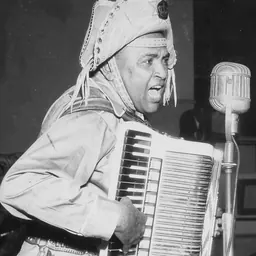


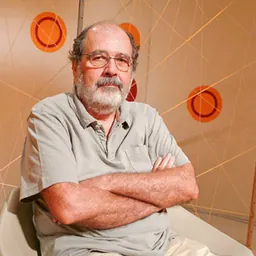
Related people
Same field, nearest in time




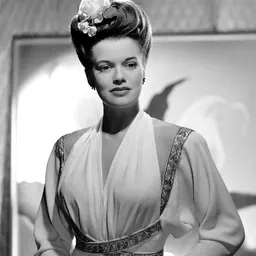

Contemporaries
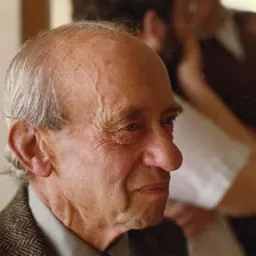
People whose lives overlapped Benito di Paula's



Frequently asked questions
Who is Benito di Paula?
Brazilian singer, composer and pianist
When was Benito di Paula born?
Benito di Paula was born on 28 November 1941 in Nova Friburgo.
What is Benito di Paula's occupation?
Benito di Paula is a singer, pianist, composer and recording artist.
What nationality is Benito di Paula?
Benito di Paula is Brazilian.
Sources & further reading
Cite this page
APA: Biography.guide. (2026). Benito di Paula. https://biography.guide/benito-di-paula/
MLA: "Benito di Paula." Biography.guide, https://biography.guide/benito-di-paula/.
Chicago: "Benito di Paula." Biography.guide. https://biography.guide/benito-di-paula/.
Data last updated: 2026-09-25 · Spot an error? Report a correction.
Page generated 2026-09-27 05:11 UTC