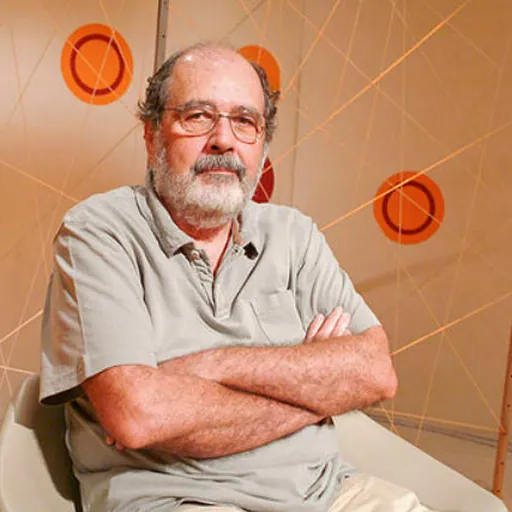
About Carlos Diegues
Lived 1940 – 2025 (aged 84). Carlos Diegues was a Brazilian film director, screenwriter and director.
Carlos Diegues (also known as Cacá Diegues; 19 May 1940 – 14 February 2025) was a Brazilian film director, best known as a member of the Cinema Novo movement. He was popularly known for his unconventional, yet intriguing film techniques among other film producers of the Cinema Novo movement. Diegues was also widely known for his dynamic use of visuals, ideas, plots, themes, and other cinematic techniques. He incorporated many musical acts in his film as he favored musical pieces to be complementary to his ideas. Diegues remained very popular and is regarded as one of the great cinematic producers of his generation. He produced films, plays, musicals, and other forms of entertainment in Brazil.
Diegues' contributions to Brazilian cinema developed the film industry. He would pioneer the most expensive film projects that domestic filmmakers had ever seen. Films such as Bye Bye Brazil were two million dollar projects, and later, films such as God is Brazilian were over 10 million dollars. This was a new era in Brazil, as domestic directors had yet to produce any films with that kind of financial support.
Diegues admitted to using Brazilians in his films as much as he could. He used extras, film technicians, painters, sculptors, and other essential personnel of Brazilian backgrounds even if they were inexperienced.
Personal life
Carlos Diegues attended the Pontificia Universidade Católica in Rio de Janeiro. In 1959 he began his legal studies at the university. A university engaged with political affairs, Diegues immersed himself in political activism through the Juventude Universitária Católica (Catholic Youth Movement) and the Centros Populares de Cultura (Popular Cultural Centers) (CPC). As a left leaning student, he pursued filmmaking as he applied his deep understanding of social criticism in his works. or CPCs, both originating in leftist student politics. In the CPCs Diegues started his career as a filmmaker.
Diegues later went on to become an integral participant of the Cinco Vezes Favela and produced the episode Escola de Samba: Alegría de vivir in 1962. Doing so, he criticized the Carnival and suggested workers should unionize and demand workers rights. His work painted a bleak picture of what was the reality. Depicting landlords and leaders in charge as figures who upheld an inequitable world. His film sparked mixed emotions, but most importantly, it gave the working masses hope for change. This was the beginning of an era in film known as Cinema Novo. In the 60s the films associated with Cinema Novo explicitly talked about the unfair treatment of people under the status quo. The leftist ideas by filmmakers like Diegues and other important figures would allow the Cinema Novo to flourish.
As the dictatorship reached full force in the late 1960s the CPC could no longer operate as regularly for the members. As a result, Diegues and other filmmakers were forced to redirect the paths of their careers. In his earliest works Diegues created Joana Francesa by 1975, when the dictatorship repressed and censored most of the media and entertainment industries. This film alluded to the ideas of inequality and injustice but it also garnered criticism by the left as they suggested it was not as intricate or heavily influenced by the social commentary Diegues had used before.
Filmography + KeyIndicates a documentaryIndicates a short film
+ List of films directed by Carlos Diegues Year Original title English release title(s) Language(s) Notes 1960 Fuga 1960 Brasília Portuguese 1961 Domingo Portuguese 1962 Escola de Samba Alegria de Viver Portuguese Segment of Cinco Vezes Favela (1962) 1963 Ganga Zumba Portuguese 1965 A Oitava Bienal Portuguese 1966 A Grande Cidade The Big City Portuguese Also known as A Grande Cidade ou As Aventuras e Desventuras de Luzia e Seus 3 Amigos Chegados de Longe. 1967 Oito Universitários Portuguese Co-directed with David Neves. 1970 Os Herdeiros The Heirs / The Inheritors Portuguese 1971 Receita de Futebol Portuguese 1972 Quando o Carnaval Chegar When Carnival Comes Portuguese 1973 Joanna Francesa Jeanne the Frenchwoman Portuguese Brazilian-French production. 1974 Cinema Íris Portuguese 1975 Aníbal Machado Portuguese 1976 Xica da Silva Xica / Xica da Silva Portuguese 1978 Chuvas de Verão A Summer Rain / Summer Showers Portuguese 1980 Bye Bye Brasil Bye Bye Brazil Portuguese 1984 Quilombo Portuguese 1985 Batalha da Alimentação Portuguese 1986 Batalha do Transporte Portuguese 1987 Um Trem para as Estrelas Subway to the Stars Portuguese 1989 Dias Melhores Virão Better Days Ahead Portuguese 1990 Exército de Um Homem Só Portuguese Music video for Engenheiros do Hawaii. 1994 Veja Esta Canção Rio's Love Song Portuguese 1996 Tieta do Agreste Tieta of Agreste Portuguese Based on Tieta, by Jorge Amado. 1999 Orfeu Portuguese Based on Orfeu da Conceição, by Vinicius de Moraes. 1999 Reveillon 2000 Portuguese 2000 Carnaval dos 500 Anos Portuguese 2003 Deus É Brasileiro God Is Brazilian Portuguese 2006 O Maior Amor do Mundo The Greatest Love of All Portuguese 2006 Nenhum Motivo Explica a Guerra Portuguese Co-directed with Rafael Dragaud. Documentary on the Grupo Cultural AfroReggae. 2013 Vinte: RioFilme, 20 Anos de Cinema Brasileiro Portuguese 2013 Rio de Fé Portuguese 2018 O Grande Circo Místico The Great Mystical Circus Portuguese
Don’t just read it —
keep it.
Full-length biographies made to live with: read them, listen on the way to work, watch them tonight.
- E-book
- Audio
- Video
Instant download · yours to keep · every purchase keeps this site free
Important facts
People in Carlos Diegues's life
Named in this biography and alive at the same time




Related people
Same field, nearest in time


Contemporaries
People whose lives overlapped Carlos Diegues's


Frequently asked questions
Who was Carlos Diegues?
Brazilian film director (1940–2025)
When was Carlos Diegues born?
Carlos Diegues was born on 19 May 1940 in Maceió.
When did Carlos Diegues die?
Carlos Diegues died on 14 February 2025 in Rio de Janeiro.
What was Carlos Diegues's occupation?
Carlos Diegues was a film director, screenwriter and director.
What nationality was Carlos Diegues?
Carlos Diegues was Brazilian.
Sources & further reading
Cite this page
APA: Biography.guide. (2026). Carlos Diegues. https://biography.guide/carlos-diegues/
MLA: "Carlos Diegues." Biography.guide, https://biography.guide/carlos-diegues/.
Chicago: "Carlos Diegues." Biography.guide. https://biography.guide/carlos-diegues/.
Data last updated: 2026-09-23 · Spot an error? Report a correction.
Portrait: Wikimedia Commons · author & licence
Page generated 2026-09-27 05:07 UTC