
About Basil Lythgoe
Lived 1913 – 2009 (aged 95–96). Basil Lythgoe was a professor and chemist.
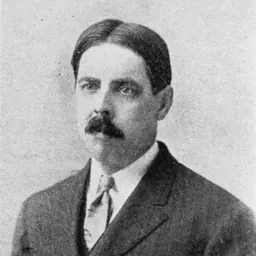
Basil Lythgoe FRS (18 August 1913 — 18 April 2009) was a British organic chemist who investigated the structure of many natural substances including nucleosides, plant toxins, and vitamin D2. He was Professor of Organic Chemistry at the University of Leeds.
Biography Basil Lythgoe was born in Leigh, the second of three children of Peter Whittaker Lythgoe (company secretary of a local textile firm) and Agnes Lily Lythgoe (née Shepherd). Basil, like his father, attended Leigh Grammar School. Aided by a county grant he progressed to the University of Manchester in 1930. His final degree examinations were delayed by a severe throat infection; he graduated in 1934, with first class honours.
Lythgoe stayed at Manchester to work or his PhD, supervised by Professor I M Heilbron, FRS; it was awarded in 1936. He then joined ICI in Huddersfield, where he worked on a synthetic dye, but soon returned to the University of Manchester as an assistant lecturer, where he worked with Alexander R. Todd, successor to Heibron.
In 1946 Lythgoe accompanied Todd to Cambridge as an “assistant in research’” – he was later promoted to Lecturer. Their main area of research was nucleosides. Their findings, and those of others in the group, contributed to determining the correct structure of DNA. By 1948 Lythgoe was working independently, although still on nucleosides. Later, he turned his attention to the structure of macrozamin, a very toxic natural substance.
In 1953 Basil Lythgoe moved to the University of Leeds to take up the professorship of organic chemistry. One of his principal research areas for many years was taxine alkaloids. Lythgoe was an early user of nuclear magnetic resonance (NMR), which helped him determine the correct structure of taxine-I.
Another extensive area of research was calciferols. In one paper he described the synthesis of cholecalciferol, which involved the use of the Wittig reaction. It was “early days for Wittig reagents, and possibly Lythgoe saw this as one of the strengths of the work in the 1958 paper”. They had met at Manchester and were married on 29 June. They had two sons.
Kate died in Leeds on 10 July 2003. Basil Lythgoe developed dementia in later life. He died on 18 April 2009 at a nursing home in Wychbold.
Don’t just read it —
keep it.
Full-length biographies made to live with: read them, listen on the way to work, watch them tonight.
- E-book
- Audio
- Video
Instant download · yours to keep · every purchase keeps this site free
Important facts
Related people
Same field, nearest in time


Contemporaries
People whose lives overlapped Basil Lythgoe's




Frequently asked questions
Who was Basil Lythgoe?
British chemist
When was Basil Lythgoe born?
Basil Lythgoe was born in 1913.
When did Basil Lythgoe die?
Basil Lythgoe died on 18 April 2009.
What was Basil Lythgoe's occupation?
Basil Lythgoe was a professor and chemist.
Sources & further reading
Cite this page
APA: Biography.guide. (2026). Basil Lythgoe. https://biography.guide/basil-lythgoe/
MLA: "Basil Lythgoe." Biography.guide, https://biography.guide/basil-lythgoe/.
Chicago: "Basil Lythgoe." Biography.guide. https://biography.guide/basil-lythgoe/.
Data last updated: 2026-09-20 · Spot an error? Report a correction.
Page generated 2026-09-27 05:08 UTC